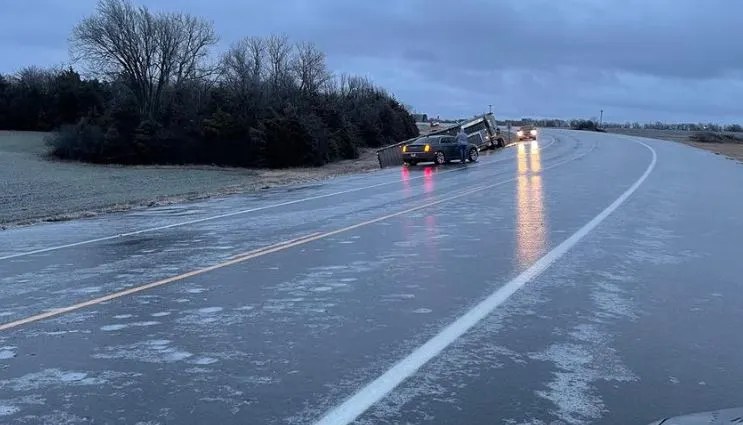
Just after New Year in 1984 a freak ice storm at evening rush hour paralyzed traffic in Montgomery County. Within seconds the wet roads froze into slick ice skating rinks. Nothing could move for hours. Into this chaos stepped the usual first responders, but also, perhaps surprisingly, librarians. All across the County stranded motorists sought refuge in those most welcoming of places, the public libraries.
Recently the retired librarians email group featured a thread of memories of that long ago night. I remember it well. At the Gaithersburg Library drivers abandoned their cars on Montgomery Village Avenue and precariously picked their way across the ice into the library. We didn’t close. We were trapped for hours. My small children were home with my mother so at one point I tried to leave. I didn’t get far from the back door when I could go no further. I was on my hands and knees and then stranded on a tiny ice-free oasis, unable to get to my car or return inside. I was stuck there for about an hour, freezing cold and feeling rather ridiculous. Eventually a police officer drove up and rescued me, helping me back into the library. Everyone was shocked to see me, thinking I was home long before. It wasn’t till about 1:00 in the morning that we were finally able to leave.
The next day, inspired by the story of the Andes plane crash survivors who resorted to cannibalism, I wrote a satirical account of the icy night that was published in The County Express newspaper on January 4th.
As the cold light of early dawn glinted on the thawing ice, the few survivors, the halt and the lame, struggled across the library parking lot into the arms of anxious relatives and the harsh glare of the TV cameras.
From our exclusive interviews with these survivors, the full story of the Gaithersburg Librarians and their grim ordeal can now be told.
In the early hours of the crisis as ice-slick roads halted traffic and stranded motorists, the Gaithersburg Library became a haven for helpless refugees. The librarians found themselves dispensing not books, but tea and sympathy. With the resourcefulness expected from those in their valiant profession, they rose to the challenge and established a command post for emergency aid to the injured and the confused. With no room at the Holiday Inn, “We are no longer taking book reserves but reservations” one librarian announced. Couches were available on a first come first served basis.
But as the crisis worsened the thin veneer of civilization, unlike the ice, began to crack. It became clear that desperate measures would have to be taken if anyone was ever to leave the Gaithersburg Library alive. With hunger gnawing at their stomachs the ready source of nutrients on the shelves could no longer be ignored. Librarians who would not have dreamt of dog-earing a page began ravenously biting into the books in order to survive. “When starvation stares you in the face,” one sobbing guilt-ridden librarian confessed, “Your values change.”
The watchword in the stacks became not browsing but grazing. Some could only stomach the light fiction in the paperback racks, but those made of sterner stuff could be found feasting on the works of Shakespeare or Sigmund Freud. One librarian, whose own slim volume of childhood reminiscences was featured in a display, even found herself eating her own words. Early estimates show that the fiction and periodicals collections have virtually disappeared, but mercifully the reference collection remains largely intact as even the librarians found it indigestible.
Such are the sordid details now emerging as the survivors tell their stories. How their ordeal will effect their future careers is still uncertain. But as one librarian put it: “Once you’ve acquired a taste for Librarians’ Choice it’s hard to go back to Prime Choice again.”
I can report that my career did not suffer as a result of my impetuous exposé of the secret life of librarians.

 Dispatches From the Former New World