The Tin Men & AI

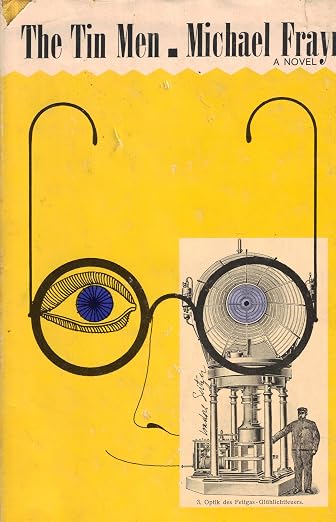
The first edition cover

Perhaps the tech gurus who, by their own account, have brought us to the brink of human extinction should have read a novel published in 1965 before they recklessly rushed ahead with AI development. The Tin Men is the first novel by Michael Frayn who went on to a prolific career as a novelist and playwright. He is one of my favorite authors and this is one of the funniest books I’ve ever read. I reread it recently and found it just as funny as the first time, though now there is a dark foreshadowing that wasn’t discernible back in the 1960″s.

The Tin Men is set in the fictional William Morris Institute of Automation Research. Here a motley crew of scientists and their bureaucratic overlords think up ways to put a cumbersome new invention, the computer, to some practical use. As Michael Frayn explains in his introduction to a new edition:

Computers – the tin men of my title – were beginning to make their importance felt, if only by their ponderous size and cost. They were produced, mostly by IBM, for a small elite of academic and commercial users, and they were as imposing in their way as the great steam engines that had ushered in an earlier technological revolution.

A Colossus Mark 2 computer 1943

The book was written in the era of Monty Python and Fawlty Towers and shares the same satirical, irreverent, and absurdist outlook. Thus we have a researcher spending his days feeding typical newspaper headline phrases into his machine, which regurgitates them in random combinations. No need for a human headline writer. Another muses on teaching a computer to write pornographic novels; after all there are only so many variables to program. Perhaps computers can even do our praying for us. Prayer is so tedious and time-consuming, surely automated prayer would be just as pleasing to the Almighty.

But the heart of the story is the work of the Ethics Department. Led by the obsessive Macintosh they are investigating to what extent computers can be programmed to follow codes of ethical behavior. Macintosh’s pet project is Samaritan. The scenes in his laboratory, which holds an enormous water tank, stuck in my mind vividly for all the fifty plus years since I first read it.

‘Launch her,’ called Macintosh. A crane on the gantry swung a raft out over the water and started to lower it. On the raft, gazing at each other sombrely, sat Macintosh’s Principal Research Assistant, Sinson, wearing an inflated yellow life-jacket, and his ethical machine, Samaritan II. A great echoing silence fell over the tank. Macintosh had concentrated all his department’s efforts on the Samaritan programme. The simplest and purest form of the ethical situation, as he saw it, was the one in which two people were aboard a raft which would support only one of them.

Continue reading “The Tin Men & AI” →

The Antichrist’s Lewd Hat

For my series On My Bookshelf I pick the book in my library with the weirdest title.

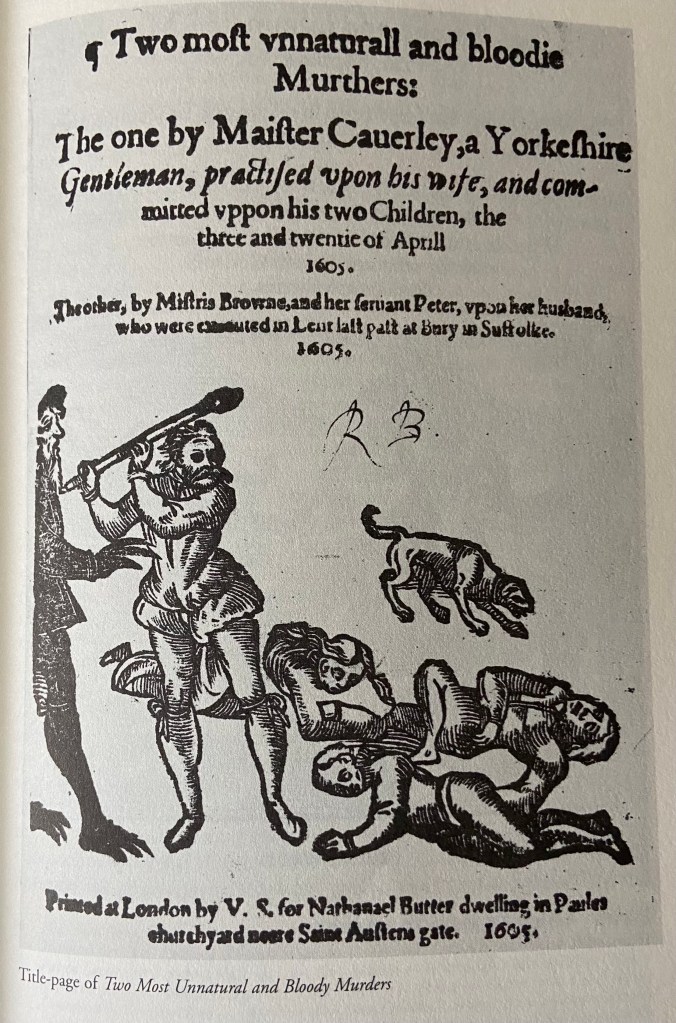
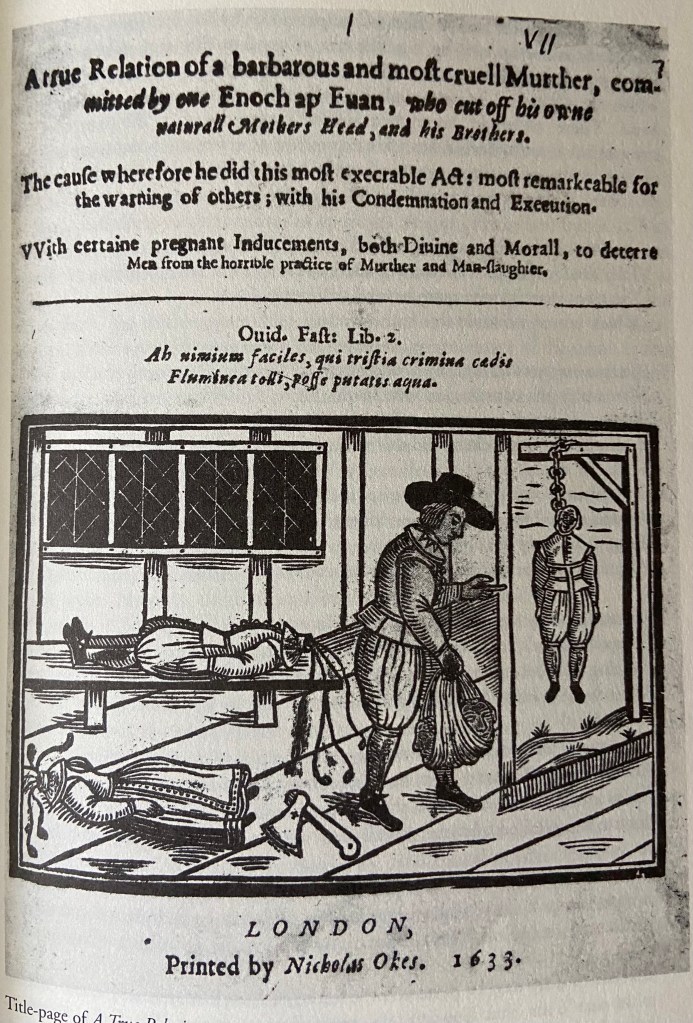
I could have titled this Pamphlets in Early Modern England or Post-Reformation Pamphlets, but like the author of the book I went with the more intriguing title, click bait you could say. Peter Lake doesn’t get around to explaining the odd title till page 584 of a 731 page book. I promise I won’t make you wait that long.

I confess I bought the book impulsively because of the title and a quick glance inside telling me it is about pamphlets, the early modern equivalent of today’s tabloids and sensational news websites. I shared an interest in historical pamphlets with my late brother Paul (Frank Key) who began creating little pamphlets as a child. His first published works were pamphlets printed by Malice Aforethought Press, a project he started with university friends. One of the eccentric characters he created for his imaginary world of Hooting Yard is Dobson, a prolific out-of-print pamphleteer.

Continue reading “The Antichrist’s Lewd Hat” →

Adventures in Unreal Estate

Last summer I fell down a rabbit hole into the topsy-turvy world of Unreal Estate. It would be more accurate to say I jumped down the rabbit hole. It was sudden and impulsive but it had been a long time coming. And, appropriately for a librarian, it all happened because of a bookcase. Let me explain.

My daughter is a nurse who works with the elderly. She has seen her share of falls or sudden illness crushing a senior’s quality of life. A three storied house with steep stairs was no place for us as we aged she insisted, and we resisted. Every now and again she would send me a listing for a house for sale in Foxfield Village, a senior community near her home in Middletown. It would be perfect, she claimed, single level living and so near the grandchildren. 

Quite an inducement. But there was always something wrong with the house. One seemed quite nice on the inside but the yard was a blank expanse of lawn, front and back. Not a twig or a leaf of any kind to be seen. How could I leave my garden full of flowering trees and shrubs and perennials for this sad bleak plot? There was always something. We had upgraded to stainless appliances, how could we go back to old white ones? My younger self would be appalled at my design snobbery. But I admit to it. We don’t always become better people as we age.

Then one Thursday last August she sent a listing that seemed to check all the boxes. Small but pretty garden, stainless appliances, and a glass enclosed porch, perfect for my heat and insect intolerance. There was just one problem. The open plan living space didn’t seem to have a wall long enough for my bookcase. I pored over the photos in search of an angle that would show a wall. None appeared. This was a nonnegotiable. 

Continue reading “Adventures in Unreal Estate” →