
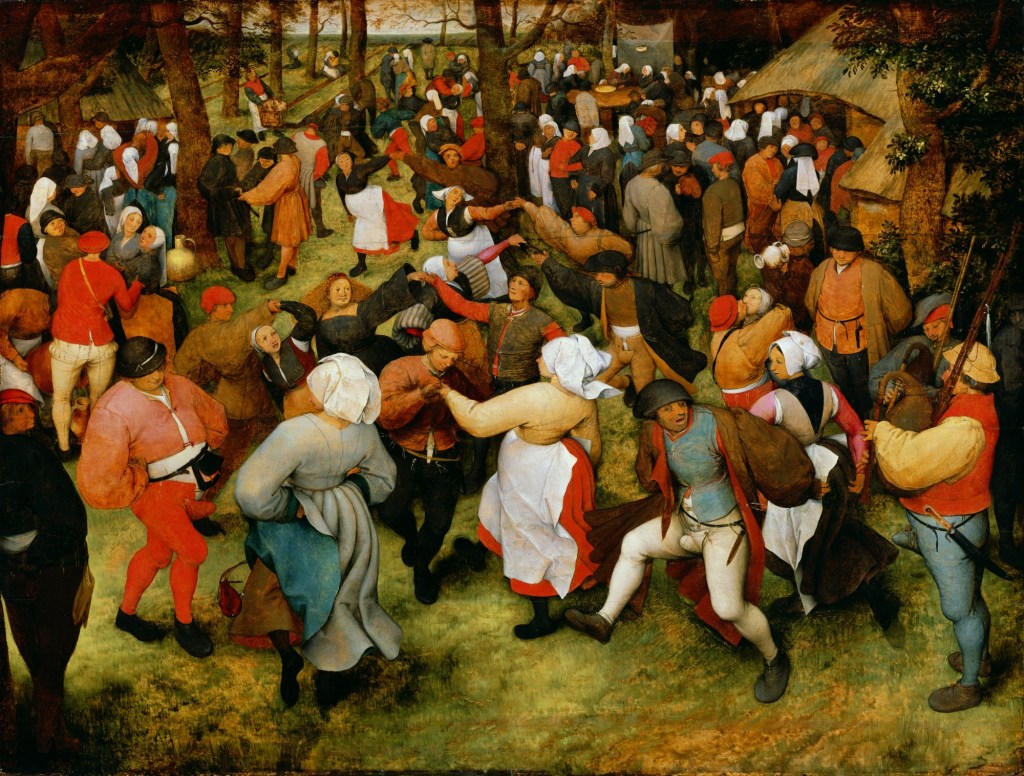
I like to think that the revelers in Bruegel’s wedding scene are dancing to the popular Flemish tune T’andernaken. Originally a folksong, the piece was arranged for instruments by many 15th and 16th century composers including Jacob Obrecht, and Ludwig Senfl, There is even a setting by Henry VIII who somehow found time between marriages and beheadings to compose some admirable music.
I have heard the tune performed several times over the years by the Medieval and Renaissance music group The Folger Consort, usually as an instrumental but twice the sung folksong. In 2012 it was included in the program City of Ladies: The Musical World of 15th Century Burgundy. It was a lovely surprise to hear a song in Flemish, the language that surrounded me in my childhood. Many of the Folger concerts include songs in Latin, French, German, Italian, and Spanish, but it was a special treat to hear Flemish. The moment occurred again this Valentine’s Day in the concert Love Songs of the 15th Century. The program promised two instrumental settings of T’andernaken, the earliest, by Tyting,, and another by Antoine Brunel. But apparently tenor Jason McStoots could not resist the opportunity to sing the folksong and gave us a lively impromptu performance.
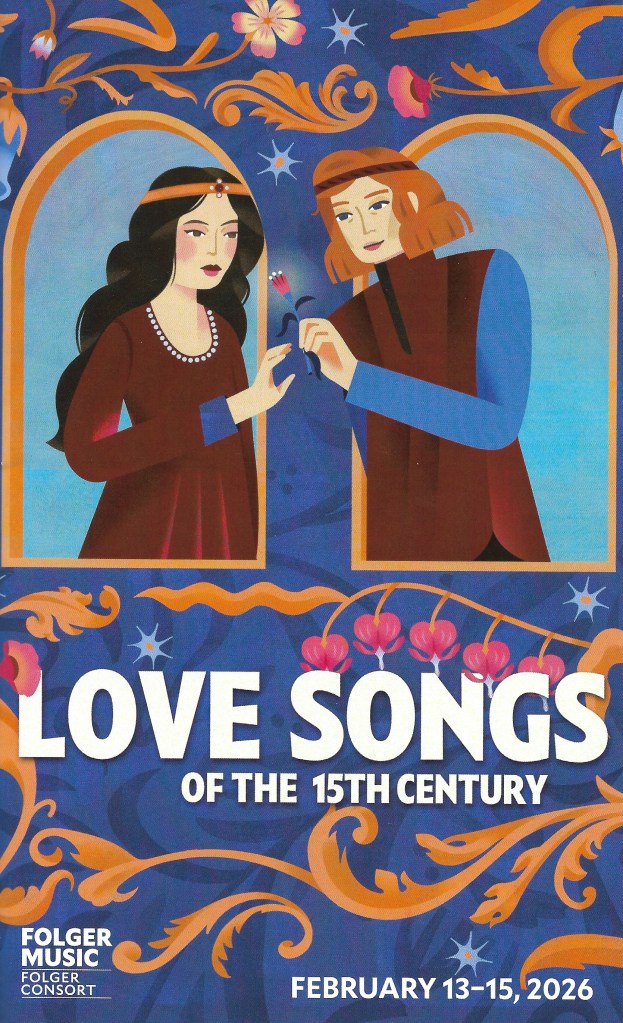
From The Folger Consort’s program notes by Consort director Robert Eisenstein:
T’andernacken is a Flemish folksong that became for some reason the basis for some of the earliest, purely instrumental pieces in the 15th-century repertoire… Composers vied with each other in fashioning more and more virtuosic settings of the tune, and it was popular well into the 16th century.
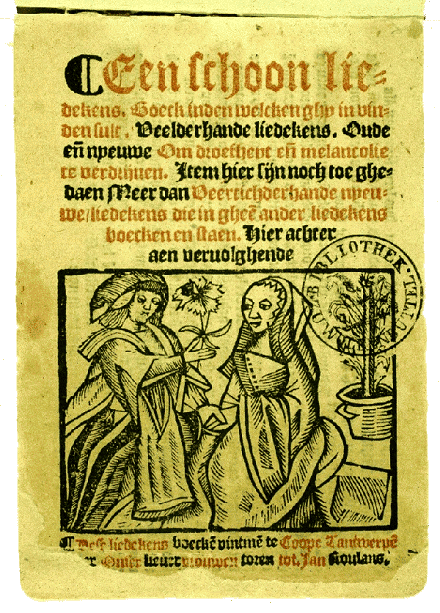
T’andernaken was first published in The Antwerp Songbook in 1544. As a love song it is far different in tone from the Courtly Love tradition of the period. It is in the folk tradition of songs that tell a story of ordinary people, their heartaches and misadventures in love. It is a cautionary tale that women across the ages can recognize and to me it has a distinctly Flemish sensibility; the hard knocks of life met with earthy humor, unvarnished realism, and determination to enjoy life despite all.
The story is narrated by a man who reports on a conversation he overheard between two young women in the town of Andernach:
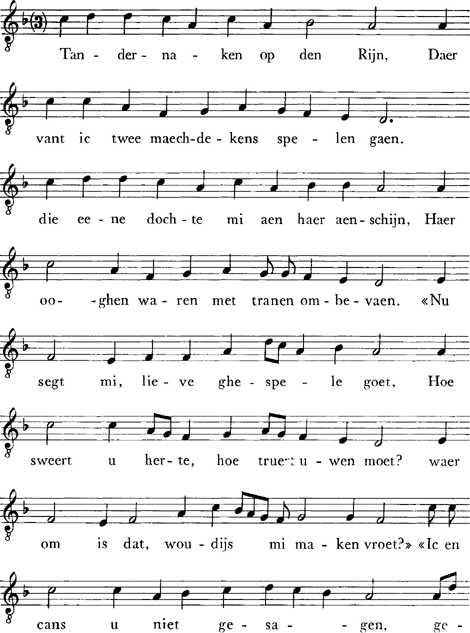
Tandernaken, al op den Rijn,
daer vant ic twee maechdekens spelen gaen;
die eene dochter mi, aen haer aenschyn,
haer ooghen waren met tranen ombevaen;
“nu segt mi, lieve ghespele goet
hoe sweert u herte, hoe truert uwen moet,
waer om ist, dat woudys mi maken vroet?”
“Ic en cans u niet gesagen;
tis die moeder diet mi doet,
si wil mijn boel veriagen, verlagen.”
In Andernach on the Rhine
I saw two girls gone out for a talk,
One of them pleased me with her appearance.
Her eyes were full of tears.
“Now tell me dear girlfriend,
why is your heart so heavy, your mood so sad,
why is that, can you explain it to me?”
“I cannot hide it from you.
It is my mother who has done this to me.
She wants to chase off my sweetheart.”
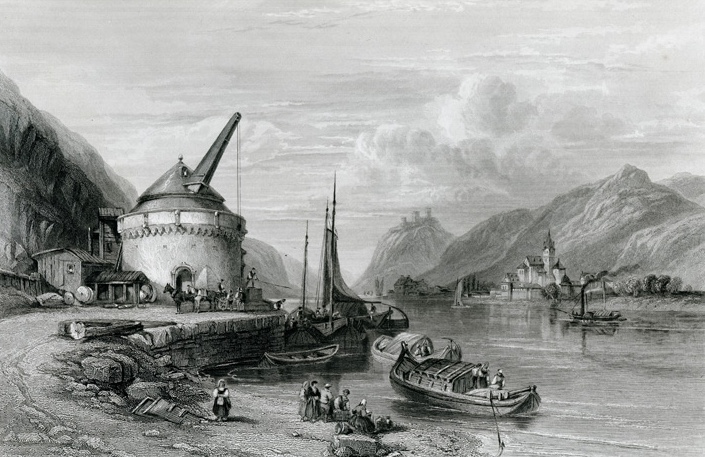
As the girl continues to complain about her mother her friend listens sympathetically but then gives her a piece of advice based on her own experience:
Ah, dear friend, it would be wrong
to commit such folly.
Had I only taken my mother’s advice,
I would have kept my virtue.
But I did his will instead,
And my belly is swollen up,
And he has left me
To go play elsewhere.
I shed so many tears for it,
But cannot heal it.
Take warning , dear friends, from one:
Take care, or your freedom is gone.
You won’t regret it
Stay away from him,
Or your reward will be sorrow.
The tearful girl thanks God she is still a maid but insists her boyfriend loves her. The pregnant friend responds cynically: :
Love made a habit of lying to me
Don’t trust their chatter – twenty times no!
They are all bent on deception.
The man telling us this story makes no comment on it, but is delighted that the girl he admired at first glance now looked at him and “laughed with a great smile.” The cautionary tale ends with love going on its heedless way as the narrator tells us:
I bid her good day lovingly,
I greeted her courteously.
God grant that I may find her with me in heaven, in heaven!
There are many versions of T’andernaken on YouTube. Here is a selection:
Obrecht’s setting on Renaissance recorders
Henry VIII’s setting by The Folger Consort
Senfl’s setting by the Farallon Recorder Quartet
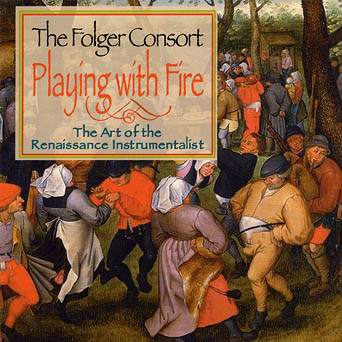
I note that The Folger Consort chose the same Bruegel painting for the cover of their CD. As we listen let’s circle back and join the wedding guests in their lively celebration. In the center is the groom wearing a black cap and a red shirt holding the hand of his bride, her red hair flying out from the energy of the dance. Around them swirls a kaleidoscope of country people dancing and partying. The men in the foreground flaunt their prominent codpieces while to the right a bagpiper plays, a couple kiss,, and a man downs a giant goblet of drink. Throughout the scene are more little vignettes of exuberant life. By contrast, at center right a man in an orange shirt stands quietly watching the crowd. This is thought to be a self-portrait of Bruegel who painted from close observation of peasant life. Another still figure wearing a tan coat stands at the top of the painting to the left of the large tree trunk. With his back to the party he gazes into the far distance. What trouble does he see looming on the horizon? For Bruegel lived in troubled times. Harsh winters had brought crop failures and widespread hunger.The Reformation had sparked religious wars between Catholics and Protestants, while the Spanish conquest of Flanders was a cruel occupation prompting rebellion.and repression. A wedding party was a rare moment of joy amidst hardship.
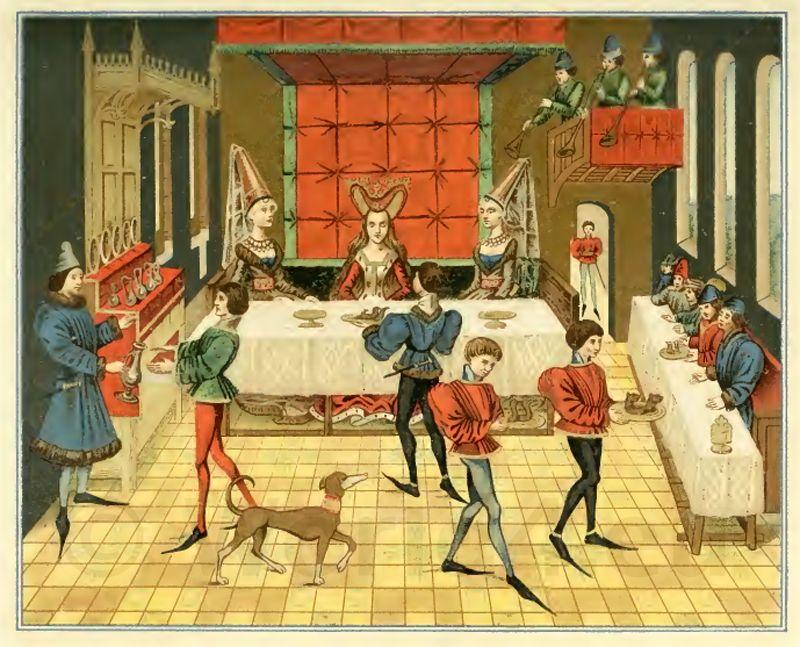
As a Flemish saying goes, Bourgondisch leven. Live like the Burgundian nobles, renowned for their luxurious lifestyle and extravagant feasting, and drinking. The scene below shows a banquet at the Burgundian court in the fifteenth century. Perhaps the musicians in the balcony are playing the popular tune T’andernaken!

 Dispatches From the Former New World
I enjoyed your dispatch. Always educational and fun to read. Lucky you to catch the Folger doing this piece. Interesting melody — key of F (or D minor) and in 3/4 time. Some of the melody notes occur in surprising places, a little off the main beat, which would probably be fun for the dancers.
LikeLike
Loved the dispatch. You made my achy body from battling with the mound of ice and snow feel better! Megumi
LikeLike