On My Bookshelf I find a volume perfect for Women’s History Month, the story of medieval women songwriters whose words sound as fresh as if they were written today.
The troubadour is a familiar figure in Medieval history, a singer of songs of unrequited love for a beautiful and virtuous lady. But women troubadours? They were virtually forgotten until Meg Bogin published this study in 1976, the first since a German monograph in 1888. The book includes translations of the 23 songs that survive by 20 women. These voices from almost a thousand years ago are remarkably fresh and intimate, giving us a rare window into the lives of women in an age dominated by men.
As a child I pored over the books on ancient Egypt in my father’s bookcase, fascinated by the tombs and treasures and the daring exploits of famous archaeologists. I dreamed of becoming an archaeologist myself one day, until I realized it involved spending a lot of time exposed to relentless sun in very hot places with hoards of nasty insects. I never could stand summer heat, even the 70 degrees that counted as a heat wave in England in those days. After a school field trip to a Roman dig near Colchester left me limp from heat exhaustion and covered in bug bites, I had to admit I was hardly cut out for the rigors of digging up ancient Egypt. Fortunately there is plenty of reading to satisfy an armchair archaeologist like me. Here are some of my favorite novels with an archaeological theme.
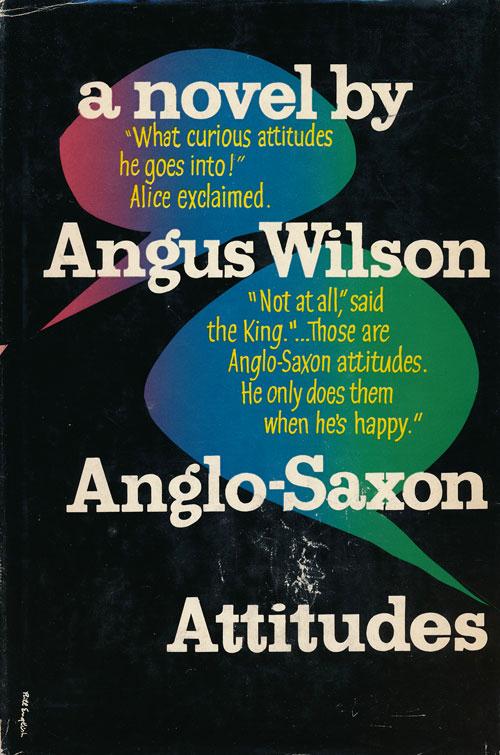
Anglo-Saxon Attitudes by Angus Wilson
Anglo-Saxons past and present are the subject of this satirical novel. Gerald Middleton is a historian past his prime when he is invited to edit a journal on the conversion of the Anglo-Saxons, a topic that brings up a pivotal event from his youth. In a golden summer when he fell in love with the delectable Dollie he was present at an excavation that unearthed a pagan phallic idol in the tomb of a 7th century Christian bishop. But Gerald knows this was a fake and who was responsible for planting it. His dilemma sets off a rollicking portrait of 1950’s England with a Dickensian caste of characters including Gerald’s eccentric wife Inga, a posse of squabbling historians, and working class chancers no longer willing to stay in their place in the post-war world. A television mini-series based on the book can be seen on Acorn TV.
In the second half of 2021 I read even more books than from January to June. Though I won’t give a number. I don’t count because for me it’s not a competition or a goal to check off. I find the comments on Facebook reading group pages very dispiriting as people stress over meeting reading goals. As if we didn’t have enough to stress about in 2021! I’m like Thomas Jefferson, “I cannot live without books.” More time for reading opened up as my grandsons went back to real school in September and I no longer had to supervise virtual learning. Much as I enjoy spending time with the boys I can tell you that this was not quality time!
I read books old and new, highbrow and lowbrow, but all well-written. I have no patience for poorly written books however much they may be hyped in the media. I threw aside one book that sounded promising, a World War II spy story, because in the first paragraph a character gave a “lop-sided grin.” I assure you no such tired cliches appear in my favorite books.
On the first day of Christmas Biden found inside his stocking Joe Manchin’s lump of coal, not really shocking!
On the second day of Christmas Biden found inside his stocking Two piqued Progressives And Joe Manchin’s lump of coal.
On the third day of Christmas Biden found inside his stocking Three obstructive Republicans Two piqued Progressives And Joe Manchin’s lump of coal.
On the fourth day of Christmas Biden found inside his stocking Four Fox hosts a lying Three obstructive Republicans Two piqued Progressives And Joe Manchin’s lump of coal.
On the fifth day of Christmas Biden found inside his stocking Five COVID variants Four Fox hosts a lying Three obstructive Republicans Two piqued Progressives And Joe Manchin’s lump of coal.
In this edition of On My Bookshelf I rediscover a history lesson.
This little paperback was published by Pelican Books, an imprint founded by Penguin Books in 1937 to offer intellectual nonfiction to ordinary people for “no more than the price of a packet of cigarettes.” The books were very popular in the postwar period, The Guardian calling them an “informal university for ’50s Britons.” My copy of What is History? by E. H. Carr was published in 1965 and shows its age. The pages are not so much yellowed as nicotine colored but the spine has held up. When I open it, for the first time in decades, I see a dedication written inside. A friend gave it to me for Christmas in 1965. She signed it with her schoolgirl nickname which I will refrain from sharing with the world to preserve her dignity. She is one of the few friends from that long ago time I am still in touch with.
What led me back to this book after so long? I remembered it and thought it might shed light on the current controversy over the teaching of history, particularly the history of slavery and race in America. I was not disappointed. This is one of the first relevant quotes I came across:
“There is no more significant pointer to the character of a society than the kind of history it writes or fails to write.
One autumn afternoon many years ago I stood on the Plains of Abraham high above the St. Lawrence River in Quebec. It remains one of the most memorable scenic views of my life along with the Grand Canyon and the English Lake District seen from the top of Helvellyn. Fierce winds flattened the grass, dark storm clouds threatened above, and the gleaming silver ribbon of the St. Lawrence far below made for a dramatic scene. In fact the sky reminded me of about the only thing I knew at the time about the history of this place, Benjamin West’s famous painting of the death of General James Wolfe. For it was here on the Plains of Abraham in 1759 that a decisive battle was fought in the great struggle for domination of North America. The name conjures a battle scene of Biblical proportions, a recent book on the subject is titled Armageddon, but the bleak windswept plain came by its name in a more prosaic way. The farmer who owned the land was named Abraham.
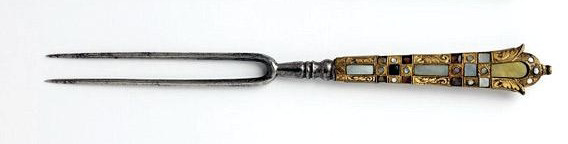
The humble dinner fork an instrument of the devil? Surely not! Yes, the fork has quite a notorious history. As soon as the new-fangled eating implement was introduced to Europeans by a Byzantine princess it became the focus of clerical ire. When Maria Argyropoulina arrived in Venice in 1004 to marry the son of the Doge she carried with her a case of golden forks to use at the wedding feast. Cleric Peter Damien, a future saint, witnessed the shocking scene:
Such was the luxury of her habits…[that] she deigned not to touch her food with her fingers, but would command her eunuchs to cut it up into small pieces, which she would impale on a certain golden instrument with two prongs and thus carry it to her mouth. God in his wisdom has provided people with natural forks – his fingers. Therefore it is an insult to Him to substitute artificial metallic forks for them while eating.
His opinion was confirmed a few years later when the unfortunate woman died of the plague, surely God’s punishment for her vanity he declared. The fact that sinful courtesans were known to eat sweets with a fork was even more reason to ban their use.
This cycle of poems is dedicated to my son Patrick Francis Hanrahan 1979-2002. Today would be his birthday. I wrote them at different stages of his life, the third shortly after his death from complications of mono. It was inspired by the last photo taken of him on his 23rd birthday.
I. Boy
          Golden-haired quicksilver boy
          You crash and rage
          About the house,
          All knees and elbows,
          Tumble of limbs and words
          In daring, perfect poise
          Of near-falls, cries, yells.

          My golden-haired quicksilver boy,
          Dropped into sleep
          Your delicate, pale-moonglow face,
          Curled, uncoiled body
          Stills.
These are my favorite books of the year so far. I’ve also read some downright silly, some forgettable, and some dreadful books which will get a mention at the end.
Fiction
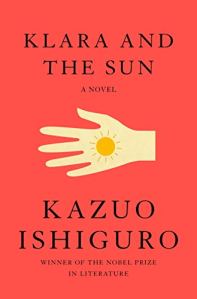
Think you could never feel heartache for a robot? Surrender to the magic of Ishiguro’s writing. Klara is an AF, a solar-powered Artificial Friend, purchased as a companion for Josie, a teenage girl who suffers from a mysterious illness. Klara is programmed to recognize and respond to human emotions and to always place the needs of her human first. She narrates the story, so we see the human world through her eyes, a disorienting combination of astute observation and naivety. As in Ishiguro’s most famous novels, The Remains of the Day and Never Let Me Go, the disturbing truth about Josie’s society and her illness are gradually revealed. When Klara decides she needs help to complete her mission she turns to the higher power who gives her life, the Sun. Once again Ishiguro’s hypnotic prose holds the reader in a spell.
I wrote this poem after my father died. It was read at his funeral.
Could I see you again As I did then It would be home from work, Your bike leaned to the house, Yellow mac dripping. Fumble of bicycle clips Then the smell of boot polish Black as the night beyond the kitchen door As you stooped to the step, Rubbed shoes to a shine I laughed into.












 Dispatches From the Former New World