Charlotte Bronte and Elizabeth Gaskell

I first read Elizabeth Gaskell’s Life of Charlotte Bronte when I was a teenager, newly enraptured by the Bronte sisters’ novels and the romantic bleakness of the Yorkshire moors. I remember the spell cast by the opening chapter as Gaskell takes us on her journey to visit Charlotte in Haworth. It is as though the reader is her companion on the Leeds and Bradford railway line to Keighley, then by carriage four miles to Haworth, past farms and workmen’s cottages and up the steep hill to the church, the parsonage, and the graveyard “terribly full of upright tombstones.” Gaskell, herself a novelist, paints an evocative picture of the landscape and atmosphere. We hear the horses’ hooves slipping on the paving stones of the steep street and breathe the “dim and lightless” air full of smoke from the clustered chimneys. I hadn’t read many biographies before and had expected it to start with Charlotte’s birth. I was so impressed with this way of leading the reader first into the world of the subject that my young self decided all biographies should be like this, that Elizabeth Gaskell had set the standard by which all others should be judged. It was one of the most memorable reading experiences of my life.

On publication in 1857, two years after Charlotte’s death, the Life was an immediate bestseller and has remained in print ever since, considered a classic of biography. What I did not know until recently, when I read a new book on the subject, is that on first publication Gaskell’s Life faced a storm of controversy causing major problems for the author and publisher.

Continue reading “Charlotte Bronte and Elizabeth Gaskell”

Jane Austen’s Favorite Authors

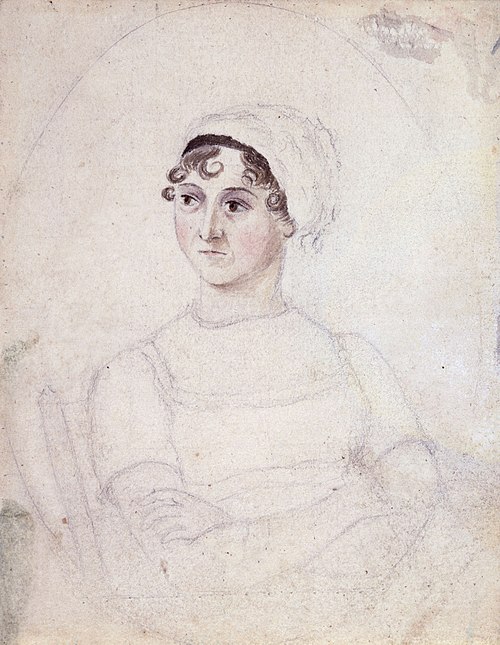
Portrait of Jane Austen by her sister Cassandra

Almost everyone reads Jane Austen at some point in their lives, but what did Jane herself like to read? She left plenty of clues in her own books. Many of her characters express their opinion of books in a way that gives us insight into their personalities. For instance in Northanger Abbey Catherine Morland, about to imagine herself the heroine of her own Gothic adventure, declares:

I have read all Mrs. Radcliffe’s works, and most of them with great pleasure. The Mysteries of Udolpho, when I had once begun it, I could not lay down again; I remember finishing it in two days — my hair standing on end the whole time.

There are further clues in Austen’s letters to friends and family, who often exchanged opinions on the authors of the day. Austen even used the opinion of a book as a test of character. In a letter to her sister Cassandra Fanny Burney’s novel Camilla is the test for one new acquaintance:

There are two Traits in her Character which are pleasing; namely she admires Camilla, & drinks no cream in her Tea.

In Jane Austen”s Bookshelf rare book collector Rebecca Romney follows these clues in a quest to find and read books by Austen’s favorite authors. She hunts for editions that date to Austen’s lifetime and has a book expert’s eye for beautiful bindings, which she describes in loving detail. And to her surprise she thoroughly enjoys most of these books, finding them worthy of sitting alongside Austen on her bookshelf. Her reading raises a question: why have these women authors been mostly forgotten, while Austen is remembered as the only great woman writer of her time, the only one worthy of inclusion in the Canon of enduring classics? Romney finds answers in the writings of nineteenth and early twentieth century literary critics, almost all male. 

As I read about these authors and their books I began to compile my own reading list for the rest of the summer; The Mysteries of Udolpho is already downloaded to my Kindle. But I found the life stories of these women as compelling as any novel, and marveled at their ability to write despite the sometimes shocking travails they endured.

Meet Jane Austen’s favorite authors:

Frances Burney (1752-1840)

Frances Burney began writing as a teenager and published her first novel, Evelina, in 1778. It is a coming-of-age story of an orphan girl who leaves the countryside for London and her experiences there in the search for happiness. Evelina follows the tradition of Samuel Richardson’s Pamela (1740) and Henry Fielding’s The History of Tom Jones (1749) but is distinguished for its emotional complexity and vivid portrayal of the heroine’s interior world. The book was an immediate sensation. Even the king and queen read it. Samuel Johnson, the most famous literary critic of the day, said he could recite entire scenes from memory and declared “Henry Fielding never did anything equal.” It was from Burney’s second novel Cecilia that Austen borrowed the phrase Pride and Prejudice. Rebecca Romney tracks down the exact sentence:

Continue reading “Jane Austen’s Favorite Authors”

My Favorite Reading of 2024

My bookcase made a successful transition to my new house

FICTION

Caledonian Road by Andrew O’Hagan.
How could I resist a book billed as the Dickens of contemporary London? It did not disappoint. The city itself is a main character and according to the GuardianThe London that emerges from its 600-odd pages resembles a vast, rotting carcass picked over by carrion.” That doesn’t sound very appealing, but the book is constantly entertaining and mordantly witty. The central character is middle aged writer and academic Campbell Flynn who rose from humble beginnings to celebrity, but whose life is now spiraling out of control. Around him swirls a cast of characters high and low, from aristocrats to human traffickers, working class students to Russian oligarchs. We can’t help but root for the hapless Campbell as he is snared in a plot of corruption and scandal he can’t escape. The usual suspects of the English class system and hypocritical politicians get a merciless drubbing.

Creation Lake by Rachel Kushner.
Like Birnam Wood, on my favorites list last year, Creation Lake is about a radical environmental group, this time in rural France near a cave where Neanderthal remains were discovered. But unlike the gardening collective of that novel, Le Moulin plans violence. An American spy-for-hire, a woman using the undercover name Sadie, infiltrates the group. Kushner successfully combines the suspenseful plot of a thriller with a serious novel of ideas. Sadie becomes fascinated with letters from Bruno, a legendary activist who inspired the founders of Le Moulin. He believes that Neanderthals had a superior way of life, in harmony with nature, and that Homo Sapiens has gone tragically astray. Is Sadie’s mission to disrupt Le Moulin’s violent plans or to entrap them by urging them on? Where do her true loyalties lie? This novel was deservedly short-listed for the Booker Prize.

Continue reading “My Favorite Reading of 2024”

Maria: The Forgotten Bronte

On My Bookshelf the biography of Maria Branwell Bronte, mother to genius.

So much has been written about the Bronte sisters, their brother Branwell, and father Patrick, that we can easily imagine we know them intimately. But one member of this extraordinary family, their mother Maria, remained a shadowy figure until the publication of this first full biography in 2019. In earlier books we glimpsed Maria on her deathbed in the Haworth parsonage crying out in despair “Oh my poor children!” Then she conveniently slipped away, leaving her children to endure the motherless youth that inspired their genius writings. What would Jane Eyre be, after all, without Charlotte’s miserable experience at Cowan Bridge School, the inspiration for Lowood. As far as literary history was concerned, Maria had served her purpose.

So it is revelatory to meet the lively, intelligent, capable young woman who won Patrick Bronte’s heart. And the young Irish curate himself is very different from the severe elderly parson, seen always bent over his books, who lived out a long lonely widowhood. 

Maria Branwell’s early life was more Jane Austen than Bronte. As a member of the gentry she enjoyed a life of festive balls in the Assembly Rooms, theatre in the Playhouse, fine dining, fashionable clothes, and afternoon visits for tea with her many friends. Instead of the bleak Yorkshire moors there was the bustling seaport of Penzance in Cornwall, a scenic little town known for its festivals, smugglers, and mild climate. Sea breezes perhaps, but no wuthering. 

Continue reading “Maria: The Forgotten Bronte”