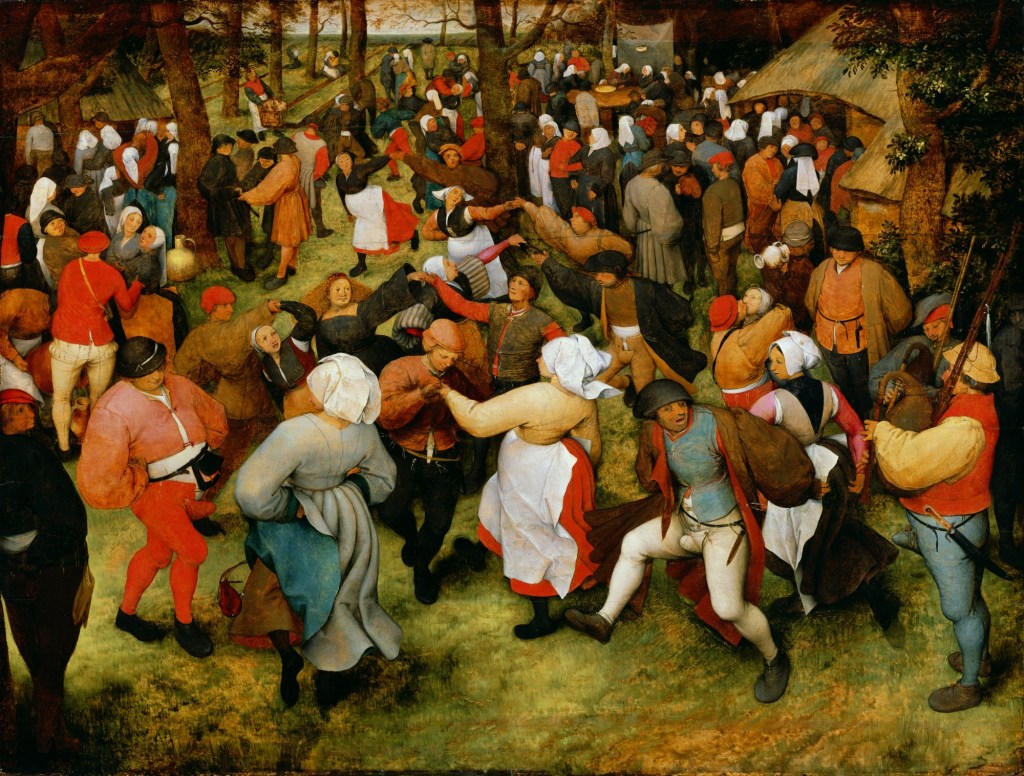
I like to think that the revelers in Bruegel’s wedding scene are dancing to the popular Flemish tune T’andernaken. Originally a folksong, the piece was arranged for instruments by many 15th and 16th century composers including Jacob Obrecht, and Ludwig Senfl, There is even a setting by Henry VIII who somehow found time between marriages and beheadings to compose some admirable music.
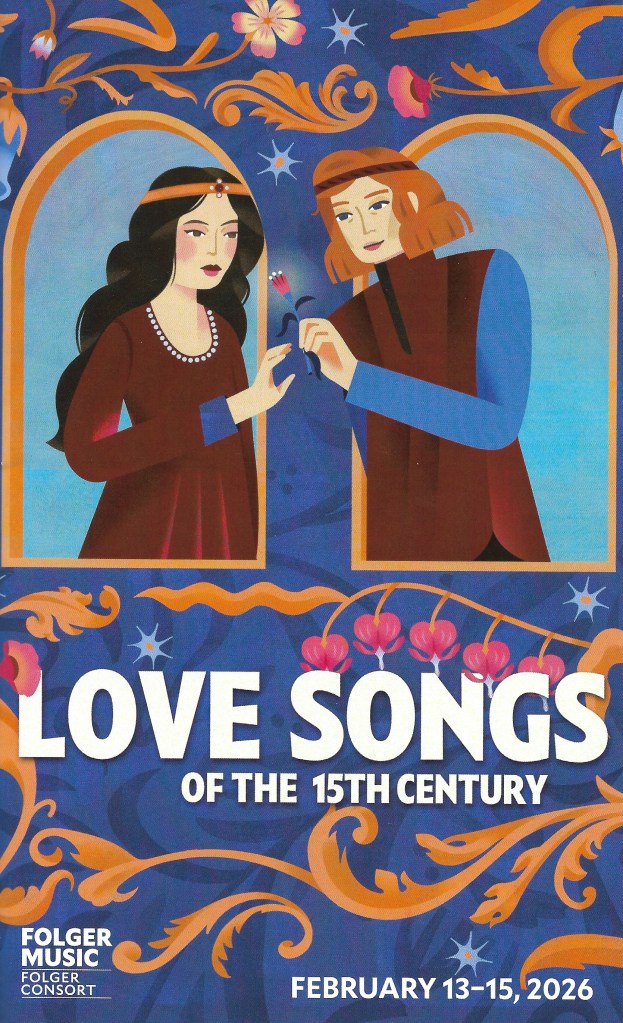
I have heard the tune performed several times over the years by the Medieval and Renaissance music group The Folger Consort, usually as an instrumental but twice the sung folksong. In 2012 it was included in the program City of Ladies: The Musical World of 15th Century Burgundy. It was a lovely surprise to hear a song in Flemish, the language that surrounded me in my childhood. Many of the Folger concerts include songs in Latin, French, German, Italian, and Spanish, but it was a special treat to hear Flemish. The moment occurred again this Valentine’s Day in the concert Love Songs of the 15th Century. The program promised two instrumental settings of T’andernaken, the earliest, by Tyting,, and another by Antoine Brunel. But apparently tenor Jason McStoots could not resist the opportunity to sing the folksong and gave us a lively impromptu performance.
From The Folger Consort’s program notes by Consort director Robert Eisenstein:
T’andernacken is a Flemish folksong that became for some reason the basis for some of the earliest, purely instrumental pieces in the 15th-century repertoire… Composers vied with each other in fashioning more and more virtuosic settings of the tune, and it was popular well into the 16th century.
T’andernaken was first published in The Antwerp Songbook in 1544. As a love song it is far different in tone from the Courtly Love tradition of the period. It is in the folk tradition of songs that tell a story of ordinary people, their heartaches and misadventures in love. It is a cautionary tale that women across the ages can recognize and to me it has a distinctly Flemish sensibility; the hard knocks of life met with earthy humor, unvarnished realism, and determination to enjoy life despite all.
The story is narrated by a man who reports on a conversation he overheard between two young women in the town of Andernach:
Continue reading “A Flemish Folksong”

 Dispatches From the Former New World