Remember, remember, the 5th of November,
Gunpowder, treason and plot.
I see no reason
Why gunpowder treason
Should ever be forgot.
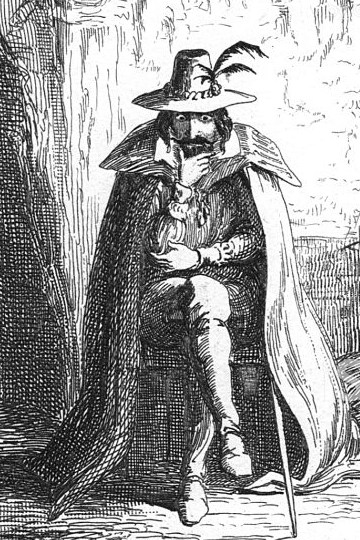
Guy Fawkes, Guy Fawkes, ’twas his intent
To blow up the King and the Parliament
Three score barrels of powder below
Poor old England to overthrow
By God’s providence he was catch’d
With a dark lantern and burning match
Holler boys, holler boys, let the bells ring
Holler boys, holler boys
God save the King!
I’ve written about Guy Fawkes Day in a previous post, but this time I want to follow up on a clue that the Catholic plot might have been hatched in a house near where I grew up. While reading Lines on the Underground for my September post I came upon this quote from Daniel Defoe, written over a hundred years after the foiled plot:
A little beyond the Town, on the Road to Dagenham, stood a great house, antient, and now almost fallen down, where Tradition says, the Gunpowder Treason Plot was at first contriv’d, and that all the first Consultations about it were held here.

I found that Daniel Lysons had also referred to the tradition in his book Environs of London published in five volumes in the 1790’s:
There is a tradition relating to this house, either, as some say, that the conspirators who concerted the gunpowder plot held their meetings there, or as others, that it was the residence of Lord Monteagle, when he received the letter which led to the discovery.
And crucially I found the name of the house, Eastbury Manor. Considering that Defoe described it as ancient and almost fallen down in 1727 I hardly expected to find it still stands today. But stand it does, now a National Trust property considered one of the finest examples of Tudor house architecture in England. Eastbury Manor is in Barking, which is indeed on the road to Dagenham, about ten miles east of the Houses of Parliament. Today it is a little oasis of beauty and history in the middle of a council housing estate.
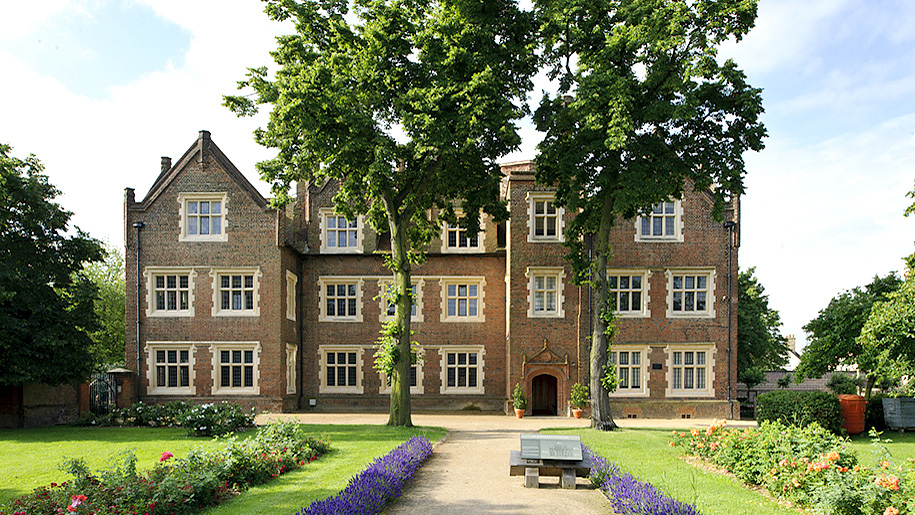

Eastbury Manor stands on land originally owned by Barking Abbey, established in 666 by the Benedictine order. It was rather unusual in having separate houses for monks and nuns, all ruled by an Abbess. Eventually it became a nunnery only and was one of the wealthiest, a favored place for the rich and well connected to send their daughters. The Abbess of Barking was the most important female religious leader in England. That all changed at the Dissolution of the Monasteries. In 1539 Barking was one of the last abbeys to be dissolved. The land became the property of Henry VIII who sold it to an absentee landlord. The abbey buildings were destroyed or fell into ruin; only the Curfew Tower dating to 1460 remains.
In 1556 Clement Sisley, a wealthy London merchant, purchased part of the property and in 1573 built a magnificent house there. Think of it as the millionaire class vanity project of the Elizabethan age. The most expensive materials were used, timber framed red brick embellished with grey patterns and glass for all the windows. The layout is the classic Tudor H shape with an inner courtyard. Because the house fell into neglect and was not extensively updated over the centuries, it retains many original Tudor features. Inside there is a timbered attic, a spiral staircase with an oak newel post, an original door, a secret room for valuables, and beautiful, though faded, wall paintings of rural scenes. The exterior retains the Tudor lead rainwater heads, tall ranks of chimneys, and one of an original two turrets. There is a cobbled courtyard, a Tudor herb garden, and a walled garden with bee boles along one wall.

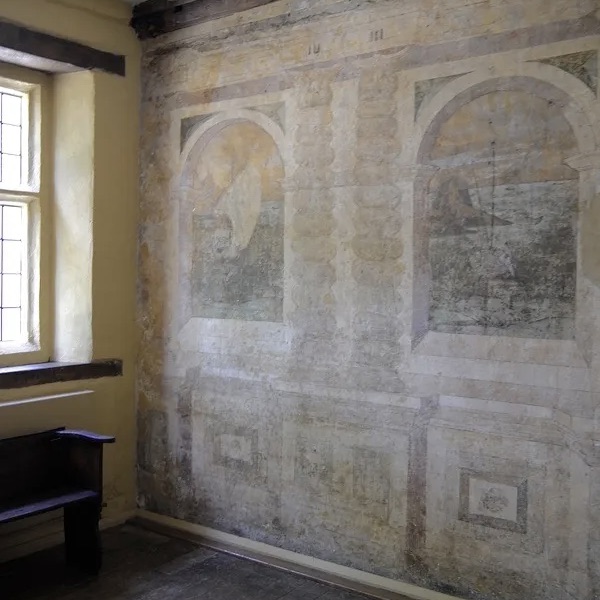

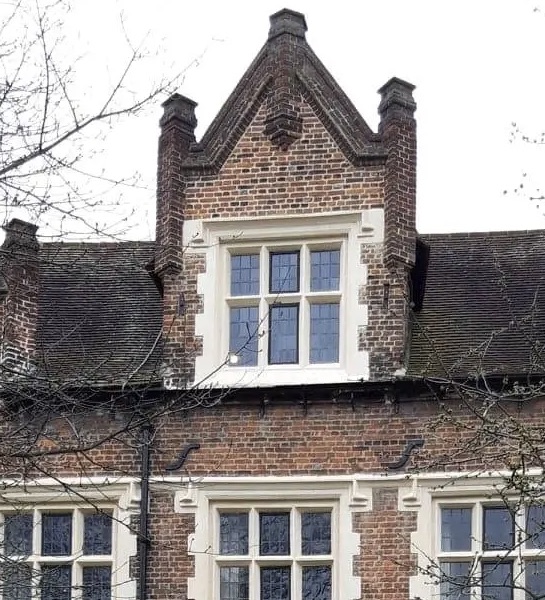


The house passed through many different owners over the centuries, eventually becoming a farm with animals housed in the once formal rooms. In 1914 the army requisitioned the property, using it to manufacture observation balloons, and during World War II it served as a post for Air Raid Wardens. But the future of Eastbury Manor as an Arts and Heritage Center was assured when the National Trust bought and restored the property in 1918.

But what of the tradition that the Gunpowder Plot was “contriv’d” there? The truth of that all hinges on who owned or lived in the house in 1605. By now Sisley was dead and his widow Anne Steward and her second husband owned the property. They rented it to Alderman John Moore and his Catholic Spanish wife Maria. Their daughter, another Maria, and her Catholic husband Lewis Tresham also lived there. The family were recusants, that is Catholics who refused to attend Anglican Church services and were punished with hefty fines.

Lewis Tresham is the key person here because of his many family connections to the conspiracy. His brother was plotter Francis Tresham and his cousin Robert Catesby was the leader. Ironically Lewis was also the brother-in-law of Lord Monteagle, the very man who received the anonymous tip-off that led to Guy Fawkes’ arrest. Another piece of evidence tying the locality to the plot is the testimony of a Barking fisherman. Richard Franklin claimed he had rented a boat to Guy Fawkes himself, perhaps for clandestine journeys on the Thames.
It is not hard to see how a house full of recusants with a web of family connections to the plotters would inspire gossip and speculation in the aftermath of the sensational events. Defoe and Lysons both use the word “tradition” which suggests stories passed down by word of mouth. Historians today discount the theory; there is just no actual evidence to support the oral tradition.
I was rather disappointed. But there is a consolation prize. What Elizabethan manor would be complete without a ghost? The spectral figure of a young girl haunts the shadowy rooms of Eastbury Manor, glimpsed only by girls and women. I like to think she is one of those girls from medieval times whose parents banished her to a convent against her will.
As for Lewis Tresham, he avoided suspicion while his family members were executed in gruesome fashion for the crime of treason. He inherited the family estate that would have gone to his older brother Francis and lived till 1639.

 Dispatches From the Former New World
You certainly have a way with history…thanks for keeping it alive and fascinating!
LikeLike
Although I am well acquainted with the story of Guy Fawks, I’d never seen pictures of the actual manor or, as it originally was, a convent. This is fascinating history. Thank you!
LikeLike