
Here is my annual list of favorite books in three categories – Fiction, Nonfiction, and Mystery/Suspense. I managed to whittle it down to five favorites in each category. But I’m adding a mention of best sellers and big name books I enjoyed that didn’t quite make it into my final five. And there’s a bonus category for the Weirdest Book I read all year. I hope you find something here to enjoy in 2024.
FICTION

Birnam Wood by Eleanor Catton.
I had never heard of radical gardening collectives before reading this novel set in New Zealand. Instead of disruptive acts of protest they plant vegetable gardens on any unused piece of land they can find. When a remote valley is cut off by a landslide Birnham Wood’s leader Mira sees opportunity on an abandoned farm. But don’t expect a bucolic rural idyll; this situation morphs into a page-turning thriller with a fierce moral vision. An eccentric American billionaire helicopters in claiming he intends to build a survivalist bunker on the farm. Then there’s the clueless businessman who owns the property and an idealistic investigative reporter determined to make his name by finding out what’s really going on. Who can Mira trust as the situation becomes more threatening and volatile? There are plenty of revelations, betrayals, and twists as the plot hurtles to a dramatic conclusion. Gardening has never been so apocalyptic!

Bookish People by Susan Coll.
This is a bookish treat for anyone who loves books, bookstores, and having a good laugh at the expense of pretentious authors and their vanity book tours. Sophie Bernstein is grieving her late husband as she tries to keep her Washington D.C. independent bookstore afloat. Now she faces a crisis as famed poet Raymond Chaucer is due to appear at the store to promote his new book. But Chaucer is accused of causing his wife’s suicide (shades of Ted Hughes and Sylvia Plath) and protesters plan to disrupt the event. Sophie asks Clemi, her young events coordinator, to cancel. But Clemi suspects that serial womanizer Chaucer is her father and is determined to meet him and find out for sure. Mayhem ensues at the bookstore with angry customers, overwhelmed staff, a fractious landlord, a tortoise on the loose, and a running gag featuring a malfunctioning vacuum cleaner. Fear not, all’s well that ends well in this delightful comedy.
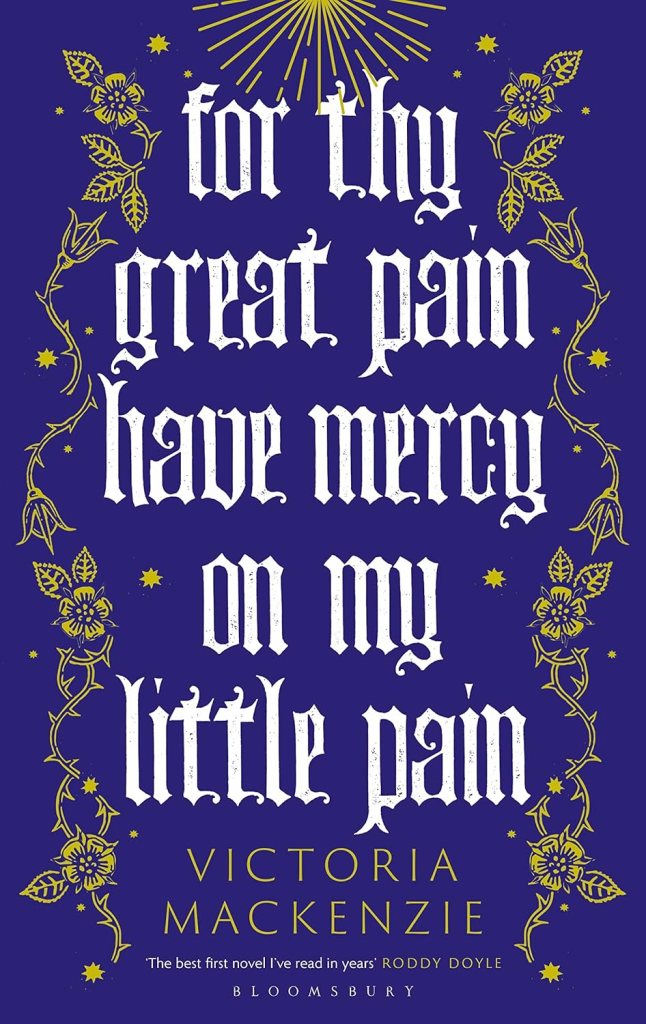
For Thy Great Pain Have Mercy On My Little Pain by Victoria MacKenzie.
This imagining of the inner lives of two medieval women, inspired by their own writings, is beautiful, strange, and profound. Julian of Norwich saw visions when she lay sick as a young woman, inspiring her to become an anchorite. She lived alone in a hut attached to the wall of a church for the rest of her long life. Her book, The Revelations of Divine Love, is considered a classic of spiritual writing. Margery Kempe could not have been more different. A married woman with 14 children, her visions inspired her to travel the world on pilgrimages and preach in the streets, exposing her to ridicule and the condemnation of church authorities. She was illiterate but dictated her book to two clerks. The Book of Margery Kempe was discovered in a country house in the 1930’s and is believed to be the first autobiography by a woman in English. In alternating chapters MacKenzie explores the psychological struggles of the women as one copes with isolation and the other with public scorn. When Margery travels to Norwich to visit Julian they experience a profound bond. As caught up in the spiritual drama as I was, I couldn’t help wondering who was taking care of those 14 children!
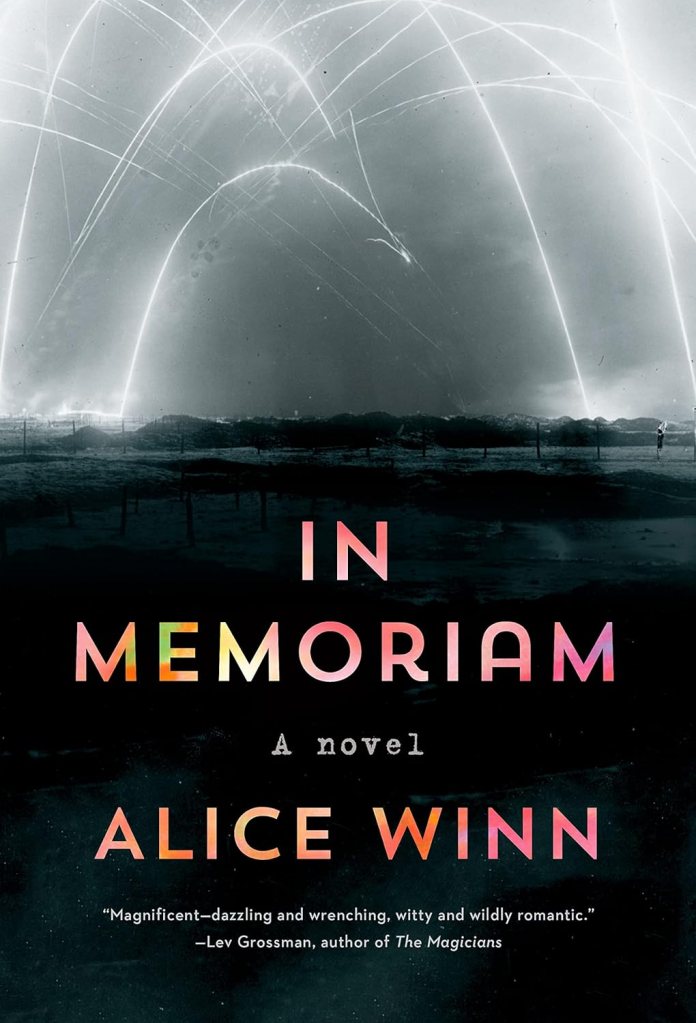
In Memoriam by Alice Winn.
I am absolutely in awe of how this young writer brings the atmosphere and people of World War I to such vibrant life in these pages. In 1914 the boys at a posh English boarding school, including Sidney Ellwood and his half-German friend Henry Gaunt, are caught up in a wave of patriotism and eagerness to serve. Gaunt immediately enlists to save his family from anti-German prejudice and Ellwood, who is secretly passionately in love with his friend, soon follows. Youthful idealism founders on the ghastly reality of trench warfare, and the school newsletter is soon filled with lists of the fallen. Winn makes brilliant use of actual period newsletters from a school she attended, and letters home by the soldiers. The scenes in the trenches are taken from these letters giving them an absolute sense of authenticity, while amid the horrors of war a tender love affair blossoms as Sidney discovers that Henry returns his feelings. This is one of the best novels of World War I I’ve ever read, and I’ve read a lot of them.

My Father’s House by Joseph O’Connor.
This novel by Irish writer O’Connor was inspired by the true story of Monsignor Hugh O’Flaherty, who worked at the Vatican during the Nazi occupation of Rome in 1943. He risked his life by organizing a secret network to smuggle Jews, escaped Allied prisoners, and foreign diplomats out of the city. O’Flaherty waged a war of wits with his nemesis, Gestapo chief Paul Hauptmann. It was a cat and mouse game of clandestine meetings, coded messages, and dangerous nighttime journeys through the back streets and alleys of the city. O’Connor combines heart-stopping suspense with beautiful poetic language bringing the wartime atmosphere of the ancient city and the Vatican enclave to life. Here O’Flaherty describes the sound of bells as he walks through the city: “Orchestra of bell-song. Lambastes of blowsy gong-song, the jangle of Rome. Pealing. Clanging. Booming and bawling, spangling from steeples, dovecots, turrets, the billow of bell-song so you feel it in your coccyx, the shock, the mockery, in dour oratorios, knells, dirges, tolling, rolling, piping soprani or piccolo jingle, rolling the doloroso of orotund bass, over martyr’s bones, immemorial stones, pulsing out spheres of iron unseen, Atlantics of sound every second”. The great tradition of Irish poetic writing lives on in this book.
I also enjoyed The Fraud by Zadie Smith, Hello Beautiful by Ann Napolitano, and Small Mercies by Dennis Lehane.
NONFICTION
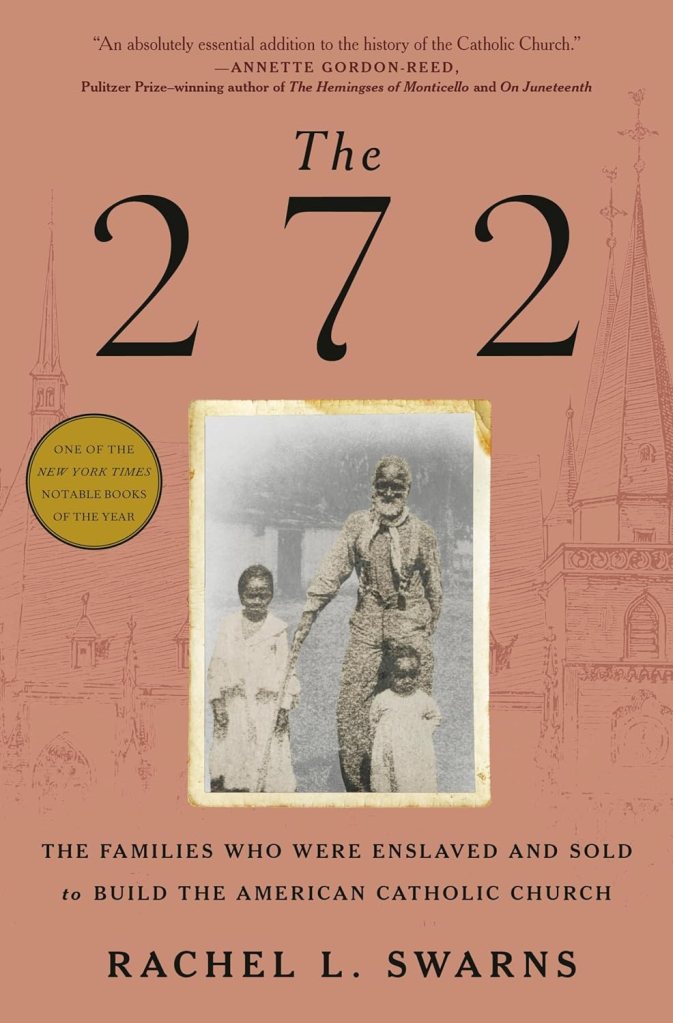
The 272: The Families Who Were Enslaved and Sold to Build the American Catholic Church by Rachel L. Swarns.
The story of the 1838 Jesuit sale of enslaved people to fund Georgetown University made headlines. This is the deeply researched and unsparing history of that sale and what led up to it. In fact the Jesuit Order, from the beginning of their arrival in Maryland, owned plantations and slaves all over the Eastern Shore. The book opens with the story of Ann Joice, a free black woman who sailed from England in the late 1600’s as an indentured servant, but because of her race her papers were torn up and she was enslaved. Her descendants, the Mahoney family, were enslaved on the Jesuit plantations but kept the story of their free origins alive. Swarns also investigates Jesuit leaders, including the ruthless Thomas Mulledy who pressed for the sale, and other priests who tried to protect families from separation. The Mahoneys were separated; their descendants now live in Maryland and Louisiana. The proceeds of the sale funded not only Georgetown University but Catholic institutions all across America. It is a shocking story, but an essential thread in the full tapestry of American history.
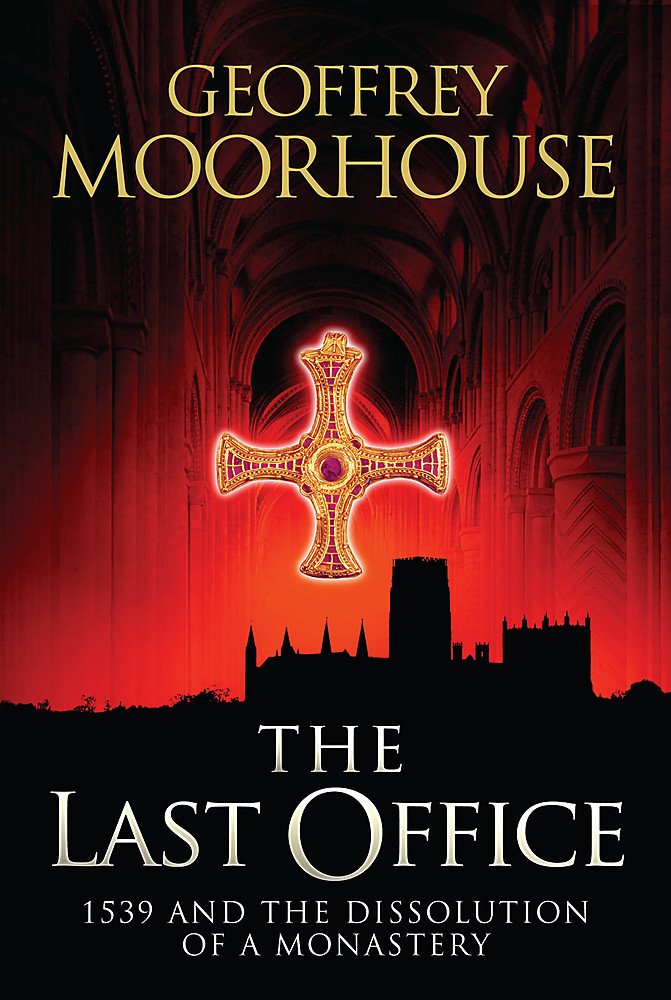
The Last Office: 1539 and the Dissolution of a Monastery by Geoffrey Moorhouse.
If you’ve ever wondered about the resilience of American institutions consider the case of the monasteries under Henry VIII – institutions that had been part of the fabric of English life for over a thousand years were destroyed in less than five. It was this thought that made me pick up a book I’d had on my shelf for some time. It tells the story of the dissolution through the experience of the Benedictine Durham Priory and the religious for whom it was home, as well as the effects on the surrounding community, which had looked to the priory for spiritual and economic support for generations. The priory was founded on the cult of St. Cuthbert whose shrine was a site of pilgrimage. In a shocking scene reported by an eyewitness, Henry’s commissioners desecrated the shrine and even broke open Cuthbert’s coffin. How did the monasteries fall so quickly? The answer is fear. In the first year of the suppression abbots who refused to surrender were executed and their body parts hung on the monastery gates as a warning to all. After this most religious leaders surrendered their houses voluntarily. That’s what happened at Durham, one of the last to surrender. If you became an admirer of Thomas Cromwell after reading the Wolf Hall trilogy, this book will remind you of his brutal side. This is history at its best, with ominous echoes of our own times.
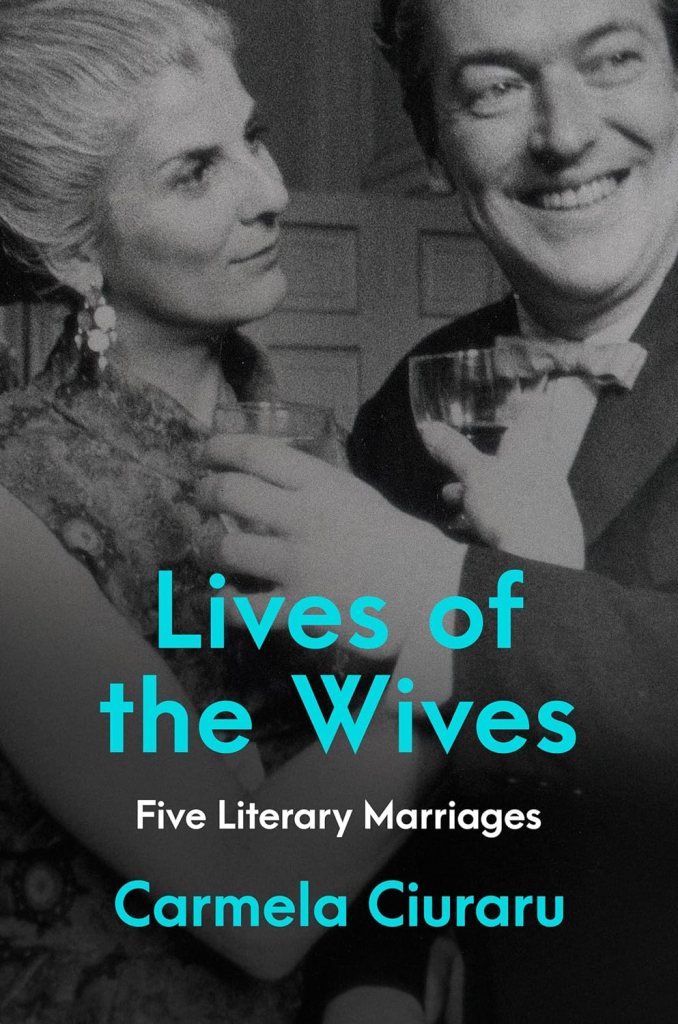
Lives of the Wives: Five Literary Marriages by Carmela Ciuraru.
A cautionary tale for women – never marry a literary genius, or a man who thinks he is one! This is the story of five women who had the misfortune to marry a literary lion and the reader is hard pressed to decide who had it worse. Was it Elaine Dundy, an American writer who married the outsize ego of theater critic Kenneth Tynan who flew into a jealous rage when she wrote a best-seller? Or actress Patricia Neal whose husband Roald Dahl couldn’t stand that she was more famous than he was and turned abusive? Or Elizabeth Jane Howard whose husband Kingsley Amis was so helpless and his needs so great that the only way she could write her own best-sellers was by divorcing him? Even lesbian wives were not spared. Una Troubridge gave up a promising career as a sculptor to live with the imperious Radclyffe Hall. Only the Italian writers Else Morante and Alberto Moravia had anything resembling an equal partnership though it was not without its conflicts. This is a deliciously gossipy book with a bit of gender relations analysis thrown in to justify the gossip. I thoroughly enjoyed it!
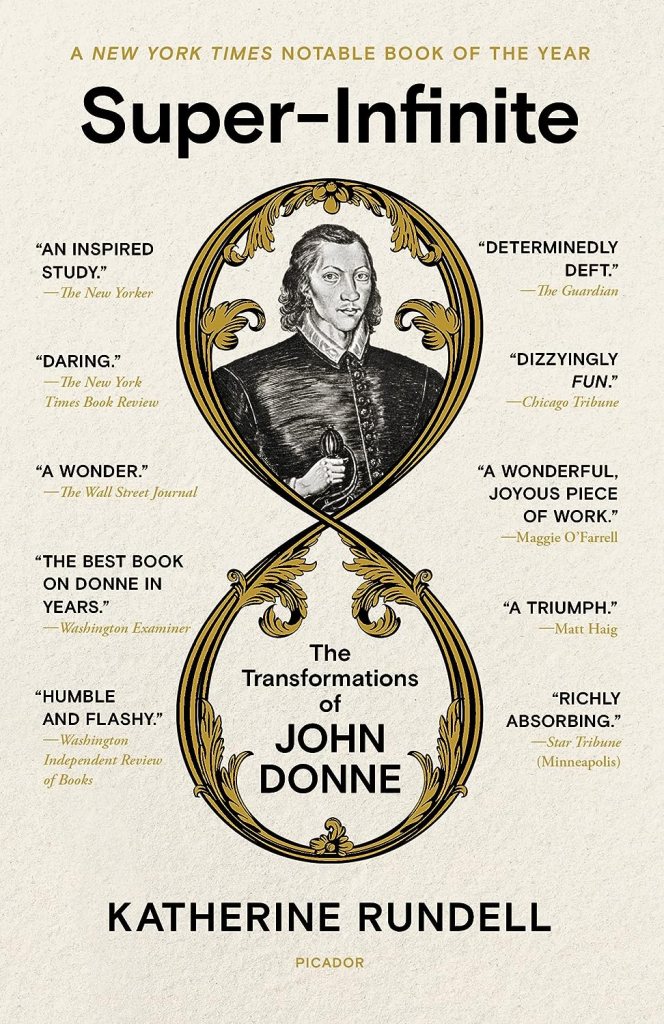
Super-Infinite: The Transformations of John Donne by Katherine Rundell.
Is it possible to have an obsessive emotional affair with a man dead for over 400 years? The intensity of Katherine Rundell’s love and appreciation for Donne, his intellect, and his work suggests the answer is yes. More heat comes off the page in this thrilling book than in any bodice-ripper romance. That said, it’s an intellectual book by a distinguished and talented scholar who brings Donne to life on every page. He was an extraordinary man of many transformations – in his youth he was a dashingly handsome romantic who wrote sexy poetry and was imprisoned for marrying a 16 year old girl without her father’s permission. He struggled to support ten children while suffering constant ill health, and to further his career converted from his Catholic upbringing to Protestantism. Later in life he became a famous preacher who drew crowds to his sermons and was appointed Dean of St. Paul’s Cathedral. His poetry leaps off the page as fresh today as when it was written. I got this book for Christmas last year and it was the first I read in 2023. Writing about it now I want to read it again. Definitely my favorite book of the year.
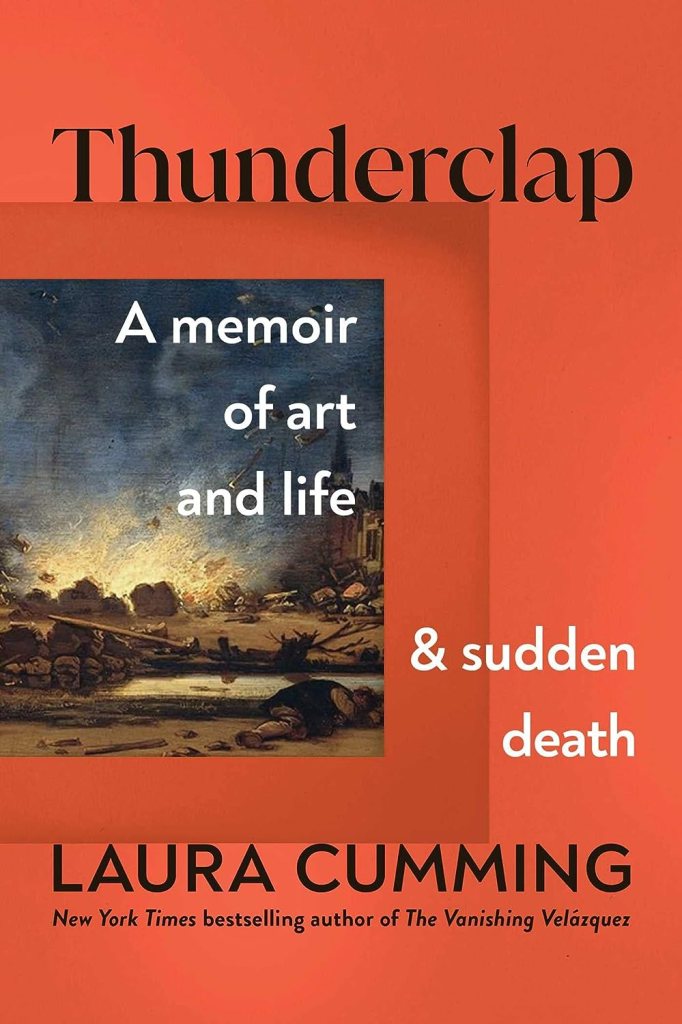
Thunderclap: A Memoir of Art and Life and Sudden Death by Laura Cumming.
I’m happy to read any book about the Dutch Golden Age of painting and this one is a standout. Laura Cumming is an art historian and daughter of a Scottish artist. Here she combines memories of her father, who inspired her to pursue an art career, with a history of the artists who lived in 17th century Delft, particularly Carel Fabritius. The thunderclap was a devastating gunpowder explosion in 1654 that completely destroyed a large area of central Delft, killing many people including the young Fabritius as he painted in his studio. He is best known for his painting of a goldfinch, which had a moment of contemporary fame when it featured on the cover of Donna Tartt’s novel The Goldfinch. Cumming feels about Fabritius much as Katherine Rundell feels about Donne. Though little is know about him and he left only a few paintings she brings him alive, with detailed analysis of his work and his place in the art culture of Delft. His two self-portraits, reproduced here along with many other full color images, are haunting.
I also enjoyed The Art Thief by Michael Finkel, The Secret Life of John Le Carre by Adam Sisman, and The Wager by David Grann.
MYSTERY/SUSPENSE
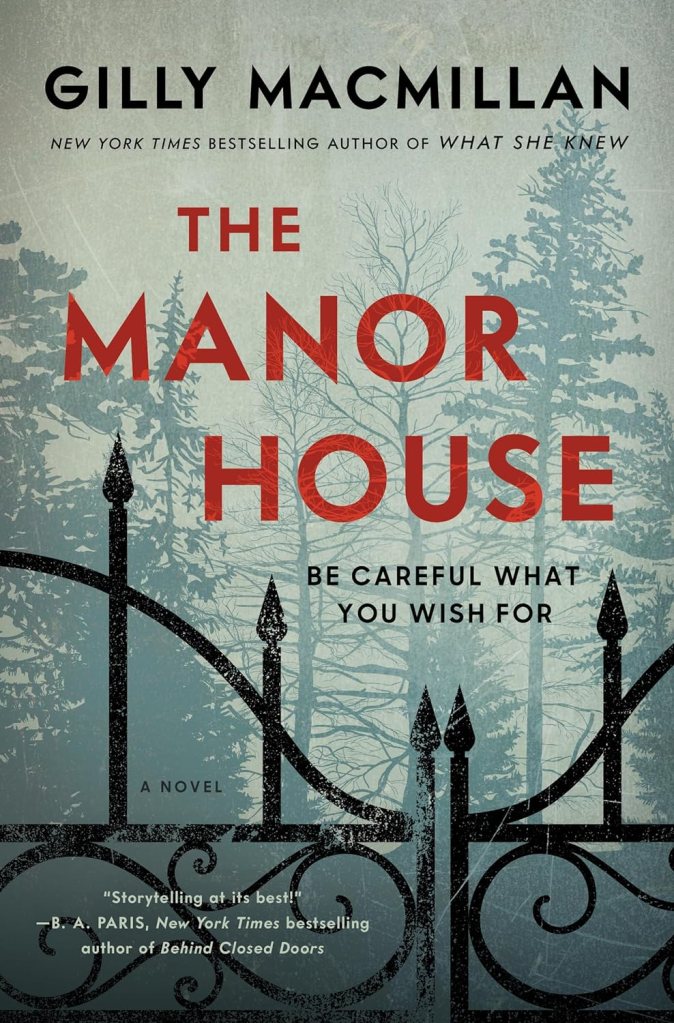
The Manor House by Gilly Macmillan.
Who wouldn’t envy Nicole and Tom, a young couple whose simple lifestyle is upended when they win the lottery? They build their dream house on a beautiful plot of land with dramatic river views in Gloucestershire. But shortly after moving in Nicole finds Tom floating in the pool. The police determine right away that it was no accidental drowning. Nicole realizes she’s a suspect and surrounded by people she cannot trust. Tom’s best friend Patrick, who was hounding the couple for a share of their winnings, shows up but his comforter of the grieving widow act rings false. Then there’s something not quite right about the neighbors in the manor house: a self-important writer, his yoga teacher live-in girlfriend, and their subservient housekeeper, an older woman who lives in the gatehouse. Macmillan pulls off some clever twists you won’t see coming.
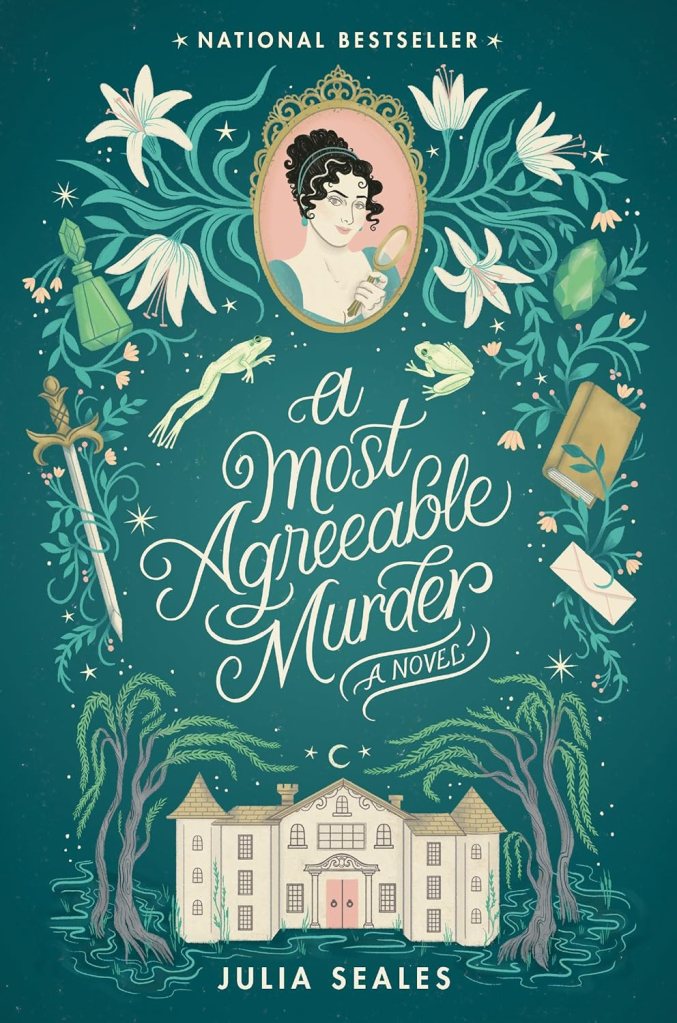
A Most Agreeable Murder by Julia Seales.
This is a most entertaining and witty mashup of a Jane Austen gothic and a murder mystery, set in the imaginary English district of Swampshire. It starts out very Jane – our feisty heroine Beatrice or her sweet sister Louisa must find a husband to prevent their horrible male cousin inheriting the family estate. Eligible bachelor Edmund Croaksworth, one of fiction’s most boring suitors, is invited to a ball where it is hoped he will fall for Louisa. But the ball is disrupted by a murder and Beatrice, who is obsessed with stories of true crime, joins forces with eccentric Inspector Drake to solve the case. Everything in Swampshire is over the top: the place suffers constant hailstorms, a plague of frogs in its famous squelch holes, and the etiquette book which must be strictly adhered to is several thick volumes long. Witty dialogue, a preposterous plot, and lively characters made this the book that was the most fun to read.

Red London by Alma Katsu.
A welcome development in publishing is that as more woman work in national security and spy agencies more women are writing spy fiction. The age of John Le Carre is officially over! I read several examples this year and this was the best, the second in a series. The plot could be taken from today’s headlines about Russian oligarchs. CIA agent Lyndsey Duncan arrives in London to handle a Russian asset. But when Russian oligarch Mikhail Rotenberg’s house in a wealthy enclave is attacked MI6 asks her for help. Her mission is to befriend Rotenberg’s aristocratic English wife Emily and find out who was behind the attack. Has Rotenberg fallen out with Putin or was another nation responsible? Lyndsey manages to insinuate herself into the household and Emily, obviously very unhappy in her marriage, proves a valuable source. Lyndsey races against the clock to uncover the truth, prevent a geopolitical disaster, and protect her new friend from the fallout. A thrilling read in the best tradition of spy fiction, no longer an exclusively male domain.
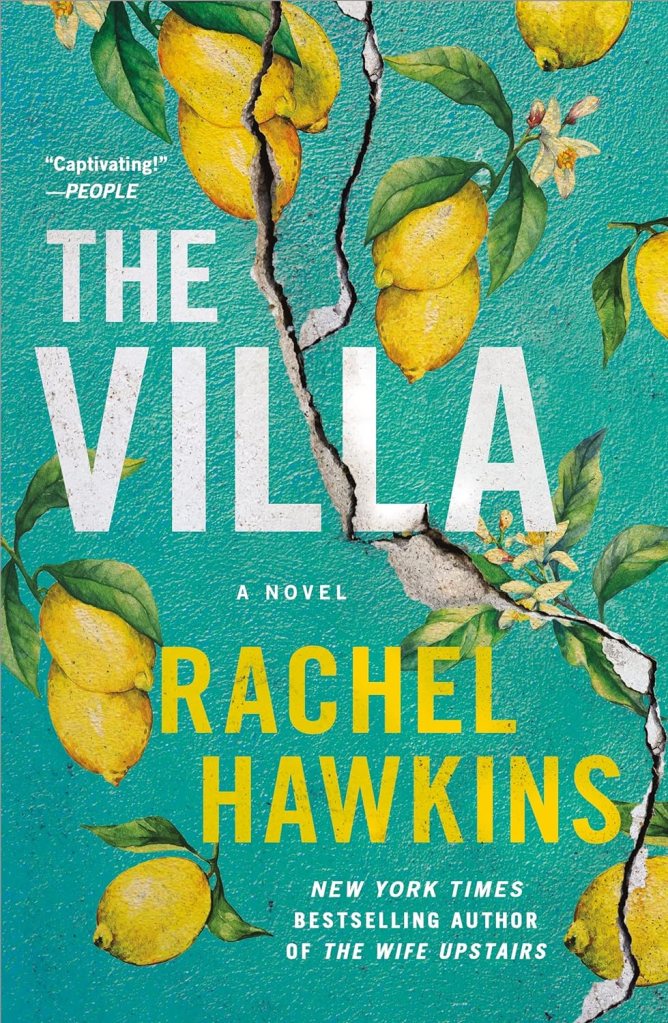
The Villa by Rachel Hawkins.
The most famous summer vacation in literary history was when Lord Byron, Percy and Mary Shelley, and Mary’s half-sister Claire stayed at a villa on Lake Geneva. It was there that Mary Shelley wrote Frankenstein. In Rachel Hawkins latest masterpiece of suspense it is a rock star named Noel Gordon (see what she’s doing there?) who gathers friends at an Italian villa in the summer of 1974 to revive his flagging creativity. Pierce Sheldon, his girlfriend Mari, and her half-sister Lara make up the group. Over the summer Mari will write a renowned horror novel, Lara will compose a platinum album, and one of the group will be murdered. Decades later sisters Emily and Chess vacation at the same villa, now renamed in an attempt to hide its tragic past. But Emily becomes fascinated by the story and begins to investigate. Are clues to what really happened hidden in Mari and Lara’s famous works? This is an absolutely brilliant novel.
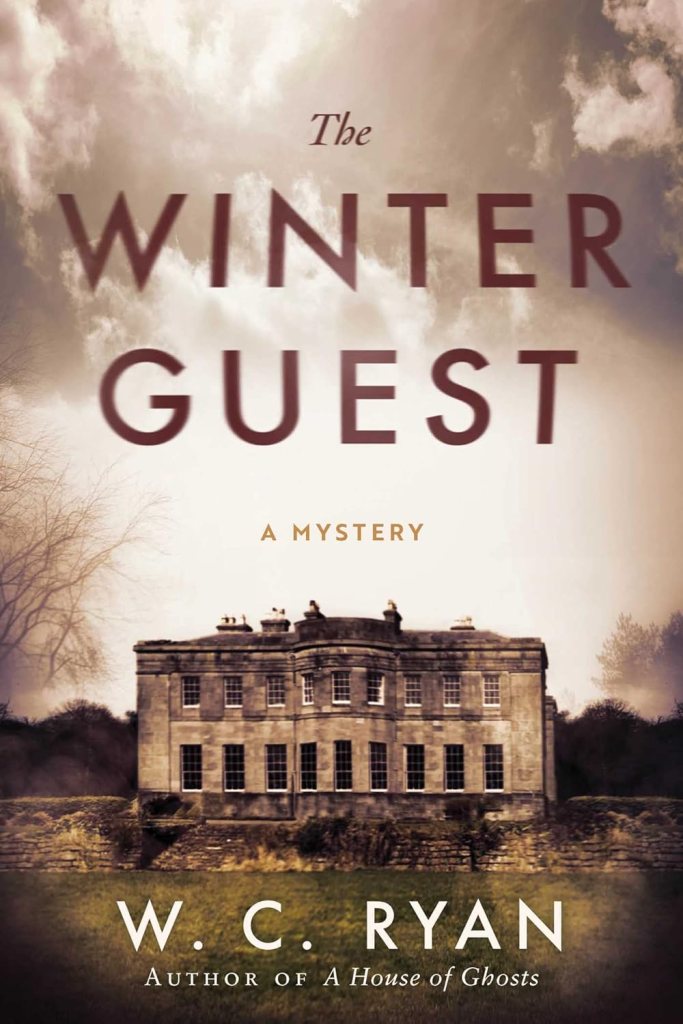
The Winter Guest by W.C. Ryan.
I read this book around the same time I saw the film The Banshees of Inisherin. Both are set in the aftermath of World War I when Ireland descended into civil war. There was so much violence and threat to anyone who had fought in the British army that my own grandparents were among those who fled to England. In this atmospheric mystery novel the divided loyalties of the characters reflect that moment in time. Outside a crumbling mansion of Ireland’s Protestant elite Lord Kilcolgan’s daughter Maud Prendeville is killed in an IRA ambush. Tom Harkin, an undercover IRA intelligence officer, is sent to investigate as the IRA claim they were not responsible for her death, that when they left the scene of the bungled ambush she was alive. Harkin also happens to be Maud’s former fiancé. Her family do not suspect his IRA connections as they welcome his investigation. He is the guest in a grieving household where everyone’s loyalties and motives are unclear. The solution will expose all the contradictions of the Irish conflict.
I also enjoyed Homecoming by Kate Morton, Locust Lane by Stephen Amidon, and None of This is True by Lisa Jewell.
And the WEIRDEST BOOK I read this year.
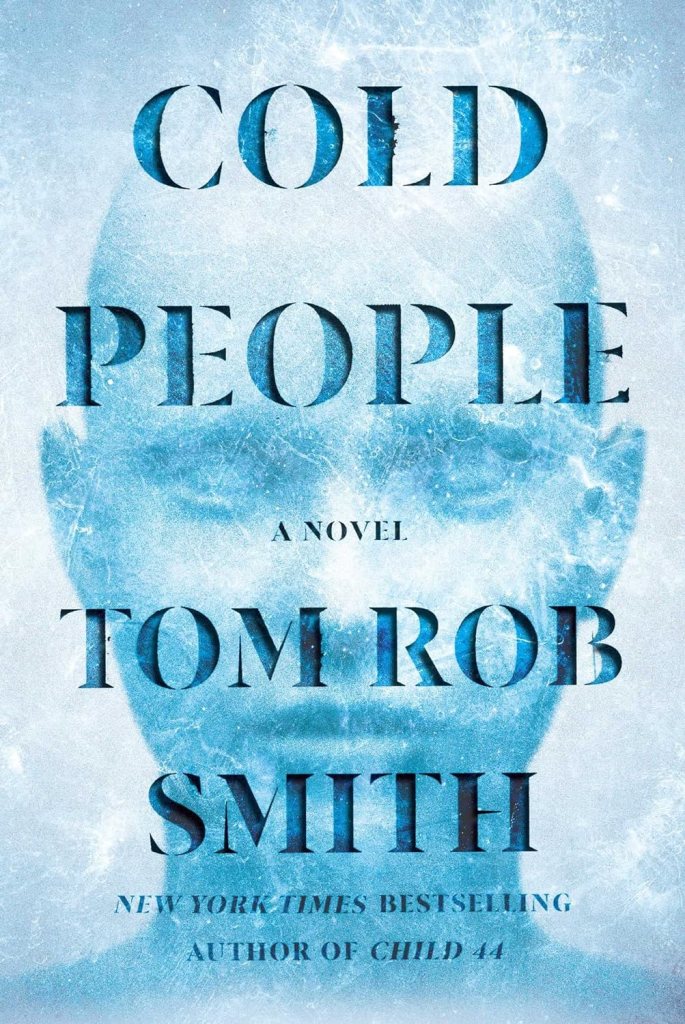
Cold People by Tom Rob Smith.
Author of popular thrillers set in Russia, Smith’s latest goes to an even colder place, Antarctica. Aliens invade Earth’s skies and issue an ultimatum – humans have one month to move to Antarctica; anyone who fails to reach there by the deadline will be killed when the aliens occupy Earth. We never see the aliens and this is not a story of a battle for Earth. It is the story of the remnant of humanity who make it to Antarctica, precious few. Besides the mega-rich who flee on their yachts, governments organize fleets and select the people to save, those they think will be most useful to humanity’s survival in the extreme climate. That includes genetic scientists who are tasked with speeding up evolution to create humans who can live in the cold. What could go wrong? At first the mutations are recognizably human, a girl with the skin of a seal, a boy with scales for skin. But the mutations become more bizarre and mistakes are made. Mistakes that are kept locked up underground in ice caves where the scientists work. Then the mutations find a leader in a creature far stronger and more intelligent than any ordinary human. Who will inherit Antarctica? I cannot say I enjoyed this book, but I could’t put it down and I can’t get it out of my mind.
If you have opinions on any of these books please comment below. And happy reading in 2024!

 Dispatches From the Former New World
Those are all great choices. Happy Reading!
LikeLike
My goodness! A great list of great reads coming up. Will I live long enough? If I really must choose, I’ll go with Father O’Flaherty’s story, MY FATHER’S HOUSE, a natural progression of WWII stories I’ve been reading. My current book is Alice Hoffman’s THE WORLD THAT WE KNEW, set during the Nazi era and mixed with a bit of magical lore. I had just finished BOYS IN THE BOAT and Hoffman’s book is one of three that my husband gifted me this Christmas. And I could go on . . . . .
LikeLike
Well the comment above was supposed to be a reply to you! I guess I clicked the wrong thing!
LikeLike