On Thin Ice

Just after New Year in 1984 a freak ice storm at evening rush hour paralyzed traffic in Montgomery County. Within seconds the wet roads froze into slick ice skating rinks. Nothing could move for hours. Into this chaos stepped the usual first responders, but also, perhaps surprisingly, librarians. All across the County stranded motorists sought refuge in those most welcoming of places, the public libraries.

Recently the retired librarians email group featured a thread of memories of that long ago night. I remember it well. At the Gaithersburg Library drivers abandoned their cars on Montgomery Village Avenue and precariously picked their way across the ice into the library. We didn’t close. We were trapped for hours. My small children were home with my mother so at one point I tried to leave. I didn’t get far from the back door when I could go no further. I was on my hands and knees and then stranded on a tiny ice-free oasis, unable to get to my car or return inside. I was stuck there for about an hour, freezing cold and feeling rather ridiculous. Eventually a police officer drove up and rescued me, helping me back into the library. Everyone was shocked to see me, thinking I was home long before. It wasn’t till about 1:00 in the morning that we were finally able to leave.

The next day, inspired by the story of the Andes plane crash survivors who resorted to cannibalism, I wrote a satirical account of the icy night that was published in The County Express newspaper on January 4th.

Continue reading “On Thin Ice”

An American History Lesson in Iceland

This summer is turning out to be unusually hectic for the author of the Dispatches. So to escape the dog days of a steaming hot summer I take you back to a chilly day in Iceland in the summer of 2015. This post was one of my most popular, first published in The Dabbler in September 2015.

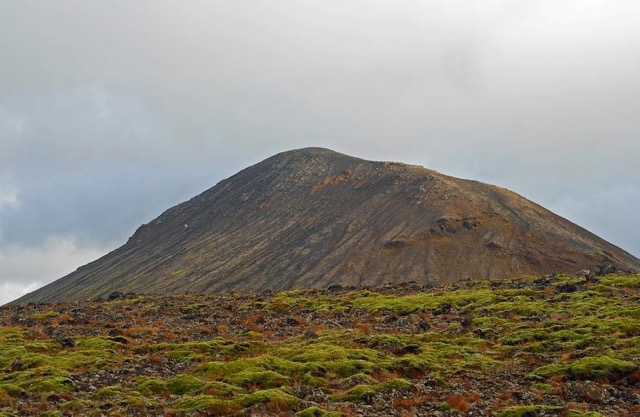
Mt. Fagradalsfjall in Iceland

Sometimes you have to travel far away to learn the history of your own neighborhood. In Iceland this summer we had a chance encounter with a loquacious bus driver who told us a fascinating story from World War II, a story that raises one of the tantalizing “what ifs” of history.

On a characteristically chilly Icelandic morning we waited outside our hotel in Reykjavik for the bus that would take us to the Blue Lagoon, an outdoor spa where we would bathe in warm geothermal waters before taking our flight home. The bus pulled up exactly on time and a ruggedly handsome middle-aged man jumped out to load our luggage. (All the men in Iceland look like Vikings and everything is done with smooth efficiency). “What state are you from?” our driver asked. Afterwards we wondered if he had a story ready for each of the fifty states, for as soon as we answered “Maryland” he announced he had an interesting tale for us and it related to one of the mountains we would be able to see from the Blue Lagoon. “Do you know,” he asked, “how Andrews Air Force Base in Maryland got its name?” We did not. The name is often mentioned in the news because Air Force One is based there, but we had to confess we knew nothing else about it. Our Icelandic bus driver enlightened us.

Continue reading “An American History Lesson in Iceland”

Marvelous Margaret Cavendish

Marvelous is my word. The word most often used by her contemporaries in the 17th century was mad. Mad Margaret Cavendish, Duchess of Newcastle, was a marvel of contradictions. Painfully shy yet hungry for fame, barely educated yet a prolific author whose complete works fill twenty volumes, given to fits of melancholy yet possessed of a supreme self-confidence.

My ambition is not only to be Empress, but Authoress of a whole world.

She published poetry, fiction, plays, and essays on philosophy, science, and government. One of the most notorious and colorful characters of her day, she was renowned for her satirical wit and eccentric dress. In an age when women revealed a great deal of bosom Margaret went further. Attending the theatre in 1667 she wore a dress so low-cut that “her breasts were all laid out to view” according to one breathless report, with “scarlet trimmed nipples.” Among her favorite accessories were nipple tassels and black velvet philosopher’s hats. She “took delight in singularity” wrote an admirer. Samuel Pepys mentions her in his famous diary:

The whole story of this lady is a romance and all she do is romantic… her dress so antik.

Continue reading “Marvelous Margaret Cavendish”

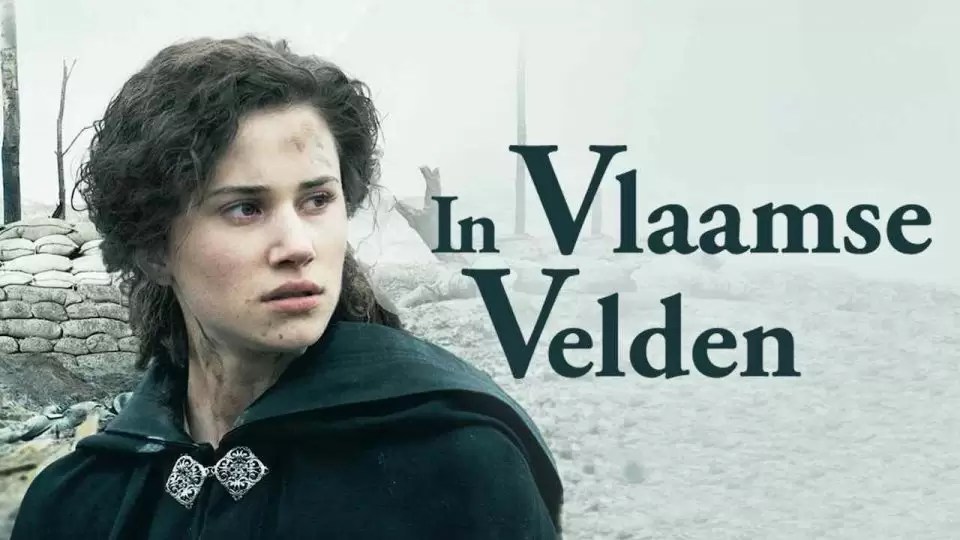
In Vlaamse Velden (In Flanders Fields)

By happenstance this month I watched a Flemish TV series about a family in World War I and read a book by a Flemish author who discovered his house was occupied by an SS officer in World War II. Both were set in Ghent, my mother’s home town, where I spent many happy childhood times and have visited often throughout my life. Both offered a fuller context to the stories passed down to me about my own family’s experiences in the World Wars.

I watched the ten episodes of In Vlaamse Velden on PBS Passport, in Flemish with English subtitles. It was lovely to hear Flemish, a language that surrounded me in my childhood. I felt good when I was able to pick up familiar words and expressions, even some entire sentences, but I did need the subtitles. The series tells the story of Dr. Boesman, a gynecologist, his wife Virginie, sons Vincent and Guillaume, and daughter Marie. Each experiences the war in a different way, illustrating the complex and divided loyalties of the Flemish people during German occupation.

Dr. Boesman believes the Germans will win and that he may at last gain a professorship at the University of Ghent, till now denied to Flemish speakers. The class divide between Flemish and French speaking Belgians is exploited by the Germans who claim a cultural kinship with the Flemish Independence movement. The language divide also compromises the effectiveness of the Belgian Army. The officer class are French-speaking while most of the enlisted men are Flemish and cannot understand their orders. Vincent Boesman plays a crucial role in his unit, translating for the officers and winning promotion. A scene where Vincent’s unit travels towards the front on bicycles underscores the inadequacy of the Belgian forces. Meanwhile free-spirited younger brother Guillaume deserts the army, but is captured by the French and pressed into service. His war experiences will profoundly change him.

Continue reading “In Vlaamse Velden (In Flanders Fields)”

Maria: The Forgotten Bronte

On My Bookshelf the biography of Maria Branwell Bronte, mother to genius.

So much has been written about the Bronte sisters, their brother Branwell, and father Patrick, that we can easily imagine we know them intimately. But one member of this extraordinary family, their mother Maria, remained a shadowy figure until the publication of this first full biography in 2019. In earlier books we glimpsed Maria on her deathbed in the Haworth parsonage crying out in despair “Oh my poor children!” Then she conveniently slipped away, leaving her children to endure the motherless youth that inspired their genius writings. What would Jane Eyre be, after all, without Charlotte’s miserable experience at Cowan Bridge School, the inspiration for Lowood. As far as literary history was concerned, Maria had served her purpose.

So it is revelatory to meet the lively, intelligent, capable young woman who won Patrick Bronte’s heart. And the young Irish curate himself is very different from the severe elderly parson, seen always bent over his books, who lived out a long lonely widowhood. 

Maria Branwell’s early life was more Jane Austen than Bronte. As a member of the gentry she enjoyed a life of festive balls in the Assembly Rooms, theatre in the Playhouse, fine dining, fashionable clothes, and afternoon visits for tea with her many friends. Instead of the bleak Yorkshire moors there was the bustling seaport of Penzance in Cornwall, a scenic little town known for its festivals, smugglers, and mild climate. Sea breezes perhaps, but no wuthering. 

Continue reading “Maria: The Forgotten Bronte”

Nextdoor Neighbors

The ideal neighborhood…

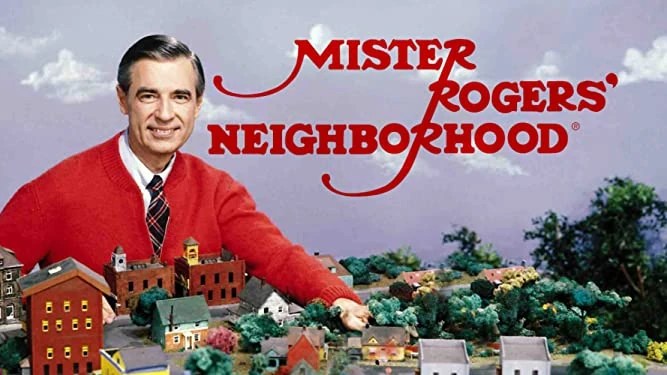
I used to love watching Mr. Rogers’ Neighborhood when my children were small. So calm, so soothing, so… well, neighborly. Sometimes I even watched when the children weren’t around. A restful oasis in a stressful day. In Mr. Rogers’ world all the neighbors were nice and friendly and helpful. Ever ready with a kind word or a helping hand. None of them yelled “get off my lawn!” If only it were so.

Today Mr. Rogers is a sweet memory. If you spend any time on the Nextdoor app, which purports to bring neighbors together, you will find yourself in a dark dystopian world where every teenager in a hoodie is a potential carjacker, every delivery man a potential home invader, and every dog walker intent on spreading dog poop over your lawn. Fear and loathing stalk the posts on Nextdoor, the comment threads a cesspool of complaints, anger, stereotypes, and often outright racism. An occasional lone voice bleats for civility.

…and the not so ideal
Continue reading “Nextdoor Neighbors”

The King’s Bedpost

On My Bookshelf I find a favorite history book about a very strange painting…

             Edward VI and the Pope, unknown artist, oil on wood, c1575

At first glance, maybe even a second or third, this is a mess of a painting. It’s busy with awkwardly positioned figures and decorative elements; there’s nowhere for the eye to rest. The viewer’s eye darts about the various unrelated parts trying to make sense of it all. Then there are the blank squares and the puzzling scene in the upper right, a picture within a picture. The artist is obviously trying to say something, but what?

As Margaret Aston explains in The King’s Bedpost it is best to think of it, not as a painting, but as a comic strip or political cartoon. The blank squares were intended to hold text, just like the speech bubbles of today. For unknown reasons they were not all filled in. The book turns that old saying, a picture is worth a thousand words, on its head, for it takes many thousands of words to explain this one. The painting may be no masterpiece but, Aston says, “undistinguished art can make interesting history.

Explaining the painting takes us on a journey through the Old Testament Kings, sixteenth century Dutch art, crucial decades of the English Reformation when much of the medieval heritage of religious art was destroyed by iconoclastic reformers, and even into Elizabeth I’s private chapel. The painting is visual propaganda for the reformers’ view that all religious images and devotional objects were “Popish abominations” akin to pagan idolatry. Once thought to have been painted during the reign of the boy King Edward VI, seen seated in his Chair of State mounted on a dais, Aston shows that it actually reflects the religious conflicts and anxieties of Elizabeth I’s reign. She also details evidence that the source materials for the painting date to the 1570’s. For the unknown artist’s skills were limited, note the unconvincing size and position of the hands, so he copied much of the painting from other works. This dating is confirmed by the modern science of dendrochronological analysis; the wood panel comes from a tree that was cut down between 1574 and 1590.

Aston begins by identifying the people in the painting, recognizable because they are copies of portraits by various artists produced in the 1560’s and 70’s.. She draws our attention to a horizontal line following the base of the king’s dais dividing the painting into upper and lower sections, upper being good and lower bad. Fashion also divides the groups. In the lower section several of the men sport tonsures, the monastic hair style, branding them as Catholics. In the upper section there are no tonsures but copious beards, the style favored by the Protestant reformers.

Continue reading “The King’s Bedpost”

My Favorite Reading of 2023

Here is my annual list of favorite books in three categories – Fiction, Nonfiction, and Mystery/Suspense. I managed to whittle it down to five favorites in each category. But I’m adding a mention of best sellers and big name books I enjoyed that didn’t quite make it into my final five. And there’s a bonus category for the Weirdest Book I read all year. I hope you find something here to enjoy in 2024.

FICTION

Birnam Wood by Eleanor Catton.
I had never heard of radical gardening collectives before reading this novel set in New Zealand. Instead of disruptive acts of protest they plant vegetable gardens on any unused piece of land they can find. When a remote valley is cut off by a landslide Birnham Wood’s leader Mira sees opportunity on an abandoned farm. But don’t expect a bucolic rural idyll; this situation morphs into a page-turning thriller with a fierce moral vision. An eccentric American billionaire helicopters in claiming he intends to build a survivalist bunker on the farm. Then there’s the clueless businessman who owns the property and an idealistic investigative reporter determined to make his name by finding out what’s really going on. Who can Mira trust as the situation becomes more threatening and volatile? There are plenty of revelations, betrayals, and twists as the plot hurtles to a dramatic conclusion. Gardening has never been so apocalyptic! 

Continue reading “My Favorite Reading of 2023”

Remember Remember…

Remember, remember, the 5th of November,
Gunpowder, treason and plot.
I see no reason
Why gunpowder treason
Should ever be forgot.
Guy Fawkes, Guy Fawkes, ’twas his intent
To blow up the King and the Parliament
Three score barrels of powder below
Poor old England to overthrow
By God’s providence he was catch’d
With a dark lantern and burning match
Holler boys, holler boys, let the bells ring
Holler boys, holler boys
God save the King!

I’ve written about Guy Fawkes Day in a previous post, but this time I want to follow up on a clue that the Catholic plot might have been hatched in a house near where I grew up. While reading Lines on the Underground for my September post I came upon this quote from Daniel Defoe, written over a hundred years after the foiled plot:

Continue reading “Remember Remember…”

From Abbess Roding to Yubberton

On My Bookshelf I discover the weird and wonderful history of English Place Names.

If you spend enough time in Great Sinns, Cornwall, you may find yourself on the road to Purgatory, Oxfordshire. Don’t take the fork to Pity Me, Durham, but seek forgiveness in Come-To-Good, another picturesque Cornish hamlet. Concocting imaginary itineraries like this is one of the pleasures of reading English Place Names by H. G. Stokes published in 1948. My copy shows its age, a bit tattered and worn. Stokes writes like a rather stuffy pedantic local history enthusiast, but his book is full of fascinating facts about the origin of English place names, many of them downright Rhude (Durham) like Mucking (Essex), Spital-in-the-Street (Lincolnshire), and Stank (Yorkshire).

English place names, according to Stokes, originated as simple colloquial descriptions, word pictures of a place. Before the age of maps or GPS people found their way from place to place by carrying the word pictures in their heads. By studying the original meanings of the words we can see a picture of what England looked like as much as 2,000 years ago. The words describe a rural landscape of woodland and heath, marsh and fen, hills and valleys, rivers and streams, dotted with dwellings and small settlements. Most of the oldest names are Celtic and Anglo-Saxon. Here are some of the most common name fragments and their meanings:

Continue reading “From Abbess Roding to Yubberton”