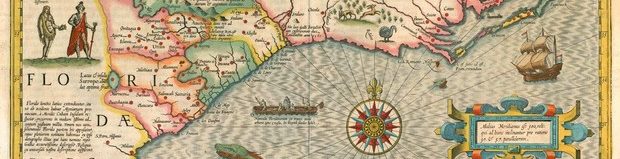

Fifty years ago this month I arrived in New York on a student charter flight and traveled to San Francisco on a Greyhound bus. This is my account of my 1970 trip, first published in The Dabbler in June 2012.
The kiss was the longest, most passionate I had ever seen outside a movie. The passengers craned their heads above the seats for a better view while the driver tapped his fingers impatiently on the steering wheel. The young couple stood in the bus doorway, he on the dusty ground, she leaning into him from the bottom step. We were somewhere in America, the land spreading flat and empty and endless all around. The scene might have had all the emotional drama of a classic movie lovers parting, but we all knew these lovers had met a mere 24 hours before.
This is one of the most vivid memories of my cross-country journey, New York City to San Francisco, in the fall of 1970. I wish I could tell you that I travelled in a painted, Continue reading “Across America by Greyhound Bus”
 I bought this book on impulse because I will read anything about Bruegel. Perhaps it is my Flemish heritage that draws me to his work. I imagine my ancestors among the peasant crowds in his village scenes. It was only when I held the book in my hands that I recognized the author’s name. Toby Ferris wrote for The Dabbler, the site that first hosted my Dispatches, and he created
 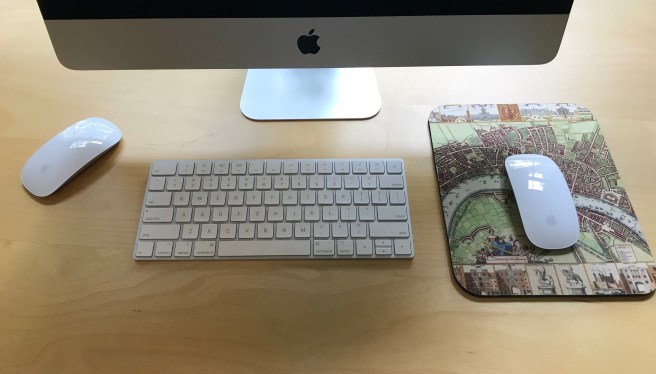 My mouse was misbehaving. It sat obediently on its little pad, but when I clicked nothing happened. Several useless clicks later I resorted to tech troubleshooting 101 and restarted my Mac. Success! The mouse capered about happily as I clicked away. But then something really strange happened. It seemed to have a mind of its own, racing around the screen wildly when I wasn’t even touching it. Was this the moment the tech wizards predict, the moment when the machines take over?
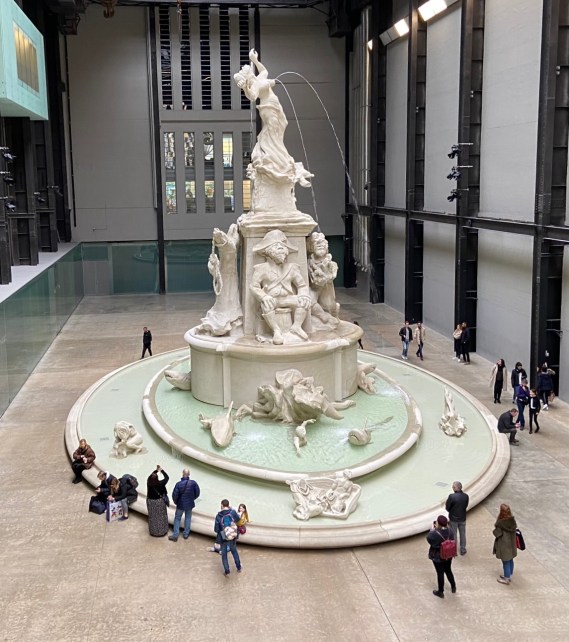 I wasn’t sure what I was looking at. Viewed from the top of the long sloping floor of the former power station it looked like an enormous tiered wedding cake. Perhaps it was the effect of the bland white surface that brought cake frosting to mind. The sculpture stood at the far end of the cavernous Turbine Hall in Tate Modern, where on previous visits we had seen other art installations, none particularly memorable. This would be different. As we came closer we heard the water. The tiers formed not a cake but a fountain, water
 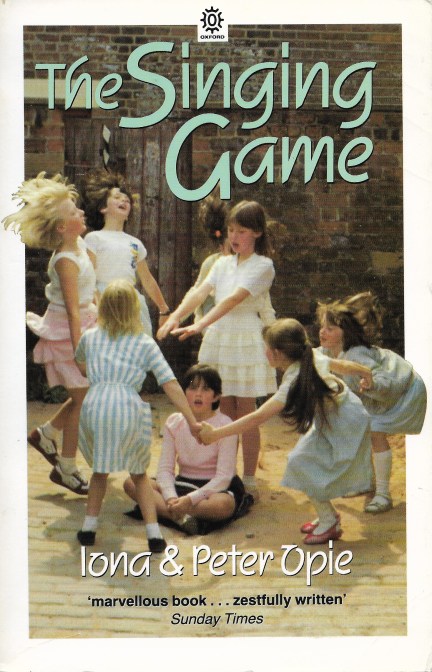 Perhaps it was the restlessness induced by quarantine that had me prowling my own bookshelves in search of diversion. I needed a break from the world of Thomas Cromwell in Hilary Mantel’s The Mirror and the Light. (I know it is tantamount to sacrilege to criticize Miss Mantel, whose Cromwell trilogy I agree is a magnificent achievement, but did we need the menu for his every meal in the year leading up to his execution, surely the last meal would have been sufficient?) In this grumpy mood I came upon The Singing Game by Iona and Peter Opie, the legendary English folklorists, a book I hadn’t picked up
 This is an update to the tale told in my earlier post

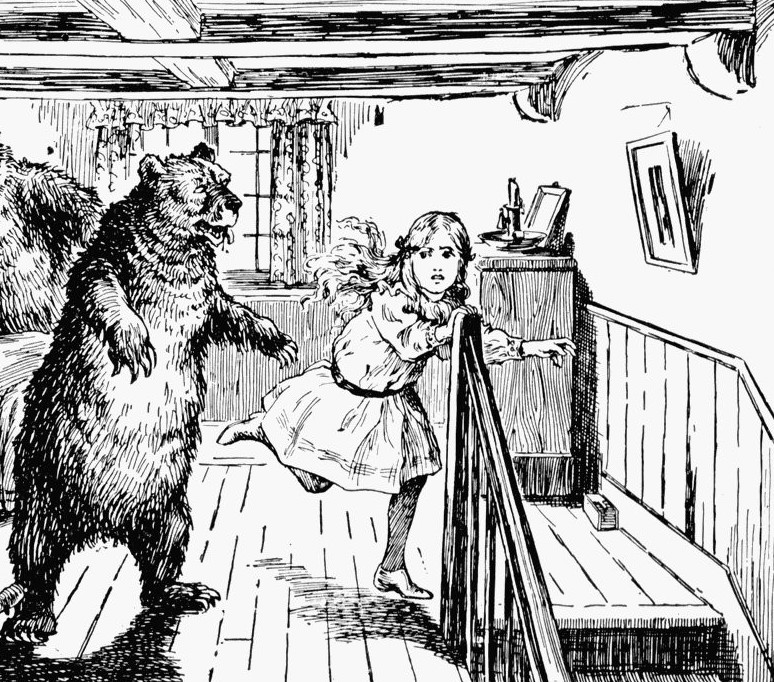 When I was very small my Uncle Lievin saved me from a bear. I was in bed at my grandmother’s house in Belgium when he came running up the stairs chased by a bear. Don’t worry, he assured me, I’ll get it. He grabbed a rifle from behind the door and stood on guard in the doorway poking at the bear as it tried to get past him to eat me up. At last, with many dramatic grunts and shouts, he drove it down the stairs and out the door. Now you’re safe, he assured me with a hug, the bear is gone. My uncle was my protector and my hero. How brave he was!
 Dispatches From the Former New World