
The Tudor Autopen

Henry VIII’s signature

On 30th December 1546 King Henry VIII lay dying, bloated beyond recognition and in excruciating pain from a festering wound on his leg, the result of a jousting accident years before. When his councillors brought him the final revision of his will he was too weak to hold a pen. So the document was signed using the dry stamp, a Tudor version of the autopen which has become so controversial recently. The dry stamp was a mechanism screwed onto paper to make an impression of the king’s signature, which was then inked over by one of his officials. Henry had authorized the use of this device in 1545 as his infirmities grew more severe.

Jefferson’s Polygraph Machine

Our current autopen issue is just another of the baseless scandals “trumped” up by President Trump and his acolytes to serve his interests. If autopen signatures on the pardons issued by President Biden can be declared invalid, then Trump is free to charge all his enemies with imaginary crimes. In fact many presidents as far back as Thomas Jefferson, including Trump himself, have used some type of autopen to sign official documents. Jefferson called his Polygraph Machine “the finest invention of the present age.” Richard Nixon, Lyndon Johnson, John F. Kennedy, and many other presidents routinely used an autopen. The question of its legality was definitively answered during the George W. Bush presidency in a 2005 memo from the Office of Legal Counsel. The challenge to Biden’s autopen signatures is unlikely to change history. But the case of Henry VIII’s will was of far more consequence for the history of the English monarchy.

Henry’s complicated marital history and mercurial temperament had necessitated passing three different Succession Acts during his reign. The first two disinherited his daughters Mary and Elizabeth, declaring them illegitimate because his marriages to their mothers Catherine of Aragon and Ann Boleyn were invalidated, by divorce and treason respectively. The third Succession Act of 1543 named Edward, his longed for son by third wife Jane Seymour, as his heir. Mary and Elizabeth were declared legitimate after all and reinstated to the succession order if Edward died childless. If all three should die childless, an unlikely outcome that would actually come to pass, then the succession should follow Henry’s last will. The act included the fateful language that the succession order in his will would be valid if “signed with his most gracious hand.”

Continue reading “The Tudor Autopen”

Charlotte Bronte and Elizabeth Gaskell

I first read Elizabeth Gaskell’s Life of Charlotte Bronte when I was a teenager, newly enraptured by the Bronte sisters’ novels and the romantic bleakness of the Yorkshire moors. I remember the spell cast by the opening chapter as Gaskell takes us on her journey to visit Charlotte in Haworth. It is as though the reader is her companion on the Leeds and Bradford railway line to Keighley, then by carriage four miles to Haworth, past farms and workmen’s cottages and up the steep hill to the church, the parsonage, and the graveyard “terribly full of upright tombstones.” Gaskell, herself a novelist, paints an evocative picture of the landscape and atmosphere. We hear the horses’ hooves slipping on the paving stones of the steep street and breathe the “dim and lightless” air full of smoke from the clustered chimneys. I hadn’t read many biographies before and had expected it to start with Charlotte’s birth. I was so impressed with this way of leading the reader first into the world of the subject that my young self decided all biographies should be like this, that Elizabeth Gaskell had set the standard by which all others should be judged. It was one of the most memorable reading experiences of my life.

On publication in 1857, two years after Charlotte’s death, the Life was an immediate bestseller and has remained in print ever since, considered a classic of biography. What I did not know until recently, when I read a new book on the subject, is that on first publication Gaskell’s Life faced a storm of controversy causing major problems for the author and publisher.

Continue reading “Charlotte Bronte and Elizabeth Gaskell”

Jane Austen’s Favorite Authors

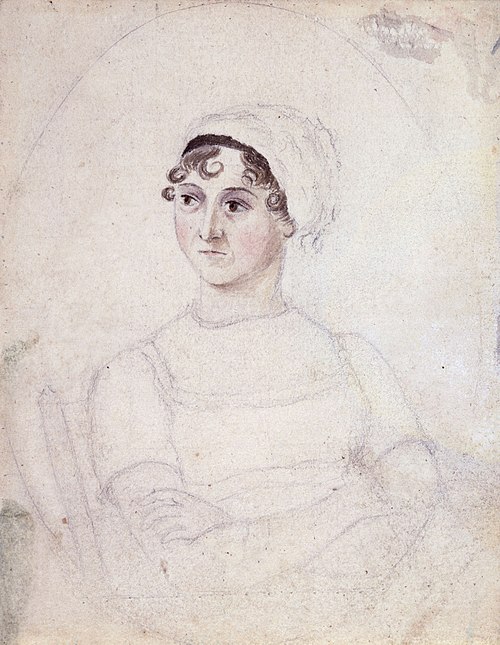
Portrait of Jane Austen by her sister Cassandra

Almost everyone reads Jane Austen at some point in their lives, but what did Jane herself like to read? She left plenty of clues in her own books. Many of her characters express their opinion of books in a way that gives us insight into their personalities. For instance in Northanger Abbey Catherine Morland, about to imagine herself the heroine of her own Gothic adventure, declares:

I have read all Mrs. Radcliffe’s works, and most of them with great pleasure. The Mysteries of Udolpho, when I had once begun it, I could not lay down again; I remember finishing it in two days — my hair standing on end the whole time.

There are further clues in Austen’s letters to friends and family, who often exchanged opinions on the authors of the day. Austen even used the opinion of a book as a test of character. In a letter to her sister Cassandra Fanny Burney’s novel Camilla is the test for one new acquaintance:

There are two Traits in her Character which are pleasing; namely she admires Camilla, & drinks no cream in her Tea.

In Jane Austen”s Bookshelf rare book collector Rebecca Romney follows these clues in a quest to find and read books by Austen’s favorite authors. She hunts for editions that date to Austen’s lifetime and has a book expert’s eye for beautiful bindings, which she describes in loving detail. And to her surprise she thoroughly enjoys most of these books, finding them worthy of sitting alongside Austen on her bookshelf. Her reading raises a question: why have these women authors been mostly forgotten, while Austen is remembered as the only great woman writer of her time, the only one worthy of inclusion in the Canon of enduring classics? Romney finds answers in the writings of nineteenth and early twentieth century literary critics, almost all male. 

As I read about these authors and their books I began to compile my own reading list for the rest of the summer; The Mysteries of Udolpho is already downloaded to my Kindle. But I found the life stories of these women as compelling as any novel, and marveled at their ability to write despite the sometimes shocking travails they endured.

Meet Jane Austen’s favorite authors:

Frances Burney (1752-1840)

Frances Burney began writing as a teenager and published her first novel, Evelina, in 1778. It is a coming-of-age story of an orphan girl who leaves the countryside for London and her experiences there in the search for happiness. Evelina follows the tradition of Samuel Richardson’s Pamela (1740) and Henry Fielding’s The History of Tom Jones (1749) but is distinguished for its emotional complexity and vivid portrayal of the heroine’s interior world. The book was an immediate sensation. Even the king and queen read it. Samuel Johnson, the most famous literary critic of the day, said he could recite entire scenes from memory and declared “Henry Fielding never did anything equal.” It was from Burney’s second novel Cecilia that Austen borrowed the phrase Pride and Prejudice. Rebecca Romney tracks down the exact sentence:

Continue reading “Jane Austen’s Favorite Authors”

Kings and Commonwealth: a concert for our times

Does a concert of 16th and 17th century music have any relevance to our present moment?

The last thing I could have imagined as I sat in my high school classroom laboring over a test about the Rump Parliament was that decades in the future, in a far country, I would attend a concert featuring a ballad about the Rump Parliament. The Rump Parliament you ask? Well it’s one of those obscure English history topics like rotten boroughs or Lambert Simnel that you would be expected to know about for an exam. Hearing the popular ballads of the time would certainly have made it more interesting.

Long before newspapers, magazines, and media, street ballads were a form of political commentary and satire. The Folger Consort drew on these sources for their May concert Kings and Commonwealth, music of the English Civil War. 

The program began with a Tudor Prelude, a reminder that it was the excesses of tyrannical kings that led to the Civil War. By chance I had just watched the final episode of Wolf Hall: The Mirror and the Light ending with Thomas Cromwell’s execution. Now I was treated to a broadside ballad celebrating his demise. Hilary Mantel created a sympathetic portrait of Cromwell in her novels. But at the time of his death Cromwell was a despised figure, hated for confiscating the wealth of the monasteries to enrich the king and himself, and for turning away from the Catholic faith. These themes come up in the ballad Trolle on Away, as well as distain for his humble origins.The meaning of the word trolle is obscure but may be related to a Middle English word for rolling or trundling an object, suggesting dragging Cromwell to his fate. 

Continue reading “Kings and Commonwealth: a concert for our times”

Marvelous Margaret Cavendish

Marvelous is my word. The word most often used by her contemporaries in the 17th century was mad. Mad Margaret Cavendish, Duchess of Newcastle, was a marvel of contradictions. Painfully shy yet hungry for fame, barely educated yet a prolific author whose complete works fill twenty volumes, given to fits of melancholy yet possessed of a supreme self-confidence.

My ambition is not only to be Empress, but Authoress of a whole world.

She published poetry, fiction, plays, and essays on philosophy, science, and government. One of the most notorious and colorful characters of her day, she was renowned for her satirical wit and eccentric dress. In an age when women revealed a great deal of bosom Margaret went further. Attending the theatre in 1667 she wore a dress so low-cut that “her breasts were all laid out to view” according to one breathless report, with “scarlet trimmed nipples.” Among her favorite accessories were nipple tassels and black velvet philosopher’s hats. She “took delight in singularity” wrote an admirer. Samuel Pepys mentions her in his famous diary:

The whole story of this lady is a romance and all she do is romantic… her dress so antik.

Continue reading “Marvelous Margaret Cavendish”

Maria: The Forgotten Bronte

On My Bookshelf the biography of Maria Branwell Bronte, mother to genius.

So much has been written about the Bronte sisters, their brother Branwell, and father Patrick, that we can easily imagine we know them intimately. But one member of this extraordinary family, their mother Maria, remained a shadowy figure until the publication of this first full biography in 2019. In earlier books we glimpsed Maria on her deathbed in the Haworth parsonage crying out in despair “Oh my poor children!” Then she conveniently slipped away, leaving her children to endure the motherless youth that inspired their genius writings. What would Jane Eyre be, after all, without Charlotte’s miserable experience at Cowan Bridge School, the inspiration for Lowood. As far as literary history was concerned, Maria had served her purpose.

So it is revelatory to meet the lively, intelligent, capable young woman who won Patrick Bronte’s heart. And the young Irish curate himself is very different from the severe elderly parson, seen always bent over his books, who lived out a long lonely widowhood. 

Maria Branwell’s early life was more Jane Austen than Bronte. As a member of the gentry she enjoyed a life of festive balls in the Assembly Rooms, theatre in the Playhouse, fine dining, fashionable clothes, and afternoon visits for tea with her many friends. Instead of the bleak Yorkshire moors there was the bustling seaport of Penzance in Cornwall, a scenic little town known for its festivals, smugglers, and mild climate. Sea breezes perhaps, but no wuthering. 

Continue reading “Maria: The Forgotten Bronte”

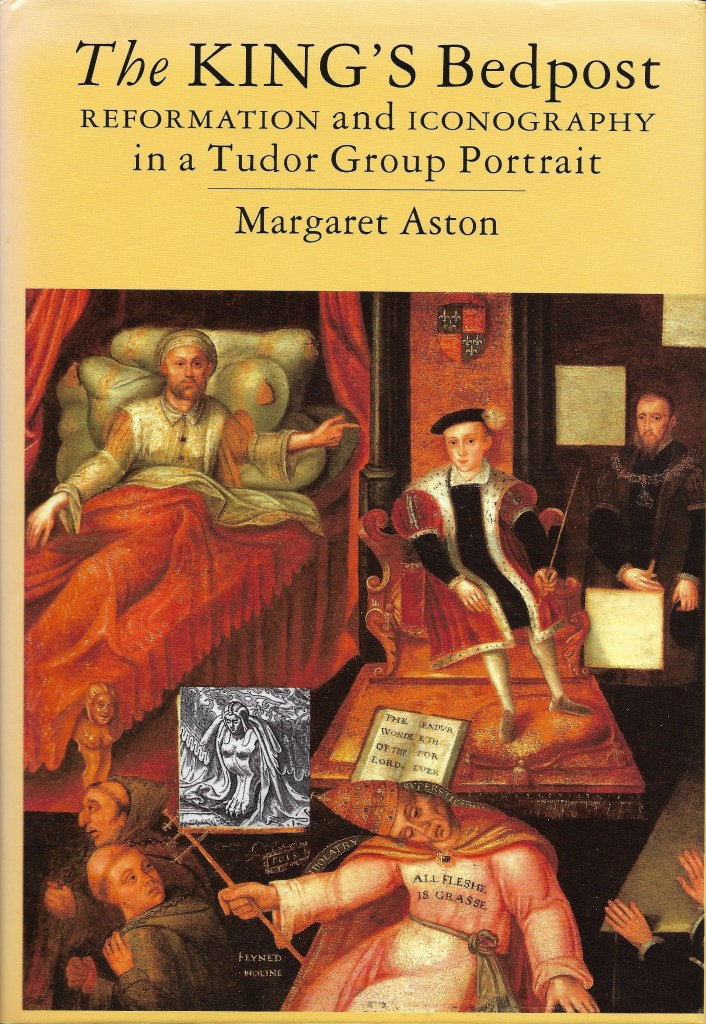
The King’s Bedpost

On My Bookshelf I find a favorite history book about a very strange painting…

             Edward VI and the Pope, unknown artist, oil on wood, c1575

At first glance, maybe even a second or third, this is a mess of a painting. It’s busy with awkwardly positioned figures and decorative elements; there’s nowhere for the eye to rest. The viewer’s eye darts about the various unrelated parts trying to make sense of it all. Then there are the blank squares and the puzzling scene in the upper right, a picture within a picture. The artist is obviously trying to say something, but what?

As Margaret Aston explains in The King’s Bedpost it is best to think of it, not as a painting, but as a comic strip or political cartoon. The blank squares were intended to hold text, just like the speech bubbles of today. For unknown reasons they were not all filled in. The book turns that old saying, a picture is worth a thousand words, on its head, for it takes many thousands of words to explain this one. The painting may be no masterpiece but, Aston says, “undistinguished art can make interesting history.

Explaining the painting takes us on a journey through the Old Testament Kings, sixteenth century Dutch art, crucial decades of the English Reformation when much of the medieval heritage of religious art was destroyed by iconoclastic reformers, and even into Elizabeth I’s private chapel. The painting is visual propaganda for the reformers’ view that all religious images and devotional objects were “Popish abominations” akin to pagan idolatry. Once thought to have been painted during the reign of the boy King Edward VI, seen seated in his Chair of State mounted on a dais, Aston shows that it actually reflects the religious conflicts and anxieties of Elizabeth I’s reign. She also details evidence that the source materials for the painting date to the 1570’s. For the unknown artist’s skills were limited, note the unconvincing size and position of the hands, so he copied much of the painting from other works. This dating is confirmed by the modern science of dendrochronological analysis; the wood panel comes from a tree that was cut down between 1574 and 1590.

Aston begins by identifying the people in the painting, recognizable because they are copies of portraits by various artists produced in the 1560’s and 70’s.. She draws our attention to a horizontal line following the base of the king’s dais dividing the painting into upper and lower sections, upper being good and lower bad. Fashion also divides the groups. In the lower section several of the men sport tonsures, the monastic hair style, branding them as Catholics. In the upper section there are no tonsures but copious beards, the style favored by the Protestant reformers.

Continue reading “The King’s Bedpost”

Remember Remember…

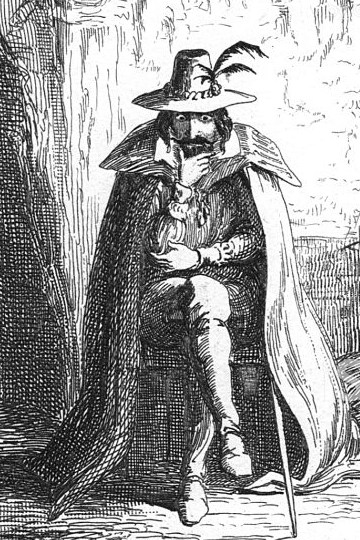
Remember, remember, the 5th of November,
Gunpowder, treason and plot.
I see no reason
Why gunpowder treason
Should ever be forgot.
Guy Fawkes, Guy Fawkes, ’twas his intent
To blow up the King and the Parliament
Three score barrels of powder below
Poor old England to overthrow
By God’s providence he was catch’d
With a dark lantern and burning match
Holler boys, holler boys, let the bells ring
Holler boys, holler boys
God save the King!

I’ve written about Guy Fawkes Day in a previous post, but this time I want to follow up on a clue that the Catholic plot might have been hatched in a house near where I grew up. While reading Lines on the Underground for my September post I came upon this quote from Daniel Defoe, written over a hundred years after the foiled plot:

Continue reading “Remember Remember…”

From Abbess Roding to Yubberton

On My Bookshelf I discover the weird and wonderful history of English Place Names.

If you spend enough time in Great Sinns, Cornwall, you may find yourself on the road to Purgatory, Oxfordshire. Don’t take the fork to Pity Me, Durham, but seek forgiveness in Come-To-Good, another picturesque Cornish hamlet. Concocting imaginary itineraries like this is one of the pleasures of reading English Place Names by H. G. Stokes published in 1948. My copy shows its age, a bit tattered and worn. Stokes writes like a rather stuffy pedantic local history enthusiast, but his book is full of fascinating facts about the origin of English place names, many of them downright Rhude (Durham) like Mucking (Essex), Spital-in-the-Street (Lincolnshire), and Stank (Yorkshire).

English place names, according to Stokes, originated as simple colloquial descriptions, word pictures of a place. Before the age of maps or GPS people found their way from place to place by carrying the word pictures in their heads. By studying the original meanings of the words we can see a picture of what England looked like as much as 2,000 years ago. The words describe a rural landscape of woodland and heath, marsh and fen, hills and valleys, rivers and streams, dotted with dwellings and small settlements. Most of the oldest names are Celtic and Anglo-Saxon. Here are some of the most common name fragments and their meanings:

Continue reading “From Abbess Roding to Yubberton”

Lines on the Underground

On My Bookshelf I rediscover a book I bought by mistake…

Have you ever bought a book thinking it was one thing and it turned out to be quite another? That’s what happened when I picked up this book in a London used book store years ago. I thought Lines on the Underground referred to the London Transport project of posting lines of poetry in the trains to give strap-hanging commuters something more interesting to read than ads. Started in January 1986 as an experiment, the project was so popular it continues to this day. I knew an anthology of the poems had been published and I assumed this was it, adding it to the pile of books I always end up buying when in London.

But when I got home and opened it up I found something quite different, but marvelous in its own way, with a clever pun in the title. This book contains not only lines of poetry but prose as well, quotations from literature, guidebooks, and historical writing from myriad sources past and present. The book is arranged by Underground Line with each station in order of travel receiving one or more quotations. So you could ride on the Circle Line, for example, book in hand, and follow along station by station with interesting snippets of reading about each place. All 270 stations that existed at the time of publication in 1994 are covered.

Continue reading “Lines on the Underground”