On My Bookshelf the biography of Maria Branwell Bronte, mother to genius.

So much has been written about the Bronte sisters, their brother Branwell, and father Patrick, that we can easily imagine we know them intimately. But one member of this extraordinary family, their mother Maria, remained a shadowy figure until the publication of this first full biography in 2019. In earlier books we glimpsed Maria on her deathbed in the Haworth parsonage crying out in despair “Oh my poor children!” Then she conveniently slipped away, leaving her children to endure the motherless youth that inspired their genius writings. What would Jane Eyre be, after all, without Charlotte’s miserable experience at Cowan Bridge School, the inspiration for Lowood. As far as literary history was concerned, Maria had served her purpose.
So it is revelatory to meet the lively, intelligent, capable young woman who won Patrick Bronte’s heart. And the young Irish curate himself is very different from the severe elderly parson, seen always bent over his books, who lived out a long lonely widowhood.
Maria Branwell’s early life was more Jane Austen than Bronte. As a member of the gentry she enjoyed a life of festive balls in the Assembly Rooms, theatre in the Playhouse, fine dining, fashionable clothes, and afternoon visits for tea with her many friends. Instead of the bleak Yorkshire moors there was the bustling seaport of Penzance in Cornwall, a scenic little town known for its festivals, smugglers, and mild climate. Sea breezes perhaps, but no wuthering.
Maria was born on April 15th 1783 to Thomas Branwell, a prosperous merchant and town dignitary, and his wife Anne. Like so many couples in those times her parents had already lost five babies. She was one of four children out of twelve to live to adulthood. One sister, Elizabeth, would care for the Bronte children after Maria’s death. The family were ardent followers of John Wesley’s Methodism, but piety did not preclude a little piracy. Thomas was involved in the town’s famous smuggling trade to avoid the import taxes levied to pay for war with France.
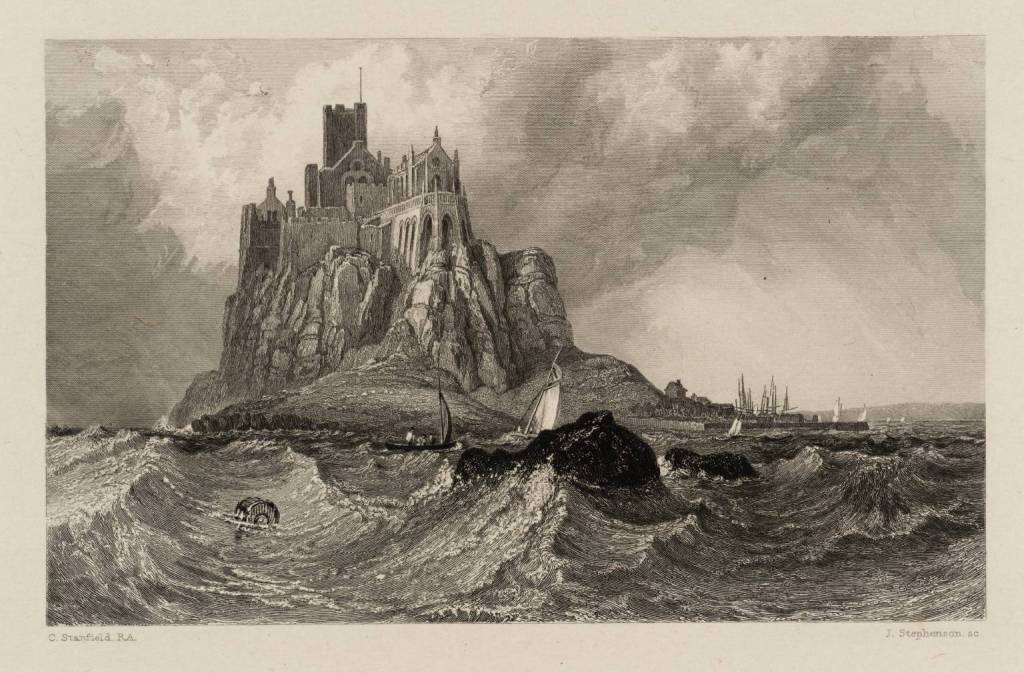
The Branwells were great storytellers steeped in Celtic traditions, local folklore, and ghost stories. John Wesley himself believed in ghosts and even wrote a ghost story, The Haunting of Epworth Rectory: An Account of the Disturbances in My Father’s House. Since the Branwells knew Wesley personally it is likely this book was in the family library. The landscape around Penzance was full of myths and strange tales. Across the water stood the rocky island of St. Michaels Mount with legends going back to its time as an Iron Age fort, a medieval priory, and Civil War stronghold. Mermaids were said to lure unlucky sailors to their death, while the lucky were guided to safety by St. Michael. Maria passed on these stories to her young children, stocking their imaginations with material for their own imaginary worlds in their childhood writings.

We know Maria loved reading. She was a member of the Penzance Ladies Book Club which loaned out about fifty books a year. Most popular were authors in the Gothic tradition mixing romance with the supernatural, like Anne Radcliffe and Clara Reeve. A particular favorite was The Castle of Wolfenbach by Eliza Parsons. In the opening scene heiress Matilda flees her lecherous uncle’s castle during an obligatory thunderstorm and faints on the doorstep of a humble cottage where she seeks refuge. Quintessential Gothic fare. Maria also subscribed to The Lady’s Magazine, a monthly publication filled with society news, the latest fashions, history and travel articles, and juicy Gothic stories. She was so fond of this magazine that she took her entire collection with her to Yorkshire. Charlotte later found them. In a letter to a friend in 1840 she reminisced:
I read them as a treat on holiday afternoons or by stealth when I should have been minding my lessons – I shall never see anything which will interest me so much again – One black day my father burnt them because they contained foolish love stories.
Patrick Bronte must by then have forgotten his own two foolish dalliances and his intense love affair with Maria.

Patrick Prunty, the name would change later, was a self-educated man who grew up poor in rural Ireland, eventually becoming a school master. He left Ireland under a cloud after kissing a young woman above his station. Thanks to his intellect and connections he was accepted into St. John’s College Cambridge to study for Holy Orders. The official who signed him in misheard his Irish accent and wrote down the name Bronty. The “y” would eventually become the “e” with two dots indicating a separate syllable. Patrick was thirty when he was ordained into the Anglican church in 1807. There followed a series of postings as a curate and unrequited love for a young woman who repeatedly rebuffed him. Patrick became a follower of Methodism, at that time still an evangelical sect within the Anglican Church. It was this connection that would bring him together with Maria Branwell.

In Penzance Maria and her sisters became independent women when their father died in 1808 leaving them each fifty pounds a year, a comfortable private income at the time. Maria seemed to enjoy the single life and there are no hints of any romance. She was a tiny woman, described as a Cornish pixie:
Miss Branwell was extremely small in person; not pretty, but very elegant, and always dressed with a quiet simplicity of taste, which accorded well with her general character…
Elizabeth Gaskell

1811 was a momentous year for Maria and for English literature. Her aunt Jane had married a Methodist preacher, John Fennell, and the couple moved to Yorkshire, which was seen as the next frontier in the evangelical revival. In 1811 the Fennells were appointed to lead Woodhouse Grove, a school for the sons of Methodist preachers. The new school proved so popular the couple were soon overwhelmed with pupils and could barely cope. In desperation Jane turned to her niece Maria. Would she consider helping out until they got things under control? Fatefully, the curate of a nearby parish, Patrick Bronte, was appointed classics examiner for the school. Maria left Penzance planning to spend a few weeks away. She never returned.
One day in June 1812 a tall red-headed Irishman “carrying a staff like a Moorland Moses” arrived at the school door. Within days Patrick and Maria were taking regular walks together by the river Aire, conversing on their shared interests, literature and faith. He walked twelve miles there and back from his parish to spend time with her. It was a whirlwind romance between the dignified young woman and the curate who was often described by acquaintances as “odd” or “peculiar” in his manner.
He was tall and spare but his figure was good, and he was remarkable for agility and strength. In temper he was hot and impetuous, especially when he saw wrong doing and it was only by the exercise of a resolute will that he at times prevented an outburst.
William Walsh Yates

We know a great deal about their early relationship because nine letters from Maria to Patrick survive. Maria was obviously head over heels in love, addressing him as “my dear saucy Pat.” But she was anxious to maintain the propriety so important to society at the time. When duty kept them apart for a few days she missed him and dared to tell him:
I cannot walk our accustomed rounds without, why should I be ashamed to add, wishing for your presence.
For his part Patrick started making mistakes and muddles in his duties but was excused because it was so obvious he was “mazed” with love. He proposed at one of their favorite walking destinations, the romantic ruins of Kirkstall Abbey.

Maria was anxious that Patrick understand the independence she had enjoyed in her Penzance life:
For some years I have been perfectly my own mistress, subject to no control whatever – so far from it, that my sisters who are many years older than myself, and even my dear mother, used to consult me in every case of importance, and scarcely ever doubted the propriety of my opinions and actions.
And Patrick, never having seen her beloved Penzance, could not imagine how much she was giving up in choosing him over her old life:
Unless my love for you were very great how could I so contentedly give up my home and all my friends – a home I loved so much that I have often thought nothing could bribe me to renounce it..
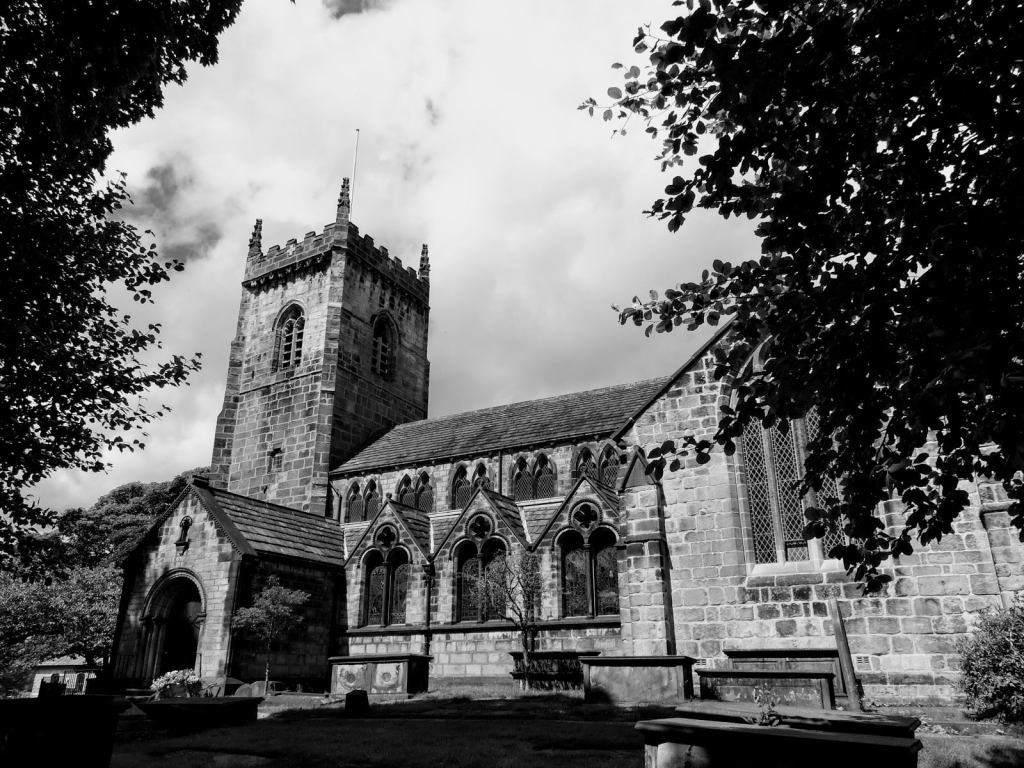
On Tuesday December 29th 1812 Maria Branwell and Patrick Bronte were married at Guiseley Parish Church. Their first home was the isolated, windswept Lousy Farm which sounds as bleak as Wuthering Heights. Patrick was anxious to find a new position with accommodations suitable for a family. He served as a curate in Hartshead until 1815 when he was appointed to Thornton where he had his own parsonage at last. During these years Maria was perpetually pregnant giving birth to a baby a year, first Maria and Elizabeth, the two girls who would outlive their mother but die as teenagers at Cowan Bridge School.

The years at Thornton were happy ones for the young family. They became part of a community with an active social life among the gentry. Charlotte, Branwell, Emily, and Anne were born here. The Brontes hired two young sisters from the local workhouse to help with the children so Maria had time for a social life and to pursue her dream of becoming a writer. Patrick Bronte was already a successful author having published poetry collections and regular articles in religious magazines. Maria was severely disappointed when her first effort was rejected. Her subject, The Advantages of Poverty, arguing that the suffering of poverty is good because it builds character and virtue, sounds cruel to modern ears. But it was conventional thinking among Christians at the time. Patrick kept this manuscript as a memento of his wife and later gave it to Charlotte. The important thing for the future was that from a very young age the Bronte children saw both their parents with pen in hand.
The move to Haworth, a mill town high on the moor, in 1820 would usher in a time of great upheaval for the family. Patrick Bronte was offered the position of perpetual curate at St. Michael and All Angels Church in 1819. But there followed a bitter dispute with the parishioners, who claimed it was their prerogative to choose the pastor, not the bishop’s. There were riots in the church during Patrick Bronte’s first weeks in the parish:
…scenes, scarcely possible in an heathen village, have been witnessed on three successive Sundays, in the church of Haworth… the house of God, and the hallowed ground of a church yard are not proper places in which to allow, by disturbance and howlings, the loudest and lowest marks of the irreverence and insult.
A mob of parishioners leapt over the pews stamping their feet, hooting and hollering to disrupt the service every Sunday for a time. But eventually reason prevailed and Patrick Bronte was accepted, if not warmly.
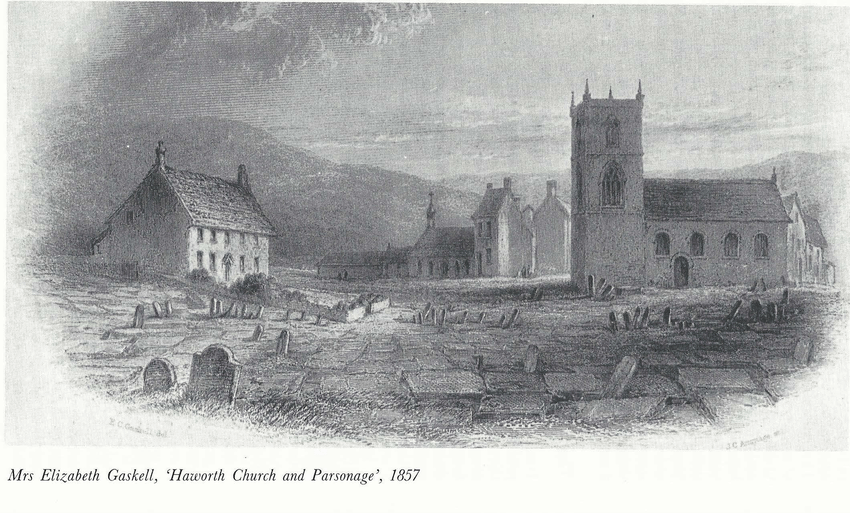
These unsettling first months in their new home were followed by worse. Patrick came home on the afternoon of January 29th 1821 to find that his wife, who had felt unwell for some days, had collapsed. He summoned a doctor whose diagnosis was grim. Maria had an abdominal cancer and could not be saved. She hung on for eight long months of suffering, bedridden and in excruciating pain, with the mental torment of leaving her small children motherless. Charlotte was only five, Anne a newborn.
Maria Branwell Bronte died on September 15th 1821, her devoted “saucy Pat” at her side, oblivious that three of her children were destined for literary immortality.


 Dispatches From the Former New World
Thank you for a very interesting and informative account of Maria Brontë. Such an illustration of how destiny can re-route our intended life’s journey and be the reason for the outcome of another’s.
LikeLike