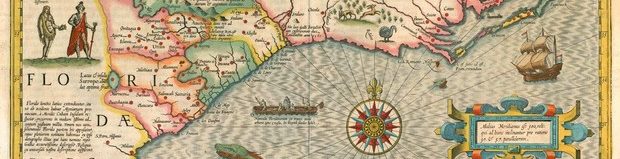
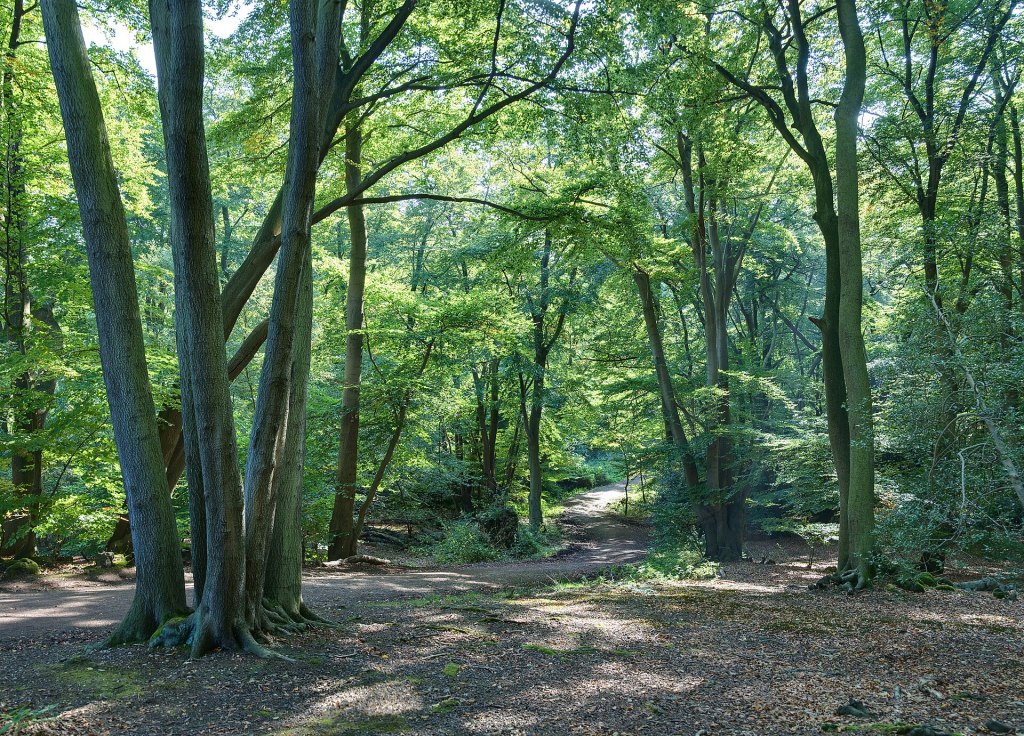
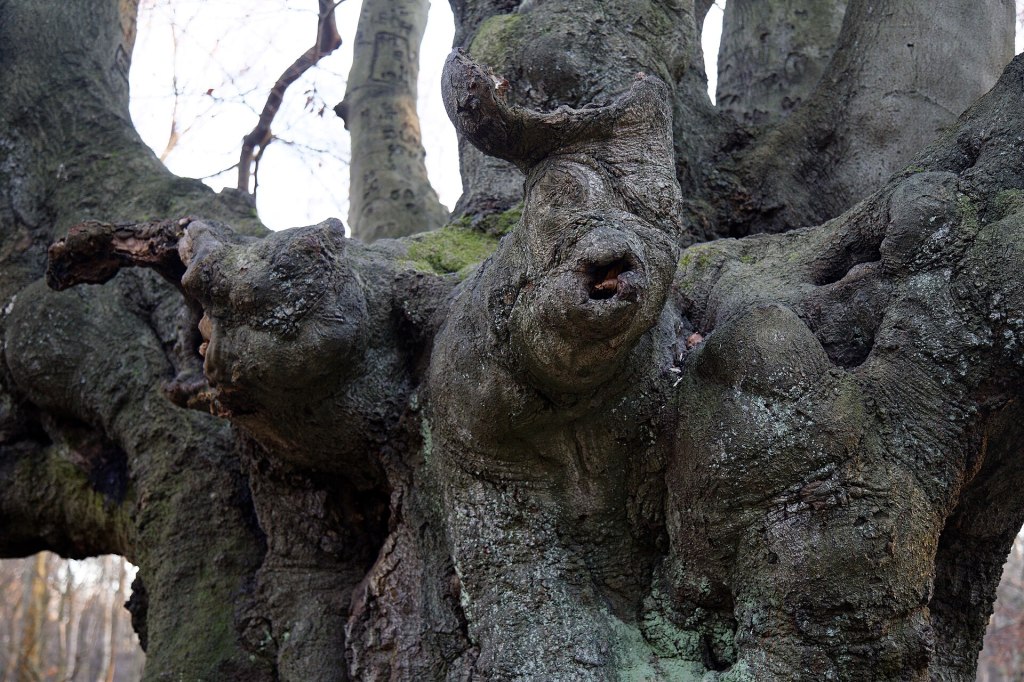
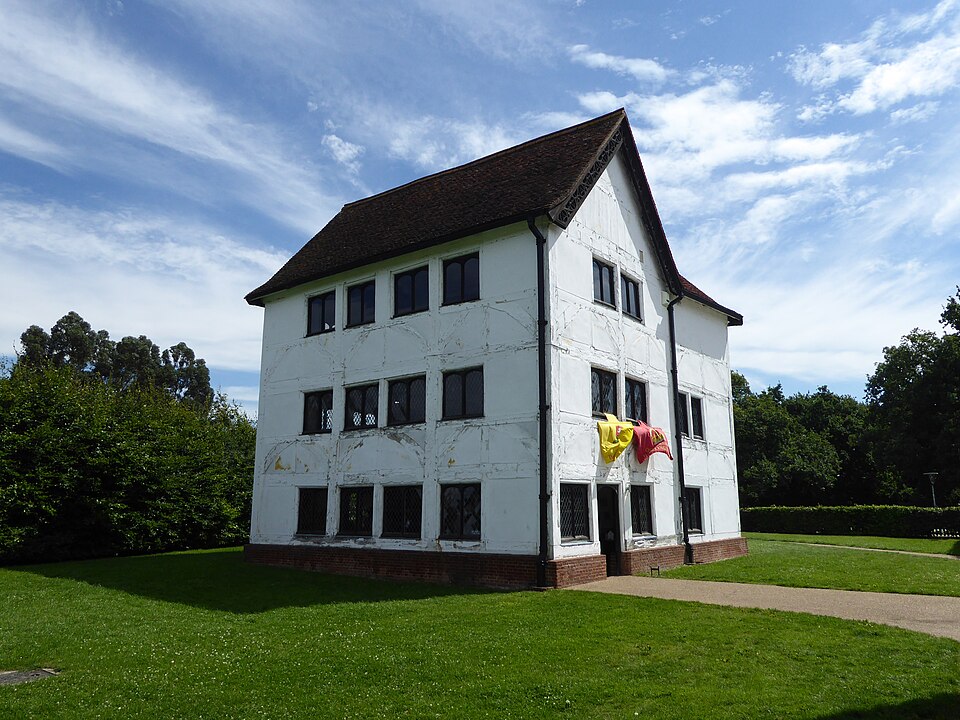
Epping Forest is a lovely, dark and deep 6,000 acre woodland in Essex near where I grew up. It is all that remains of a 60,000 acre ancient forest steeped in history and legend. Some of the gnarled beeches and oaks date to Anglo-Saxon times and the forest hides the traces of two Iron Age forts. In Medieval times it was a favorite hunting ground for England’s kings. To this day the sight of a white stag is said to be an omen of death. Queen Elizabeth I’s hunting lodge still stands at the edge of the forest, but 18th century highwayman Dick Turpin’s secret hideaway cave is still a secret. Among the ghosts said to haunt the forest is Queen Boudica, who fought a battle against the Romans nearby, and Kate of the Hollow, a poor servant girl seduced by the Lord of the Manor who of course had to drown herself and her baby in a woodland pond. Another pond where young lovers died in a suicide pact is said to lure unsuspecting walkers to their deaths. The forest has more than earned its title the scariest woodland in England. In modern times it is a favorite place for London area murderers to bury the bodies. In the 1960’s the notorious East End gangsters the Kray twins regularly used it as a dumping ground for their sins.
In my youth I thought of the towns surrounding the forest, Epping, Waltham Abbey, and Chingford, as places where the posh people lived. For picnics and hikes we favored Hainault, a much smaller remnant of the ancient forest that was a short bus ride away. I did not realize then that Hainault is so small because it fell victim to the Enclosure Movement in the nineteenth century. Epping itself was spared because attempts at enclosure sparked a mass protest movement. Legislation protecting the area passed in 1878 and Queen Victoria declared it The People’s Forest.
It was in the nineteenth century that one of Epping’s most curious histories unfolded, the story of a Victorian mental institution where the lives of two poets briefly converged.
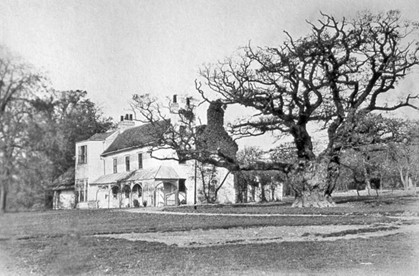
High Beech Institution was founded by an eccentric and charismatic Scottish doctor in 1825. It was a complex of buildings at the edge of Epping Forest surrounded by spacious gardens and a high thorn hedge. Dr. Matthew Allen was far ahead of his time in the treatment of mental illness. Victorian lunatic asylums were notorious for cruel treatment and appalling conditions. (Sarah Waters gives a harrowing account of one woman’s ordeal in her novel Fingersmith). In contrast Dr. Allen’s regimen sounds quite modern. His hospital, he declared, was not an asylum but a place of seclusion for exhausted minds. He was inspired by Quaker ideals of humane treatment and kindness. Patients received individual attention, occupational therapy, group discussions, and maximum freedom to wander the gardens, even to go through the gate into Epping Forest for longer walks. Allen boasted that only 3% of his patients required restraint, the common practice in most asylums. Dignified work in the garden or the woodworking shop was the key to recovery. One especially difficult patient was given the task of digging new paths between the buildings. When completed Allen held a ceremony to name the paths in the patient’s honor.
In July of 1837 a new patient arrived at High Beech, sent there by his desperate family. He suffered from erratic behavior and delusions and could not support his wife and seven children on his poetry alone. He thought he was married to his childhood sweetheart Mary, not his actual wife, the long-suffering Patty. John Clare, known as the Peasant Poet, was the son of a farm laborer from Helpston in Northamptonshire. His biographer Jonathan Bates calls him the greatest labouring class poet England has ever produced. He was an untutored genius who left school at the age of twelve and explained his gift thus:
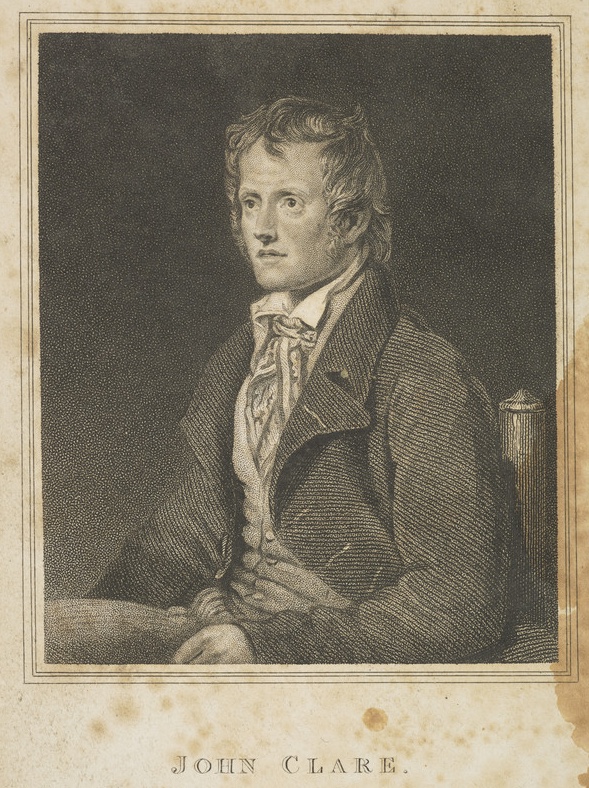
I found the poems in the fields
And only wrote them down.
His subjects were rural life and precise observations of the natural world written in his local dialect with little regard for grammar. He quickly gained a loyal following among ordinary readers as well as the literary establishment. At High Beech he continued to write but persisted in the delusions that he was Lord Byron or Shakespeare. Visitors recalled him digging in the garden and smoking a pipe, seemingly at peace. Allen wrote of him:
It is most singular that ever since he came…the moment he gets pen or pencil in hand he begins to write most poetical effusions. Yet he has never been able to obtain in conversation, not even in writing prose, the appearance of sanity for two minutes or two lines together, and yet there is no indication of insanity in any of his poetry.
In the same year John Clare came to High Beech another poet moved to a house in the nearby town with his mother and siblings. Alfred Tennyson was 28, not yet the venerable Lord and Poet Laureate pictured in old age with straggly beard and stern demeanor. He was exceptionally handsome with dark Byronic looks and a moody disposition to match. Tennyson’s home life could not have been more dysfunctional. His father, a country vicar, was an alcoholic raving madman terrifying his wife and children with violent rages, even once chasing them through the house with a knife. He spent long spells in a lunatic asylum. One wonders how he carried out his clerical duties. Unfortunately several of his children had inherited his madness. Tennyson was particularly worried about his younger brother Septimus. Part of the motivation for moving to the Epping area was to place his brother in Dr. Allen’s care.
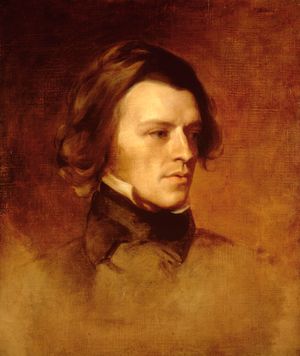
Once Septimus was a patient at High Beech Tennyson became a frequent visitor. He developed a close friendship with Allen, spending hours in conversation with the doctor. Tennyson himself suffered from frequent bouts of depression and was haunted by grief over the death of his close friend Arthur Hallam who had died suddenly in 1833. Tennyson’s poem In Memoriam is an elegy dedicated to his friend. Though never a patient, he would voluntarily stay at High Beech when he needed a place of seclusion for his troubled mind. Tennyson’s literary friends in London, always concerned about his mental state, were skeptical of this development. His friend James Spedding wrote:
(he) has been on a visit to a madhouse for the last fortnight and has been delighted with the mad people, whom he reports the most agreeable and the most reasonable persons he has met with. The keeper is Dr. Allen with whom he has been greatly taken.
Another friend wrote:
(Tennyson) lived in great intimacy as you may have heard with one Dr. Allen, a mad doctor at High Beech who is very mad himself.
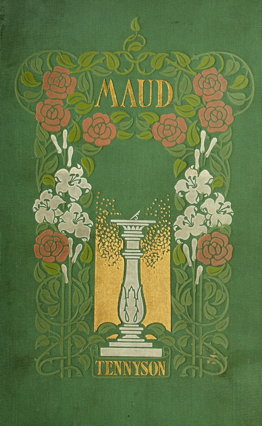
Tennyson’s time at High Beech influenced his great poem Maud, or The Madness in which Maud’s suitor is driven insane by unrequited love. The poem channels the fragmentary mumblings of the psychologically lost and broken he overheard in High Beech garden. One critic called it the most faithful representation of madness since Shakespeare.
My life has crept so long on a broken wing
Thro’ cells of madness, haunts of horror and fear …
Neither poet departed High Beech on good terms with Dr. Allen. To Tennyson the kindly doctor revealed another side of his character. He persuaded Tennyson to invest in a scheme to turn High Beech into a profitable business, selling the furniture crafted by his patients in the woodworking shop. Tennyson invested almost his entire life savings and lost it all. Apparently the science of marketing was not yet advanced enough to persuade Victorians to purchase furniture fashioned by lunatics. Worse, Tennyson discovered that Allen had written to his mother requesting funds and she had given him a substantial sum. His sisters also received begging letters. And in a clear violation of medical ethics Allen had persuaded his own patient Septimus to contribute. The entire family were plunged into financial crisis. Tennyson lost all faith in Allen and suffered a depressive breakdown. He wrote:
Dr. Allen has already at different times received from our family about £8,000 – the result of which loan has been to my mother and sisters that they are at this time living upon my brother Charles – and to myself that I am a penniless beggar and deeply in debt, besides.
In 1840 Tennyson and his family, including Septimus, left High Beech and settled in a house in Tunbridge Wells. Dr. Allen eventually went bankrupt and died a ruined man.
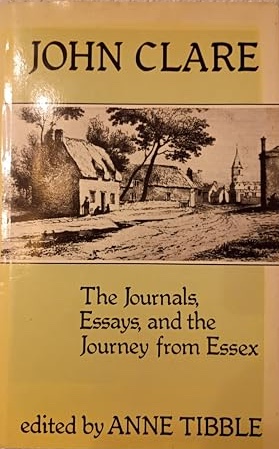
The year after Tennyson moved away from High Beech John Clare left in more dramatic fashion. On July 20th 1841 he did not return from his usual walk in Epping Forest. In four days he walked the ninety miles to his home in Helpston, believing he would be reunited with his childhood sweetheart Mary, who had actually died three years before. He wrote a prose work, Recollections of Journey from Essex, recounting his experience sleeping in farmyards and eating the grass by the wayside, which seemed to taste something like bread. He found his way by sleeping with his head pointed north to aid his steering in the morning. Hearing of his escape his wife Patty set out in a cart to meet him on the road. Clare wrote:
I was making for the Beehive as fast as I could when a cart passed me with a man and a woman and a boy in it – when nearing me the woman jumped out and caught fast hold of my hands and wished me to get into the cart but I refused and thought her either drunk or mad. But when I was told it was my second wife Patty I got in and was soon at Northborough, but Mary was not there.
Clare did not stay long at home. In December 1841 he was certified insane on the ground of being addicted to poetical prosings. The biographer Frederick Martin’s account is heartbreaking:
He struggled hard when the keepers came to fetch him, imploring them, with tears in his eyes, to leave him at his little cottage, and seeing all resistance fruitless, declaring his intention to die rather than to go to such another prison as that from which he had escaped. Of course, it was all in vain.
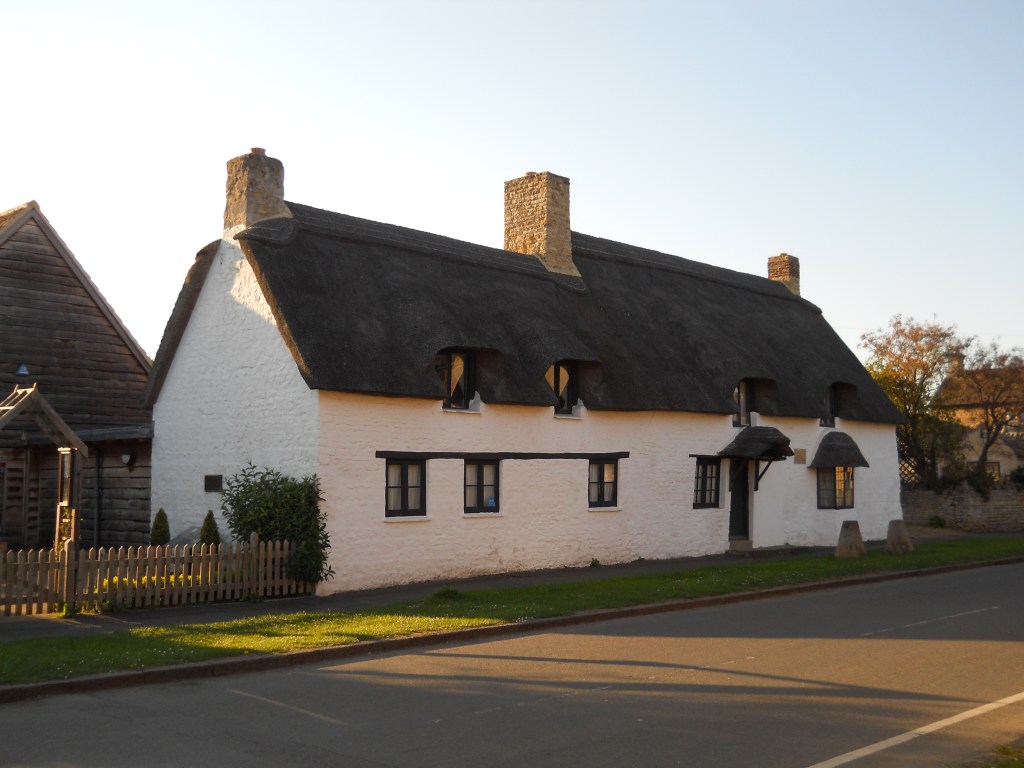
Clare was committed to Northampton General Lunatic Asylum where he lived for the remaining twenty-three years of his life. His writings reveal his final verdict on Dr. Allen and High Beech. Allen he called Doctor Bottle Imp and High Beech Allen’s Hell.

The obvious question that arises is – did Clare and Tennyson meet during the time their paths crossed at High Beech? There is no direct evidence that they did, but given the small size of the property, the small number of patients, and the amount of freedom they were given, it seems unlikely that they did not meet and interact in some way. Both men found woodland walks restorative and they shared a friend in common, the son of another poet who was also a High Beech patient. What may have passed between the two poets is left to our imagination, and to the imagination of one contemporary writer.
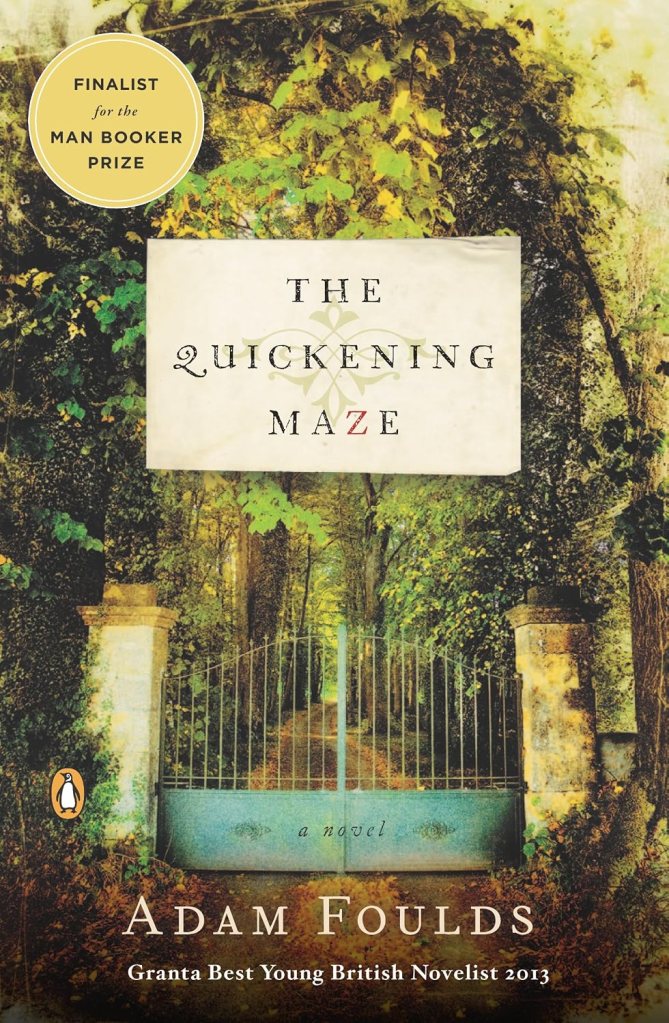
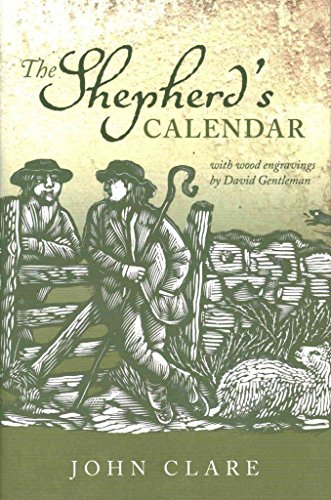
As a poet who grew up on the edge of Epping Forest Adam Foulds was naturally drawn to this story. In The Quickening Maze John Clare, Alfred Tennyson, and Dr. Matthew Allen are brought to life in the vividly imagined Victorian world of High Beech. Published in 2009 the novel was short-listed for The Booker Prize and The Walter Scott Prize and won the Encore Award and the European Union Prize for Literature. The Times Literary Supplement called it a visionary novel. In lyrical prose that rivals Clare himself for evocative descriptions of nature, Foulds uses the bare historical facts to explore the maze of the human mind and the porous border between sanity and madness. In this semi-fictional world the two poets do meet, Clare’s grief over the ruin of the natural world by industry and the railways is brought to the fore, and Tennyson is pursued romantically by Allen’s daughter.
The cover of this edition evokes the gate from High Beech garden into Epping forest, the gate between the confinement Clare so hated and the natural world of the forest where he longed to escape. I think of the ghosts of Epping Forest now joined by the whispered murmurings of the mad conjured by Tennyson in Maud, and by the spirit of John Clare released from the Northampton Asylum at last.


What an interesting article. As a member of the staff team at Glenside Hospital Museum, Bristol where we delve into the the development of mental health care using a collection from a Victorian Asylum 1861 -1994, I was interested to read all about this hospital. Indeed, Dr Allen was part of an innovative movement to look after people with mental illness all across Europe, that transformed asylums into therapeutic communities seeking to support people back to health.
Another innovator was John Conolly, superintendent at the sprawling Middlesex County Asylum. I recommend his books they are enlightening on the new movement to ensure county asylums became hospitals.
Conolly, John (1830). An Inquiry concerning the Indications of Insanity, with Suggestions for the Better Protection and Care of the Insane. London: John Taylor. ISBN 9781548740023.
Conolly, John (1847). The construction and government of lunatic asylums and hospitals for the insane. London: John Churchill.
Conolly, John (1856). The Treatment of the Insane without Mechanical Restraints. London: Smith, Elder & Co.. Hanwell,
John Conolly recognised many conditions were beyond treatment and sought a more compassionate approach which was reinforced when he visited a privately-run asylum in Lincoln. Here, he found a fellow doctor who managed 150 patients with no need for ‘mechanical restraints’ and subsequently ordered the removal of ‘all instruments of restraint,’ increased the ratio of keepers to patients as well as increasing their wages.
This movement changed attitudes and the 1808 mental health act encouraged change and the 1845 mental health act made it compulsory for all county’s to provide safe places for pauper mentally ill.
There were strict central government operational rules that managed the county Victorian Asylums which encouraged them all to be therapeutic communities, replacing overcrowded, unkind rooms in workhouse. Private asylums were more individual. .
Therefore this statement is not accurate, ‘Victorian lunatic asylums were notorious for cruel treatment and appalling conditions.’ It should read the Georgian era (1714-1837). Victorian Asylums were modelled the new innovative approach Dr Allen was part of.
LikeLike
Thank you so much for the correction and interesting information. Perhaps I have relied too much on fiction for my impression of Victorian asylums!
LikeLike
now I want to go there……beautifully and tenderly written. Thanks.
LikeLike