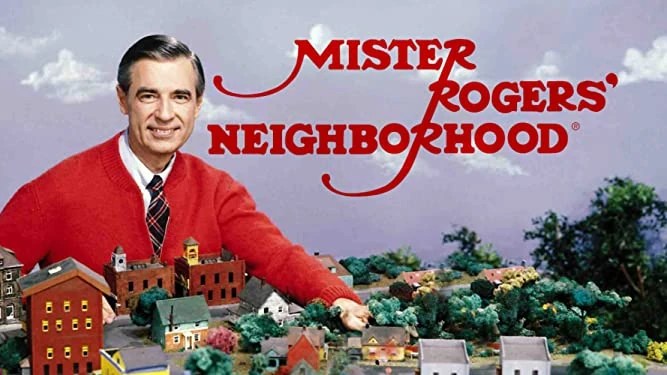
I used to love watching Mr. Rogers’ Neighborhood when my children were small. So calm, so soothing, so… well, neighborly. Sometimes I even watched when the children weren’t around. A restful oasis in a stressful day. In Mr. Rogers’ world all the neighbors were nice and friendly and helpful. Ever ready with a kind word or a helping hand. None of them yelled “get off my lawn!” If only it were so.
Today Mr. Rogers is a sweet memory. If you spend any time on the Nextdoor app, which purports to bring neighbors together, you will find yourself in a dark dystopian world where every teenager in a hoodie is a potential carjacker, every delivery man a potential home invader, and every dog walker intent on spreading dog poop over your lawn. Fear and loathing stalk the posts on Nextdoor, the comment threads a cesspool of complaints, anger, stereotypes, and often outright racism. An occasional lone voice bleats for civility.
Here is my annual list of favorite books in three categories – Fiction, Nonfiction, and Mystery/Suspense. I managed to whittle it down to five favorites in each category. But I’m adding a mention of best sellers and big name books I enjoyed that didn’t quite make it into my final five. And there’s a bonus category for the Weirdest Book I read all year. I hope you find something here to enjoy in 2024.
FICTION
Birnam Wood by Eleanor Catton. I had never heard of radical gardening collectives before reading this novel set in New Zealand. Instead of disruptive acts of protest they plant vegetable gardens on any unused piece of land they can find. When a remote valley is cut off by a landslide Birnham Wood’s leader Mira sees opportunity on an abandoned farm. But don’t expect a bucolic rural idyll; this situation morphs into a page-turning thriller with a fierce moral vision. An eccentric American billionaire helicopters in claiming he intends to build a survivalist bunker on the farm. Then there’s the clueless businessman who owns the property and an idealistic investigative reporter determined to make his name by finding out what’s really going on. Who can Mira trust as the situation becomes more threatening and volatile? There are plenty of revelations, betrayals, and twists as the plot hurtles to a dramatic conclusion. Gardening has never been so apocalyptic!
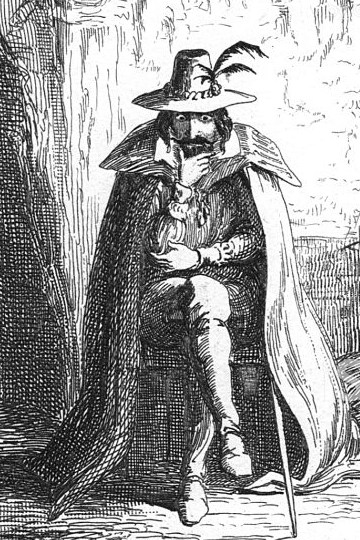
Remember, remember, the 5th of November, Gunpowder, treason and plot. I see no reason Why gunpowder treason Should ever be forgot. Guy Fawkes, Guy Fawkes, ’twas his intent To blow up the King and the Parliament Three score barrels of powder below Poor old England to overthrow By God’s providence he was catch’d With a dark lantern and burning match Holler boys, holler boys, let the bells ring Holler boys, holler boys God save the King!
I’ve written about Guy Fawkes Day in a previous post, but this time I want to follow up on a clue that the Catholic plot might have been hatched in a house near where I grew up. While reading Lines on the Underground for my September post I came upon this quote from Daniel Defoe, written over a hundred years after the foiled plot:
We slouched through the sclerotic artery of the Capital Beltway, my husband at the wheel. I turned to my book* and read about a glittering glass city floating in the Atlantic, a haven for the rich to escape a future drowning world. The Floating City was designed in concentric circles, each dedicated to a specific class and purpose. Only the elite could enter the inner circle, an Eden where no expense or effort was spared to fulfill their every desire. The workers who toiled to fulfill the dreams of the elite were bused in each day through a tunnel from the broken, flooded mainland.
The voice of the Navigator intoned, “You have arrived at your destination.” I looked up to find myself on a circular road ringing a massive glass and metal edifice that could have been the Floating City of my book. A monstrous golden lion stood guard over the complex, imperiously crushing dreams of luck and riches under his enormous paws. We entered through the lowest circle of Hell, the parking garage. Exit from this level was not easily accomplished. Dragging our luggage we wandered the aisles like lost souls until finally stumbling upon the well hidden elevators. Somewhere Satan was laughing.
With a mechanical hiss we rose to the Casino level. The serpentine hallway was thronged with scantily clad women teetering on six-inch stilettos followed by sharp-suited men with hungry eyes. Teams of watchful security guards mingled with the crowd. ATMs were arrayed along the walls at strategic intervals, and through doorways we glimpsed serried ranks of game machines emitting a disorienting cacophony of flashing lights and electronic sounds. The humans here were mere go-betweens for the machines, doomed to forever carry cash ejected from the ATMs to feed the ravenous appetites of the insatiable game machines, which occasionally vomited forth a dribble of coinage to keep hope of luck alive.
For St. Patrick’s Day here is the text of a talk I gave to the Maryland Ladies Ancient Order of Hibernians in March 2019. I was scheduled to present it again at the Maryland Irish Festival in the fall of 2020, but for obvious reasons that never happened.
My display table at the talk
I’m going to tell you about a long and winding road of research and travel in search of my Irish family. But first a confession, unlike perhaps most of you I’m not Irish-American, I’m Irish-Flemish. I grew up in England with an Irish father and a Flemish mother. My mother grew up during the Nazi occupation of Belgium and my father was born to Irish immigrants in the northern English town of Manchester. My parents met when my father was a soldier with the British troops who liberated my mother’s town of Ghent in Belgium after D Day. They had a classic wartime romance, married in Ghent in 1947, and settled in the suburbs of London. My brothers and sister and I are quite proud of our unusual heritage. I once met a Flemish history professor from the University of Louvain. Of course I told him I am half Flemish. He asked what was my other half? When I told him Irish he reared back in mock horror and said “What a volatile combination.” Both peoples are known to be hot-headed and argumentative. Anyway that’s my family’s excuse for any number of sins!
Bridie Byrne
Growing up in England my Irish grandmother Bridget Byrne lived with us. I knew her maiden name was Carney, and that her family had called her Bridie. We knew her as Nanny. She was a very quiet, nervous woman, very religious. Her bedroom was like a little chapel, full of religious pictures and statues. She had a statue of a rather obscure saint, St. Philomena, by her bed. Later on I would learn its significance. Every morning before school we would kneel by her bed to say our prayers and then she would give us a mint, holding the round white candy out to us almost like the host at Mass. She never talked about Ireland or her family. When I was about 12 she had a nervous breakdown with paranoid delusions that my mother was going to run away and take us to live in Belgium. She was in a mental hospital for a time and when she recovered she went to live in a convent retirement home. My mother told me this was perfect for her; when she was a girl she had wanted to be a nun but her family couldn’t afford the dowry you had to pay to convents in Ireland in those days.
Collecting the dead and pointing out anointers during the 1630 plague in Milan by Gallo Gallina
In the church of San Antonio in Milan in 1630 a frail elderly man who had been kneeling in prayer rose to sit on the pew behind him. Before he sat he used the edge of his cloak to wipe off the seat. Seeing this, a woman seated near him jumped up and pointing to the man cried out “Look, that old man is anointing the pews.” Despite the worship service in progress members of the congregation attacked the old man, grabbing him by the hair and dragging him outside the church where they beat and kicked him to death. The mob was acting under the influence of a bizarre, false conspiracy theory about how the plague was spreading through their city. When I read this in The Betrothed, a classic Italian novel by Alessandro Manzoni, I immediately thought of the way Americans of Asian descent were attacked in the street during the COVID pandemic. Just because the virus originated in China was no reason to blame or fear any individual Asian American, but the perpetrators of the violence were acting on an irrational conspiracy theory just like the mob in Milan four hundred years before.
The Betrothed (I Promessi Sposi in Italian) is on my list of favorite reading of 2022. Written in the early nineteenth century it is a story of star-crossed lovers set against the background of historical events in seventeenth century Lombardy; famine, war, and plague. The chapters that describe the Milan Plague of 1630 are famous and considered one of the best accounts of the plague ever written. Manzoni based his account on memoirs and histories, notably those of Giuseppe Ripamonti and Alessandro Tadino. Dr. Tadino was deputy to the Chief Medical Officer of Milan and a member of the Tribunal of Health during the plague. He personally witnessed the attack on the old man in the church of San Antonio; it is not fiction.
If you’ve had enough of the Windsor family dramas you may be surprised to learn that they are far from the worst in the annals of dysfunctional British royal families. Meet the Hanovers! Forget the scandal of divorce; they just threw a discarded queen in prison for the rest of her life. Feuding fathers and sons? They set up rival courts. And no voluntarily “stepping back” from royal duties; one prince was thrown out of the palace, his belongings dumped in baskets outside the gates. As for royal babies, they weren’t always greeted with open arms.
It all began when the last of the Stuarts, Queen Anne, died without an heir in 1714. She had endured seventeen pregnancies, all but one ending in miscarriage, stillbirth, or babies who died very young. Her only child to survive infancy, William, died age eleven. The question of who should succeed her came down to religion. By the Act of Settlement passed in 1701 Catholics were disqualified from inheriting the throne. That excluded James II’s son and grandson, James Francis, known as The Old Pretender, and Bonnie Prince Charlie. Instead the throne passed to the descendants of James I’s daughter Elizabeth Stuart, whose daughter Sophia had married the Elector of Hanover, a tiny German province. Sophia died shortly before Queen Anne so the throne passed to her son who became George I, the first king of the House of Hanover.
I read a lot of books in 2022, some wonderful, some so-so, and a few just plain dreadful – yes I did try a Colleen Hoover. Here are my favorites in three categories – fiction, suspense, nonfiction, and a bonus classic. I hope you find something here to enjoy in 2023.
A word on the suspense category. Genre fiction is divided into so many overlapping categories – crime, mystery, thriller, spy, suspense. I chose suspense as the most inclusive. My favorites have elements of each but all are suspenseful.
My favorite books of course reflect my own reading preferences. It wasn’t until I had winnowed my list down to five in each category that I noticed all my nonfiction choices are history or literature. I did read other subjects, but those are certainly my favorites. I also noticed that of my sixteen books thirteen are by women and half are by British authors. My reading list certainly reflects me!
If you have opinions, pro or con, on any of these books please share in the comment section at the end of the list.
FICTION
Fellowship Pointby Alice Elliott Dark. How refreshing to find a book where the main characters are in their eighties and the author treats them with dignity. Agnes and Polly are lifelong friends who met at Fellowship Point, a retreat in Maine where their parents owned summer homes. They remain close though their lives took different paths. Polly became a traditional wife and mother while Agnes never married and is the famous author of a series of children’s books about a girl called Nan. Each summer they meet up at the Point and this year there is a looming crisis. A developer wants to build a resort on the Point, part of which is a wildlife sanctuary, but Agnes determines to fight it. The women must deal with the younger generations of their families who have differing ideas about the future of their inheritance. Meanwhile a young woman who works for Agnes’s publisher visits the Point, triggering revelations about the past and the inspiration for the character of Nan. I found this a thoroughly engrossing read full of appealing characters, drama, humor, and a realistic picture of aging. I still find myself sometimes thinking “What would Agnes do?”
Santa came early to our house this year. He didn’t enter stealthily down the chimney. He announced his arrival with a ring of the doorbell. He had a white beard and wore a jolly smile, but not a red suit. He handed me the most unusual Christmas gift I’ve ever received – the moon. Or at least a moon.
After I published my sad story about the missing moon I learned that Brian and Caryl, artists who live on my street, had acquired some of the dismantled lamp globes. They repurposed them into beautiful hanging lanterns of many colors.
As darkness settled over our house a pure full moon, hanging low in the sky, cast its calm and comforting light through our family room window. It seemed a good omen on our first night in a new home. No sound of howling wolves or other nocturnal creatures disturbed the quiet. Just a lovely silent moon shining it’s gentle light across the garden.
We’d lived in the house several weeks before it finally dawned on us that there couldn’t be a full moon every night. A moon that never waxed or waned or hid it’s face behind a cloud. We laughed when we realized that our moon was no celestial body but the globe shaped lamppost on the path beyond the garden fence. The ground slopes upward toward the path giving our moon the illusion of hanging in the sky.