The Mobsters and the Baby Shoes

Baby Shoes2

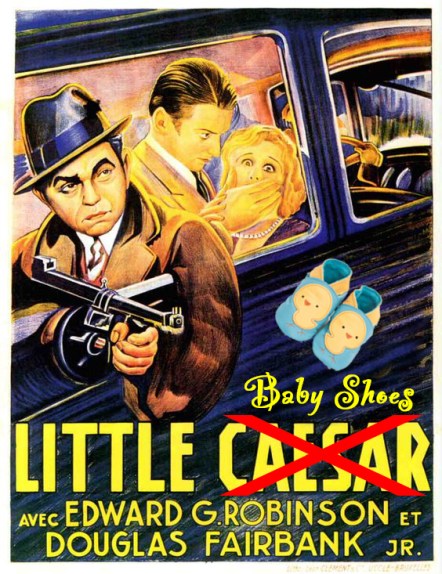
Back in the early 1970s my sister Angela worked for a temp agency in the East London suburbs of Essex. Her first assignment was with a company named Downy Baby Shoes. She imagined an office where grandmotherly women sewed baby bootees while softly humming lullabies. A cosy place, perhaps decorated with Beatrix Potter prints. The reality was far different. On her first day she found a rather grungy office in an out of the way alley presided over by two Canadian men. The boss was a supremely ugly man Continue reading “The Mobsters and the Baby Shoes”

Follow the Money

marijuana-industry-hydroponics-pile-of-money-300x225

“Follow the money,” the famous words whispered by Deep Throat in an underground garage during the Watergate scandal, can be usefully applied to any number of ills afflicting American society. To take just the two main scourges of the present day, gun violence and opioid addiction, you can be sure there are people somewhere raking in huge profits on the backs of the victims. Continue reading “Follow the Money”

That Was The Year That Was

dba00e2c485a08a18a23bc48bc6cca91

Long ago and far away in the England of the 1960’s television political satire was born. I was fourteen years old, precociously interested in current events, and allowed to stay up late to watch That Was The Week That Was. TW3 as it was known first aired on Saturday November 24th 1962. The star was a young David Frost and I was soon helplessly in love, my first big crush. The show was revolutionary. The hitherto staid and cautious BBC Continue reading “That Was The Year That Was”

We’ll See What Happens

You_Doodle_2017-10-30T18_43_55Z

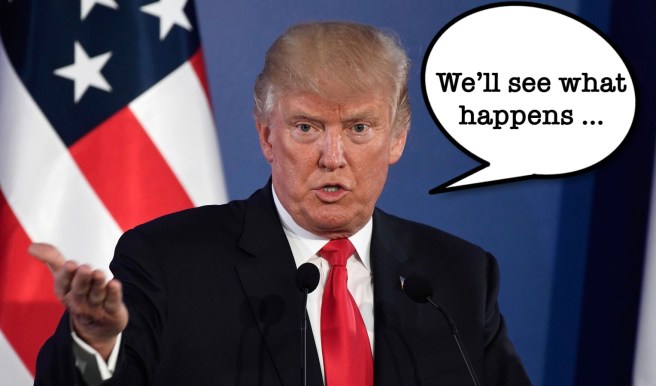
“We’ll see what happens” is one of President Trump’s favorite phrases. His trademark talk and tweets contain a limited vocabulary of words and phrases, which he slots together in seemingly random combinations. How many times have we heard “believe me,” “that I can tell you,” “amazing,” “sad,” and of course “no collusion”?

But “we’ll see what happens” is in a class by itself when it comes to strange Continue reading “We’ll See What Happens”

Fall on your Knees

fra-angelico-annunciation-2

When you google the words “Christian iconography kneeling” the first image that comes up is Fra Angelico’s Annunciation painted on a wall of the Friary of San Marcos in Florence. The Angel Gabriel appears before Mary in a loggia. He kneels, bent forward on one knee as a sign of respect and reverence towards the woman chosen by God to bear his Son. I googled these terms out of confusion that the current national debate concerns the act of kneeling viewed as a sign of disrespect. For most of recorded history the exact opposite has been the case. Continue reading “Fall on your Knees”

Cul Dreimhne – The Battle of the Book

w_pg50_franciscans

What do you think of when you think of monks? Silent hooded figures praying in a shadowed cloister perhaps? Or the ethereal sound of Gregorian chant? You probably don’t think of a violent battle leaving thousands of dead and dying strewn on a blood-soaked field. Yet this is part of the story of a famous Irish monk named Colmcille, or Saint Columba. His Gaelic name means dove of the church, but Colmcille was far from a dove of peace when it came to Cul Dreimhne, the Battle of the Book. I heard about this strange episode in Irish history while staying in the village of Drumcliffe north of Sligo, in sight of the slopes of Ben Bulben where the sixth century Battle of the Book was fought. Colmcille instigated the battle in the aftermath of a legal dispute that is the first recorded case of copyright law. Continue reading “Cul Dreimhne – The Battle of the Book”

The Spanish Armada – According to the Irish

Armada map
Map of the Spanish Armada shipwrecks in Ireland

Along with every other English schoolchild I learned the story of the Spanish Armada. In 1588 Philip II of Spain sent the largest fleet ever seen to conquer England, depose the heretic Queen Elizabeth I, and restore the Catholic faith. But luckily a storm blew up driving the Spanish ships off course. Trying to make their way back to Spain many were shipwrecked on the west coast of Ireland. Good Queen Bess was triumphant and England saved. End of story. Later, when I studied history for my degree, I learned the more nuanced version, setting the Armada story in the full context of sixteenth century European power struggles and religious conflicts. The story ended the same way though, with English triumph and Spanish shipwrecks. Not a word or a thought to what happened to the Spaniards who washed up on Irish shores. But I discovered in Ireland that the end of the English Armada story is where the Irish story begins. A story of Continue reading “The Spanish Armada – According to the Irish”

In Yeats Country

IMG_0859
Yeats mural in Sligo

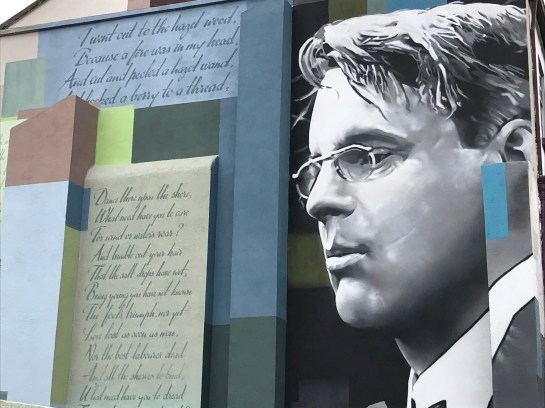
Our boat slowed and began to circle the little island in the lake. Then over the loudspeaker came the voice of our captain, George, reciting the W. B. Yeats poem The Lake Isle of Innisfree. We were circling that very island. We were in Yeats country, “the land of heart’s desire” around Sligo in the west of Ireland. This was just one of the magical moments we experienced in my first visit to my paternal grandparents’ country. And George was just one of the marvelous characters we met who made Irish history Continue reading “In Yeats Country”

We’ll Always Have Pittsburgh

web 900 x 600 SOFM American Paris

Americans used to love Paris. There’s even a song about it, something about springtime and fall and drizzles and sizzles. George Gershwin wrote a whole musical on the theme. He thought Paris ‘S wonderful! American literary types used to hang out in Paris and get inspired to write Great American Novels. Paris was on every American’s bucket list. It was the epitome of Romance. But no more. President Trump broke up with Paris bigly. Continue reading “We’ll Always Have Pittsburgh”