Hidden in archives accumulating over centuries, in famous cities and obscure towns, are the lives, thoughts, and feelings of ordinary people lost to history. Lost, until a curious researcher unearths them, often by chance when they are looking for something else. Out from the dusty scrolls, the bundled letters, voluminous trial transcripts, dry tax records and inventories, come the voices of people long forgotten.
This is my favorite kind of history book, pioneered in the twentieth century by the French Annales school. Instead of great leaders, politics, diplomacy, and battles they focused on the common people. Emmanuel Le Roy Ladurie was the first to explore mentalities, how the people of the past viewed the world around them. His 1975 book Montaillou is a landmark work, considered a classic of both history and anthropology. I include it in this list as one of the most memorable books in my lifetime of reading.
The Burdens of Sister Margaret by Craig Harline
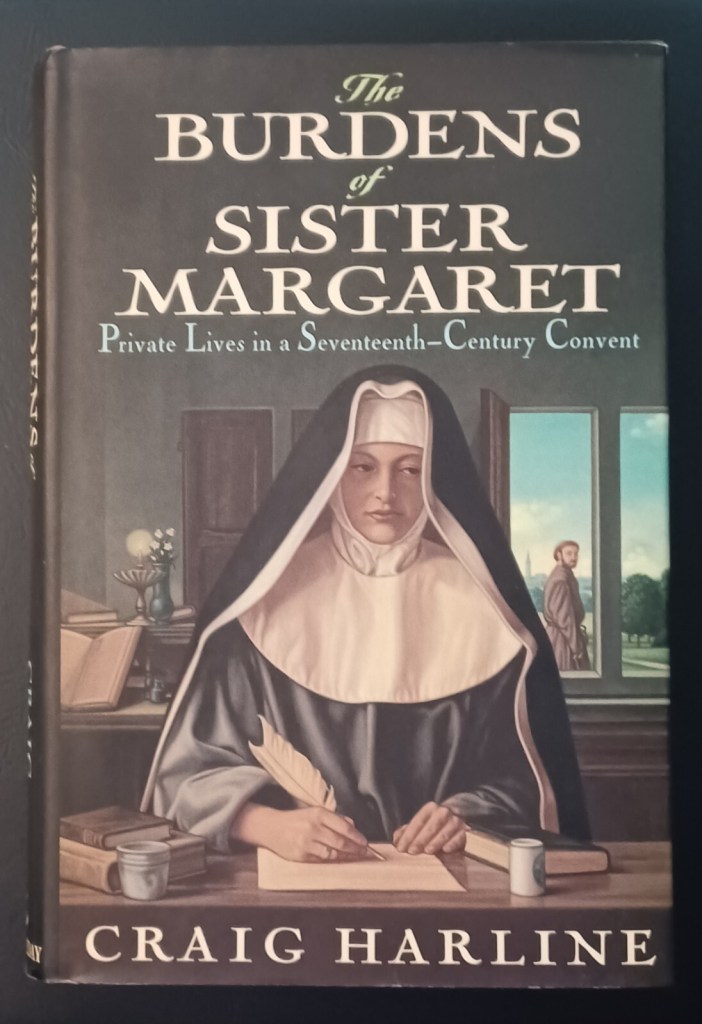
Harline was researching a seventeenth century bishop of Leuven in Flanders when he came upon a cache of letters that told an extraordinary story about life in a Franciscan Grey Sisters convent. The letters reveal the story of Margaret Smulders, a nun who accused a chaplain of sexually harassing her and in turn was accused of being possessed by demons. She spent years exiled to a room above the convent gatehouse writing voluminous letters to the bishop pleading her case and spreading gossip about her fellow nuns. Among Sister Margaret’s complaints was that the nuns spent too much time cooking waffles to give to the influential people of the town instead of praying. The bishop also received letters from the other nuns detailing their complaints against Margaret. From this stew of gossip and innuendo Harline reveals an intimate portrait of the daily life and trials of one convent.
The Burgermeister’s Daughter by Steven Ozment
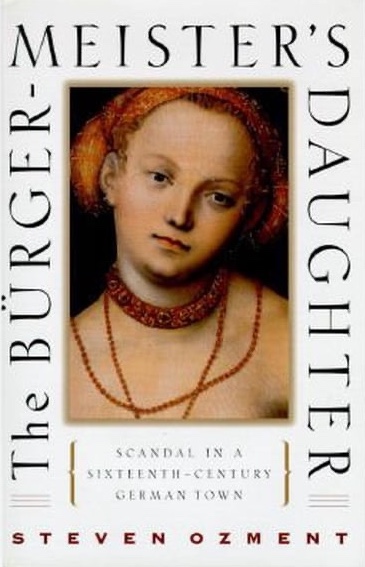
The sixteenth century archives in the German city of Schwabisch Hall are stuffed with records of a thirty year legal battle between Anna Buschler and her father, a prominent local official. From these and surviving love letters Ozment brings to life a feisty woman who defied the social and gender expectations of her time. Beautiful and flirtatious, young Anna shocked her father and neighbors by carrying on simultaneous love affairs, one with a member of royalty. When her father threw her out she sued him for abandonment. He responded by capturing her and keeping her chained to a table for six months. She escaped and added an accusation of abuse to her legal challenge. Maturity did not calm her down; she led a life of romantic drama and bitter legal struggle to claim her inheritance. This is a story of one woman that reveals a whole world.
The Cardinal’s Hat by Mary Hollingsworth
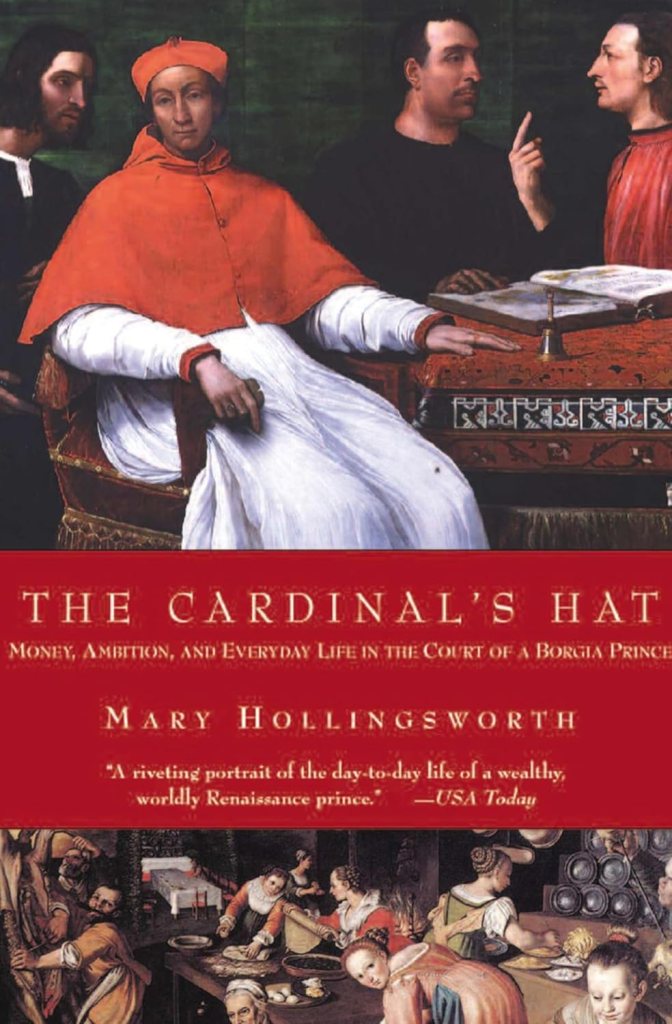
Ippolito d’Este, born in 1509, was the son of Alfonso d’Este and Lucrezia Borgia. He became Archbishop of Milan at the age of nine and set his sights on the prize of a Cardinal’s hat. Hollingsworth came upon detailed ledgers of his fabulously wealthy household in the archives of Modena. Her background as an accountant was ideal for turning the dry details of household accounts into a colorful portrait of the extravagant lifestyle of a Renaissance Prince of the Church. She was helped by d’Este’s clerk who kept exceptionally detailed records. Every item that came into the household was meticulously listed. From the ingredients for the kitchen she reconstructs the sumptuous feasts for privileged guests and the humble meals for the servants. D’Este showered expensive gifts on the rich and powerful to advance his ambition. It paid off. He was made a cardinal in 1538. My favorite episode – the entire household and their baggage cross the Alps to visit the French court; pity the poor stable boys.
The Cheese and the Worms by Carlo Ginzburg

This is an early example of the “mentalities” approach to history; the sixteenth century world as seen through the eyes of one man, a miller known as Menocchio. Ginzberg was researching a sect accused of witchcraft in the Inquisition archives of Udine when he came upon a sentence about the world originating in putrefaction. Intrigued, he wrote down the number of the trial and came back to it when he had finished his book on the witchcraft sect. Menocchio was a free thinker who developed his own ideas about religion, a dangerous thing at that time. “In my opinion, all was chaos, that is, earth, air, water, and fire were mixed together; and out of that bulk a mass formed – just as cheese is made out of milk – and worms appeared in it, and these were the angels.” Menocchio could read and the trial includes a list of the books he owned. Ginzburg shows how his odd ideas developed from a mix of oral peasant culture and the higher learning being spread by the printing press. The miller was a garrulous fellow; he could not stop talking about his ideas which soon drew the attention of Church authorities. In another age he might have been dismissed as an eccentric, but here his fate was trial for heresy and execution.
Montaillou: The Promised Land of Error by Emmanuel Le Roy Ladurie
This portrait of a community is also based on records of the Inquisition. The Inquisition Register 1318 – 1325 of Jacques Fournier, Bishop of Pamiers (later Pope Benedict XII), reveals the world of shepherds in the tiny village of Montaillou in the Pyrenees, told in their own words. The village was the last place to cling to the Cathar (also known as Albigensian) heresy which had been largely suppressed in the Languedoc region the century before. Fournier was an obsessive inquisitor keeping meticulous records of each deposition, which often covered twenty or more large folio pages. No aspect of village life was left unexplored as we see in the chapter headings. They include Environment and Authority, The Shepherd’s Mental Outlook, Body Language and Sex, Concepts of Space and Time, and Morality, Wealth, and Labour. Not as dry as these titles suggest, the testimony comes in the vivid voices of the villagers themselves, replete with gossip and colorful regional idioms. Among the memorable characters is Pierre Clergue, the powerful village priest and shameless womanizer who boasts of his seduction skills.
Virgins of Venice by Mary Laven
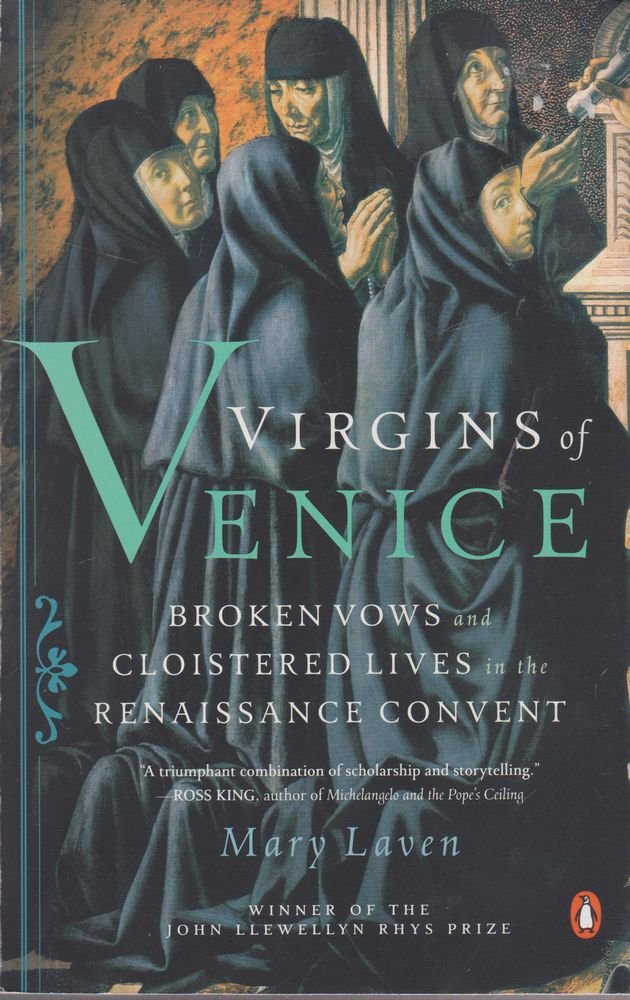
The archives of the city of Venice are the source for Laven’s detailed and engaging portrait of life In late Renaissance convents. There were fifty convents housing about three thousand nuns in the city. Most came from wealthy families and did not go willingly into the religious life. They were forced there by their parents for a variety of motives, financial being uppermost. Marriage dowries were a strain on families, especially if they had many daughters. So it is not surprising that the vows of poverty, chastity, and obedience were rarely followed. In fact the convents of Venice were a hotbed of illicit affairs and conspicuous consumption.Thanks to some nuns keeping diaries we have the story of a nun who chipped a hole in the convent wall to let her lover inside. Like the nuns of Leuven some kept busy baking treats for their visitors and were accused of wasting kitchen supplies. With many women from powerful families, life within the convent walls often mirrored the political scheming in the city state without.


