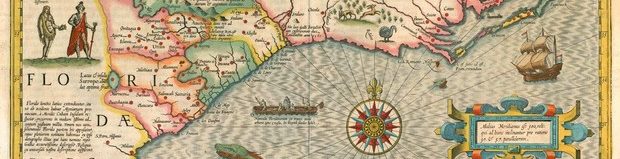
 Witchfinders – no, not characters in our contemporary political drama. But it could be that hearing cries of “Witch Hunt” almost every day for two years was what led me to this particular book on my shelf. Witchfinders by Malcolm Gaskill is a mesmerizing account of a seventeenth century English witch hunt, one of the most vicious on record, led by two Essex gentlemen, Matthew Hopkins and John Stearne. Hopkins earned the title Witchfinder General and became something of a folk hero in the villages and towns of East Anglia. Through torture and intimidation he extracted confessions and false witness accounts from terrified people, mostly women, arresting a total of 250 presumed witches. Over a hundred were publicly hanged. Continue reading “On My Bookshelf – Witchfinders”
Author: dispatchesfromtheformernewworld
Notre Dame
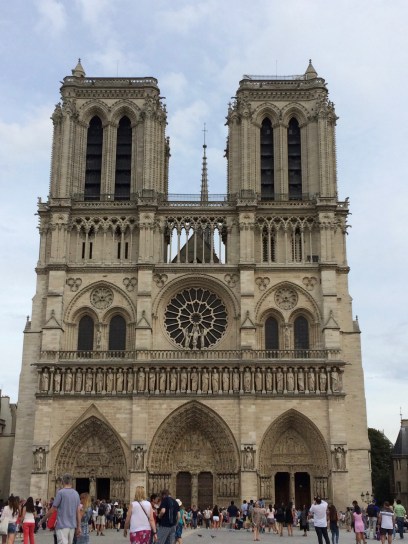
Like so many people across the world I watched with horror as Notre Dame Cathedral burned. I felt grateful that I had the opportunity to enjoy its beauty before this devastating fire. After my visit I wrote favorably about how France protected the character of its churches and cathedrals as houses of worship, unlike the eyesores of secular installation art I had seen in cathedrals in England and Belgium. This is an excerpt from my post Please, Not in the Cathedral:
“It is hard for me to admit that France may be superior to England or Belgium in any way, but Notre Dame, Sacre Coeur, and Sainte-Chapelle were mercifully art installation-free. All were making an obvious effort to maintain the atmosphere of a house of worship despite the hoards of tourists. As we entered Notre Dame a large sign spelled out Silence in a lengthy list of languages. In addition an official stood by with the sole duty of saying “Shhh” every few minutes and as needed. It was the loudest, most officious Shhh I had ever heard. Ignoring these admonitions many tourists chattered away, at first in whispers but gradually becoming louder. When the noise level became too high a recording came on with a spectral Shhh echoing through the vast space like the voice of God himself. Then the word Silence was intoned in a multitude of languages like the tolling of a great bell from the Tower of Babel. For a time a mortified hush fell over the crowds until a fresh influx of visitors started the chattering up again.”
May the silence now be broken by the sounds of reconstruction until Notre Dame is restored to her former glory.
Blog News
Good news – Dispatches From the Former New World is now ad free! I have upgraded the site to get rid of those annoying and ugly ads.
The Dream of an English Garden
Spring is here at last and my thoughts turn to the garden. Weeds are already beginning their annual takeover before I’ve even finished cleaning up the dead remains of summer past. A good time to reprise my garden dream first published in The Dabbler in 2013. One bit of good news – no mad robin disturbs the spring idyll this year.

As I write the demented robin who inhabits the dogwood tree in our garden is repeatedly flinging himself against the window in a kind of avian kamikaze assault. The thump, thump, thump of bird meeting glass is a strange counterpoint to the sweet tweeting and trilling of the other garden birds. I don’t know why the robin does this every day for hours, Continue reading “The Dream of an English Garden”
Leaving Ireland

They left to escape the famine, poverty, an oppressive colonial government, then the violence of rebellion and civil war. They left to find work, to send money home to their families, to find opportunities in the big industrial cities far from their small rural cottages. Some sailed east to England, some west to America, and some south to Australia. Many, like my grandmother, never spoke of Ireland again. So I have had to piece together my Irish family’s history from snatches of conversation overheard in childhood, bits and bobs of story learned from relatives, facts discovered in online archives, and a box of Continue reading “Leaving Ireland”
On My Bookshelf – The Marxist Brontes?
 Myths of Power: A Marxist Study of the Brontes by Terry Eagleton, published in 1975. Quite what this book is doing on my bookshelf I have no idea. I must have acquired it long, long ago judging by the antique fashion in literary criticism it represents. Back in the 1960’s when I was educated at an English university the term “dialectical materialism” was tossed around with abandon by anyone wishing to seem a true intellectual. Marx was dragged into analysis of just about anything. But the Brontes? Surely not. The wild romantic moors of Yorkshire seem a world away from theories of an oppressed proletariat and dominant bourgeoisie locked in class struggle. Or are they? I don’t remember reading the book in the past but I decided to dig in and see if Marx can really shed light on the Bronte novels. Continue reading “On My Bookshelf – The Marxist Brontes?”
Streaming Royal History
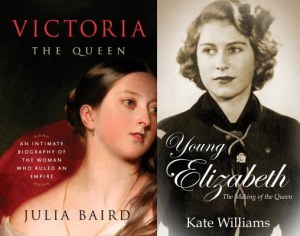
Did you enjoy The Crown on Netflix or Victoria on PBS Masterpiece Theater? Then check out my latest library blog listing related reading for fans of the series.
Trump’s 12 Days of Christmas

On the first day of Christmas Trump found beneath his tree
A Democratic House majority
On the second day of Christmas Trump found beneath his tree
Two ex-Chiefs of Staff and
A Democratic House majority
On the third day of Christmas Trump found beneath his tree
Three resigning generals Continue reading “Trump’s 12 Days of Christmas”
My Favorite Books of 2018

Of the fifty odd books I read this year I’ve picked a handful of favorites, all but one published this year. My two fiction choices are both beautifully written stories of wartime, one set on the Eastern front in World War I and one in London during and after World War II. I was stunned that neither of them made the New York Times or Washington Post’s Best Books of the Year list. My nonfiction choices are both histories, not surprisingly as I read a lot of history. What these have in common is that I knew absolutely nothing about the subjects beforehand and they were both revelatory. Next my favorite guilty pleasure of the year and my favorite older book discovery. Continue reading “My Favorite Books of 2018”
On Thanksgiving and Guy Fawkes Day

One of the oddest questions I’ve been asked since moving to the U.S. is “Do you celebrate Thanksgiving in England?” Yes, this was a real question. I resisted the temptation to answer “Yes, we celebrate that the Puritans left and took their repressive ban on dancing and merriment with them!” More tactfully I said “No, but we have our own November holiday, Guy Fawkes Day.” That met with blank stares. So I explained that Guy Fawkes was a guy who plotted to blow up King James and the Houses of Parliament in 1605. He was part of a Catholic plot to restore the true faith in Protestant England. “You mean you have a day to celebrate a domestic terrorist?” “No, no” I hastily corrected. “We burn him Continue reading “On Thanksgiving and Guy Fawkes Day”
 Dispatches From the Former New World