These are my favorite books of the year so far. I’ve also read some downright silly, some forgettable, and some dreadful books which will get a mention at the end.
Fiction
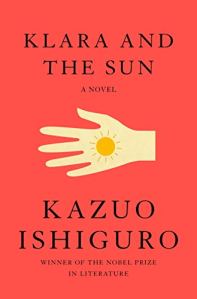
Think you could never feel heartache for a robot? Surrender to the magic of Ishiguro’s writing. Klara is an AF, a solar-powered Artificial Friend, purchased as a companion for Josie, a teenage girl who suffers from a mysterious illness. Klara is programmed to recognize and respond to human emotions and to always place the needs of her human first. She narrates the story, so we see the human world through her eyes, a disorienting combination of astute observation and naivety. As in Ishiguro’s most famous novels, The Remains of the Day and Never Let Me Go, the disturbing truth about Josie’s society and her illness are gradually revealed. When Klara decides she needs help to complete her mission she turns to the higher power who gives her life, the Sun. Once again Ishiguro’s hypnotic prose holds the reader in a spell.
Continue reading “Half a Year of Reading”