Why do some incidents and people stick in the memory while others are lost in the past? It fascinates me that my siblings can recount stories I have no memory of and vice versa. Here are three stories of people I remember vividly from my childhood and youth.
Mrs. Noble
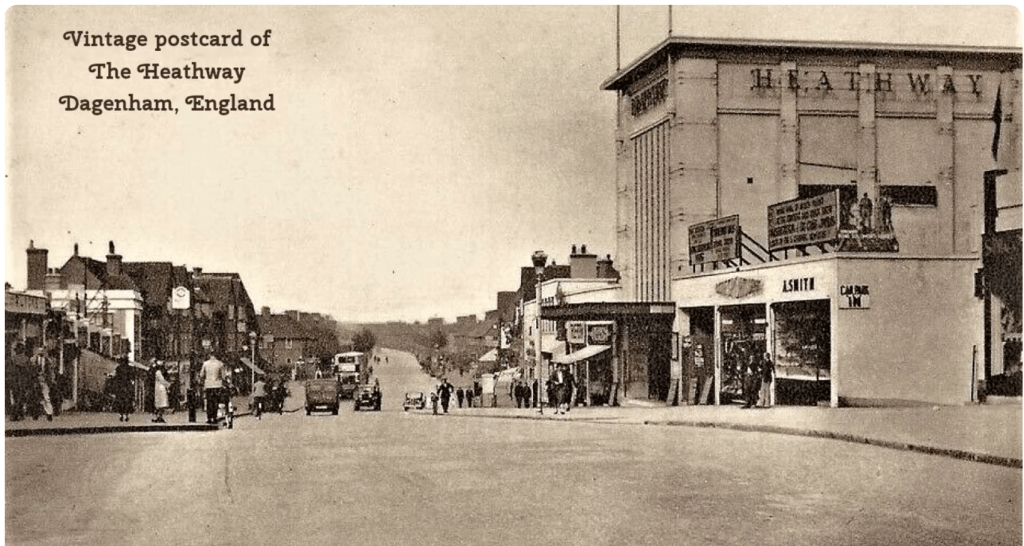
Mrs Noble sat in an armchair in the corner of our sitting room, clutching a handkerchief. She was a large ungainly woman with heavy features, now wet with tears, a portrait of sorrow. The chair was upholstered in brown, her wool coat was brown, and the light in the room was dim, perhaps a typical London overcast day. This was in our house on Whitebarn Lane in Dagenham so I must have been about five years old. 1953. Everything in my memory of that time is sepia toned, a tea-stained postwar world.
At Mrs. Noble’s side, silent and scared, stood her son. He was a bit older than me and what was then termed a “spastic.” When they visited he was never interested in playing but always stayed close to his mother. An odd smell clung to him, perhaps from medication, which I associated with his condition.
The cause of Mrs. Noble’s tears was the sudden death of her husband Charles. I remember him as a tiny frail looking man; they made an incongruous couple. It was said he suffered from war wounds and this was the cause of his death. His wounds were not from a battlefield. He had endured terrible torture and malnutrition in a Japanese prisoner-of-war camp and seen many men around him die from the cruel mistreatment.
In retrospect it seems obvious that Charles Noble suffered from what we now know as PTSD. Did physical wounds cause his death, as I then assumed, or was it psychic wounds that drove him to suicide, the cause of death for so many war veterans in our own time? In that time and place euphemisms would no doubt have been used, especially in front of the children. But death from war wounds was true enough.
Fred Spraggins
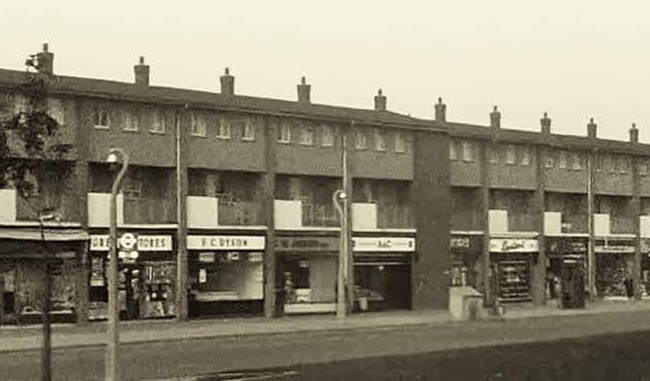
Fred Spraggins was a small plump man with a moon face and anxious demeanor. He spoke quietly with a slight lisp and precise enunciation, as though trying to suppress his local London accent. He lived with his mother. My father knew him through the Dagenham Labour Party and he was a regular visitor to our house on Marks Gate Estate. He was a sincere Christian and a Socialist. I remember one visit when he showed us his new wristwatch. It was Russian he said, explaining that he bought it because he thought supporting Russian business could help draw them away from godless communism. It was gold, large and flashy, and seemed incongruous with his otherwise modest appearance.
He was devastated when his mother died, but a short time later my father announced that Fred was getting married to a widowed lady, middle aged like himself. One Sunday afternoon he brought her over for tea. His intended was much like him in appearance, small and plump and very nervous. The poor woman must have felt under scrutiny for our approval. She perched on the very edge of the sofa clutching a large handbag in her lap as if it was a life raft. She seemed in awe of her surroundings. Visitors to our house were often taken aback by the floor to ceiling bookshelves taking up an entire wall, an unusual sight on a council estate.
A few weeks later my father shared the news that Fred had suffered a complete nervous breakdown and had broken off his engagement. It went unspoken but we understood that the thought of married life and what it entailed had terrified him and sent him over the edge. We never saw him again.
Mrs. C.
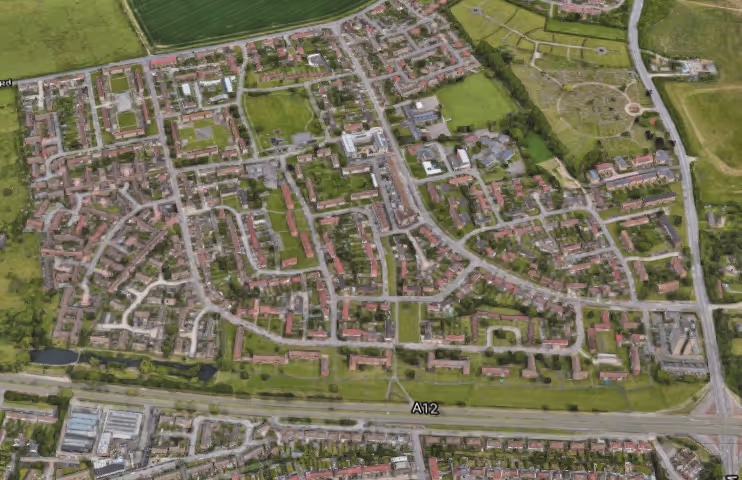
Mrs. C. was a thin bird-like woman with a nervy eager manner. The family lived on the other side of the main road into London from our council estate. It was a rung up the social ladder in a neighborhood where people owned their houses. She was fiercely aspirational, very proud and boastful about her academically gifted son. I remember one Sunday we met the family outside church after Mass. Her son and I were the same age and had both just won scholarships to grammar schools. Mrs. C. introduced us. Michael was short like his parents and what I thought of as a “drip.” No doubt he had a similarly unflattering opinion of me, a too tall for my age gangly girl. We both studiously avoided making eye contact.
On a visit home many years later I met Mrs. C. again. She came to our house ostensibly to help out; my father was ill at the time. It turned out her real purpose was to unburden herself of a secret anguish. She insisted on cooking the evening meal for us and bustled about in the kitchen making a casserole with chicken and vegetables. It seemed best to leave her to it and we sat in the adjacent living room. There ensued a great cacophony of crashing pots and pans and vigorous chopping. After a while there was silence. My mother decided to check what was going on. She found Mrs. C. slumped in a kitchen chair completely inebriated. On the table stood an empty bottle of cooking sherry; she had drunk the whole thing. The alcohol had released her inhibitions and she sobbed out the cause of her meltdown. Her adored son had just come out to the family as gay. The news shattered her; she just couldn’t accept it.
She was in such a state that she clearly couldn’t walk home alone. Someone rang her husband and apprised him of the situation. It must have been an unfamiliar and mortifying experience for him to come and collect his drunken wife. At some point she had managed to take the casserole out of the oven and set it ready on the table. So with calm restored to the house we sat down to eat. My mother lifted the lid and looked in. The chicken was raw.
Mrs. C’s son went on to a distinguished career in arts journalism. I do hope she was eventually able to accept him. She had every reason to be proud.


