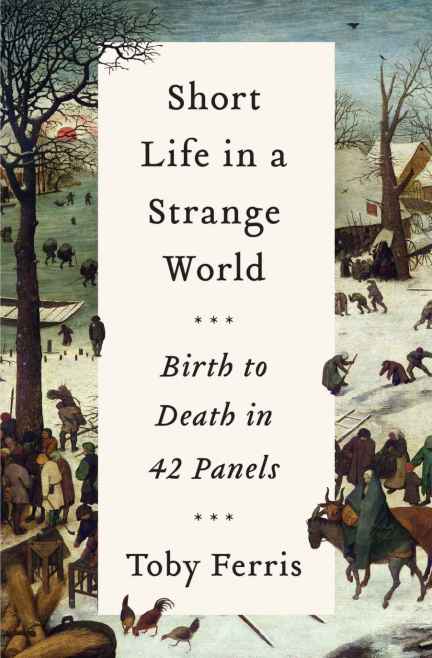
 I bought this book on impulse because I will read anything about Bruegel. Perhaps it is my Flemish heritage that draws me to his work. I imagine my ancestors among the peasant crowds in his village scenes. It was only when I held the book in my hands that I recognized the author’s name. Toby Ferris wrote for The Dabbler, the site that first hosted my Dispatches, and he created Anatomy of Norbiton, a web site “exploring suburban life and universal failure as seen through the lens of Renaissance art.” My brother, the writer Frank Key, called it “a thing of strange and terrible beauty.” So I opened this book with heightened expectations. It would be no ordinary book about Bruegel.
There are 42 surviving paintings by Pieter Bruegel the Elder. He lived about 42 years, his birth year of 1525 is an approximation. Ferris was 42 and had recently lost his father when Continue reading “Reading Bruegel”
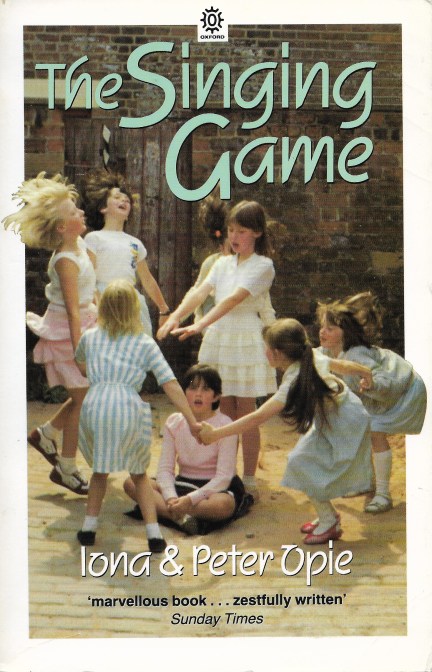 Perhaps it was the restlessness induced by quarantine that had me prowling my own bookshelves in search of diversion. I needed a break from the world of Thomas Cromwell in Hilary Mantel’s The Mirror and the Light. (I know it is tantamount to sacrilege to criticize Miss Mantel, whose Cromwell trilogy I agree is a magnificent achievement, but did we need the menu for his every meal in the year leading up to his execution, surely the last meal would have been sufficient?) In this grumpy mood I came upon The Singing Game by Iona and Peter Opie, the legendary English folklorists, a book I hadn’t picked up
  Witchfinders – no, not characters in our contemporary political drama. But it could be that hearing cries of “Witch Hunt” almost every day for two years was what led me to this particular book on my shelf.
 Myths of Power: A Marxist Study of the Brontes by Terry Eagleton, published in 1975. Quite what this book is doing on my bookshelf I have no idea. I must have acquired it long, long ago judging by the antique fashion in literary criticism it represents. Back in the 1960’s when I was educated at an English university the term “dialectical materialism” was tossed around with abandon by anyone wishing to seem a true intellectual. Marx was dragged into analysis of just about anything. But the Brontes? Surely not. The wild romantic moors of Yorkshire seem a world away from theories of an oppressed proletariat and dominant bourgeoisie locked in class struggle. Or are they? I don’t remember reading the book in the past but I decided to dig in and see if Marx can really shed light on the Bronte novels.